‘No Mow May’, but what about June?
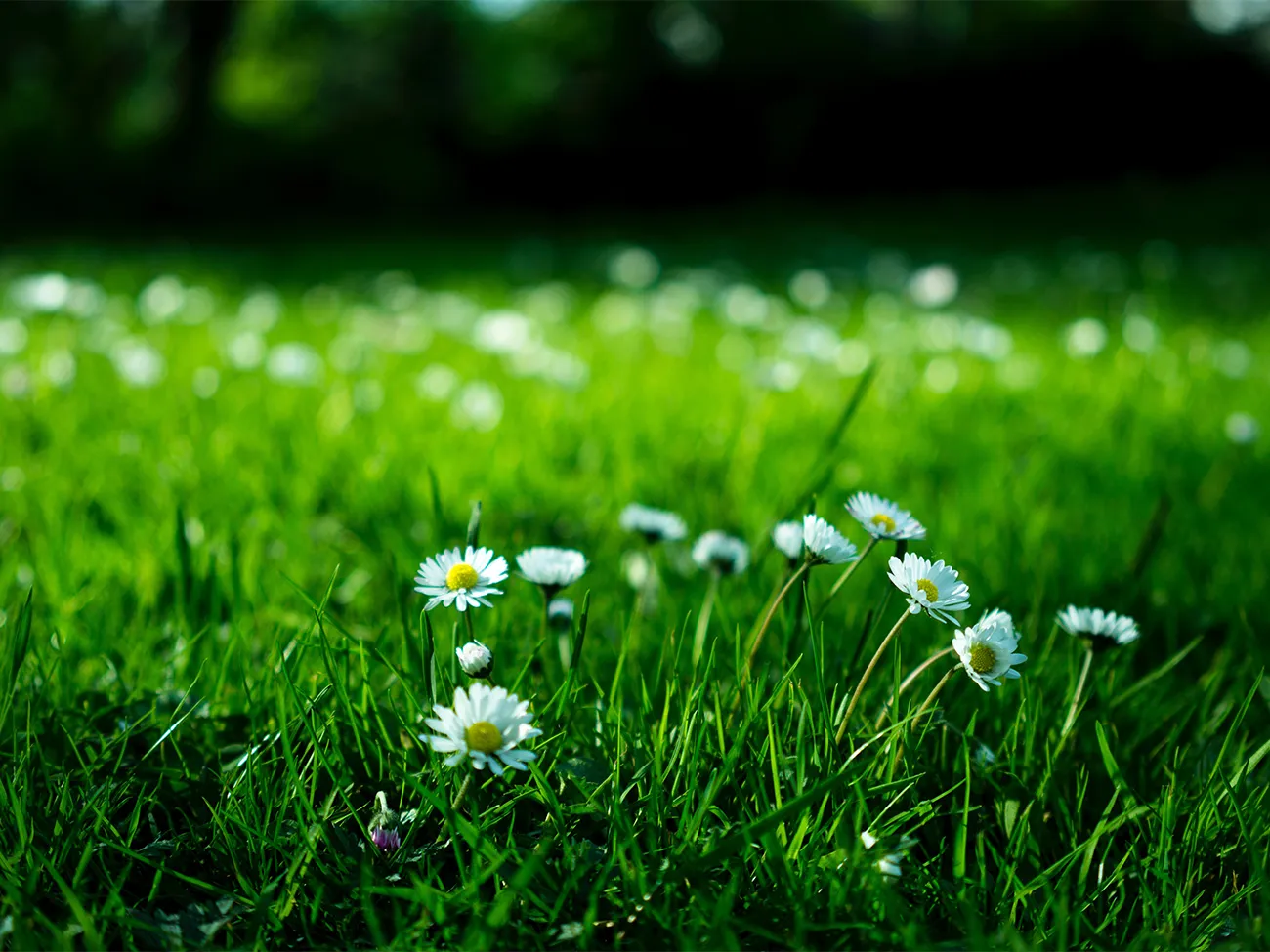
May, the month when every bird lays a proverbial egg and every patch of grass is free to grow and flower unchecked. When lawnmowers fall silent for a month, all kinds of plants and herbs get the chance to flower, helping to boost the diversity of wildlife in our gardens. But there comes a point when you need to turn that meadow back into a lawn. Here’s how.
Next month, it’s time for No Mow May! It’s a great initiative that means leaving the mower in the shed for a whole month. The lawn is left to grow freely and can develop into a true carpet of flowers. You provide a veritable buffet for the many insects and boost biodiversity in the garden. It’s a lovely idea that warms the heart of any garden and nature lover. As a landscape contractor, of course, you also have the practical understanding that this free rein is best managed in a controlled way, so that months of care to create a beautiful ornamental lawn are not wasted.
Mow gradually and scarify
Once most of the flowers have disappeared in June, it’s best to get the mower back into action. Bringing the grass back down to length will take several mowing sessions, each removing just one third of its height. This gradually reduces the amount of leaf growth, allowing the grass to adapt better and undergo less stress. Always use a lawnmower with a grass collector. This picks up weed seeds and reduces the risk of them spreading across your green carpet.
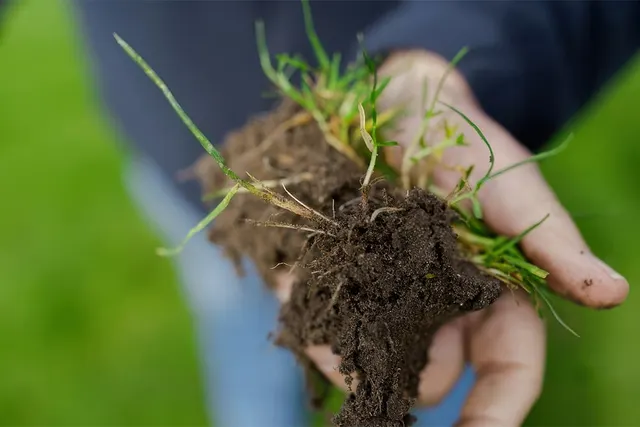
During the many weeks in which the grass was able to grow long blades, it also cast considerable shade over the lawn surface. Leaves in this shaded zone died off, contributing to a build-up of thatch in the lawn. Herbs and other plants that have grown vigorously in the meantime also need to be brought under control. After a period of boosting biodiversity in the lawn, using chemical pesticides is out of the question. The lawn can only be cleared up in an environmentally friendly way through mechanical means: scarifying is the answer.
Minimal damage
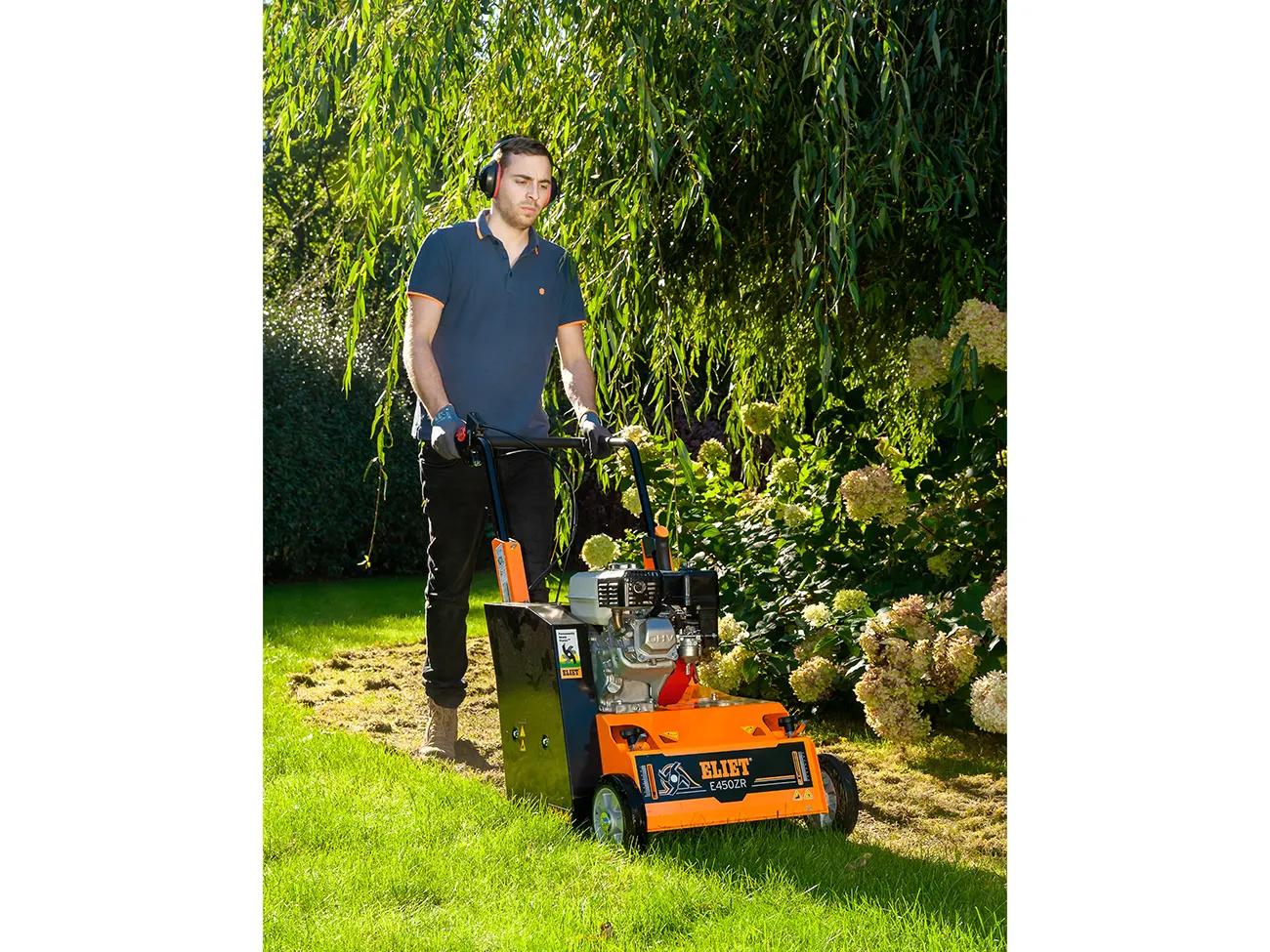
During scarifying, the blades cut vertically through the turf, scraping away excess thatch from the soil. Weeds and other plants in the lawn often have broader leaves than grass, so the scarifier blades remove mainly this leaf growth. Stripped of its leaves, the weeds are weakened and less able to hold their own among the grass plants, which are unaffected by scarifying. The key is to use a scarifier that can comb the turf very intensively while causing minimal damage to the grass.
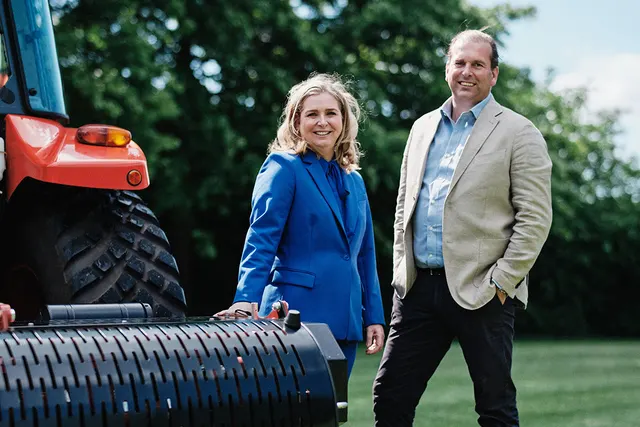
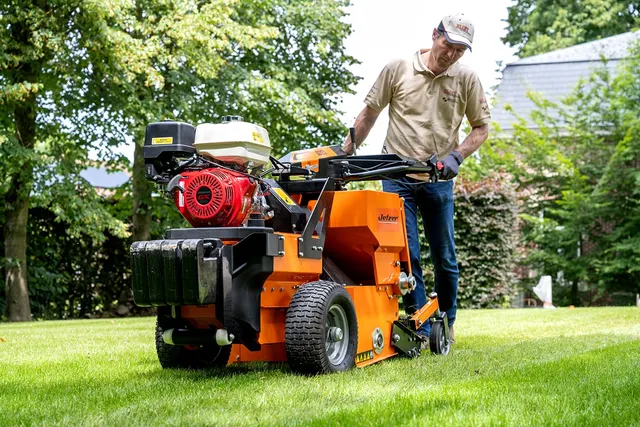
The new ELIET EZR scarifiers are particularly well suited to the task. The Double Cut blades on these machines are spaced just 1.5 centimetres apart, allowing them to cut through the turf very intensively while causing minimal damage thanks to their ultra-thin profile (1.5 mm). The blades also rotate against the direction of travel and remain sharp at all times, giving them a better grip on moss and thatch so they can lift it cleanly from the turf. These machines are known for the quality of their scarifying: they remove moss and thatch from the turf with 30% greater efficiency.
The EZR scarifiers are self-propelled, so there is no need to push them and the lawn can be cleaned at a consistent speed, whatever the terrain. These professional machines are available in several working widths (45 cm, 55 cm and 65 cm), so you can choose the ideal machine for the size of the garden. After scarifying, the lawn is clean again and the grass is ready for summer.
Overseeding
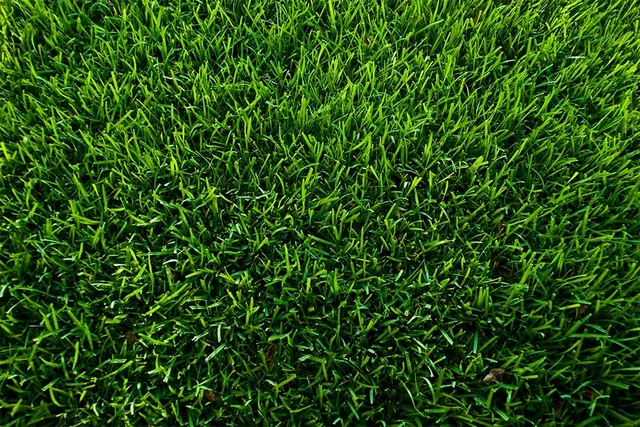
Once you have removed the weeds and moss, bare patches may become visible in the lawn. This is the perfect time to overseed. This introduces young grass into the existing lawn, making it more resilient to summer drought and lawn diseases. The additional grass increases plant density, which can also suppress weed growth. With the right approach, you can have a clean, green ornamental lawn again in just a few weeks.
Question about this story? Ask your question
Keep following this
Get an email when a new story is published. No account needed.
- ThemeMachinery for professional grounds maintenance
- SubjectTurf management