A system shift in line marking
Text Trees AccouImage Expo-Line
Robots are not the real revolution
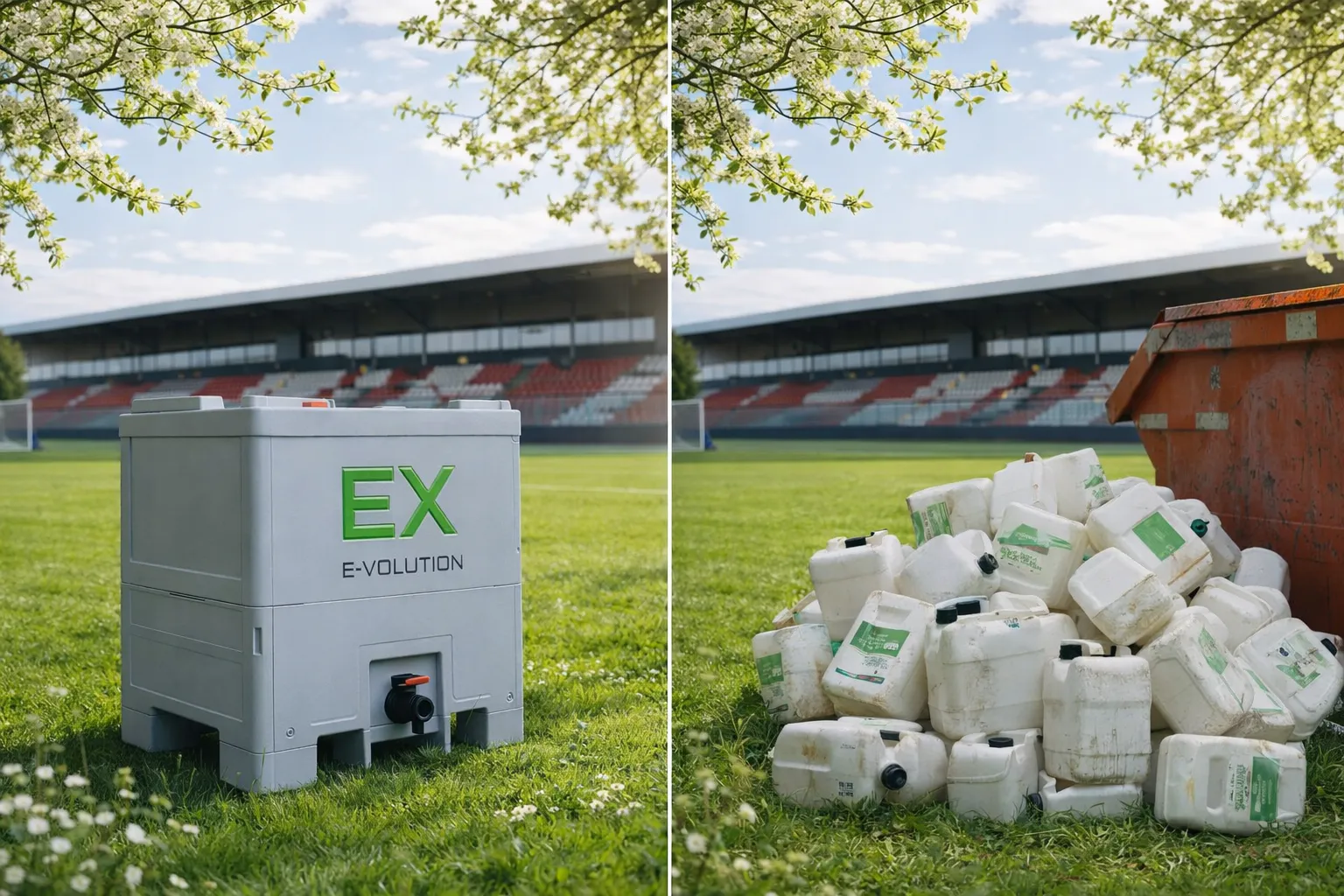
Every season, four million empty jerrycans in Europe are ready for the recycling centre. ‘Empty’ is a relative term here: the sediment at the bottom can no longer be loosened by shaking or drilling. As a result, the product often becomes unusable before it has been fully used. So anyone looking to make the line-marking process cleaner needs to start not with the packaging, but with the coating itself. “With the launch of EX-Evolution, we are aiming for a complete system shift,” explains Raf Bogaerts, CEO of Expo-Line.
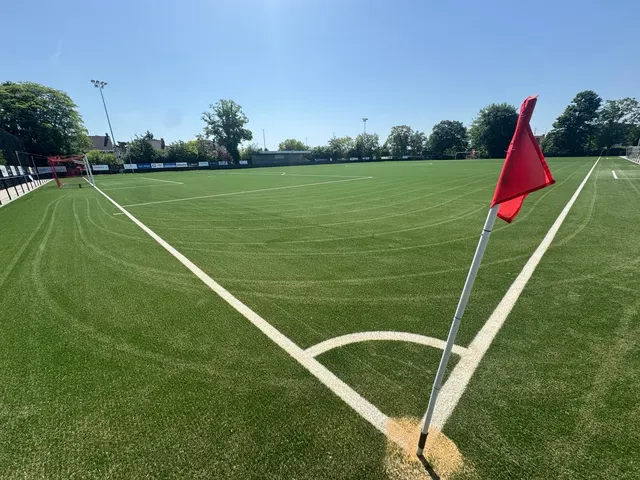
No match without line marking, no line marking without lime. Or so it was until 1989, when coatings were quickly adopted by groundsmen. They were easier to use, up to a point. “It may sound like a detail, but pigments in standard line-marking paint settle heavily in the container,” says Raf Bogaerts. “This settling sets off a chain of adverse effects. That’s why you always have to shake the paint before use. But once your coating settles, the water presses more and more heavily on the pigment, making it harder to turn it back into a liquid, usable paint. Clubs now buy ten to twenty jerrycans at a time, after which the paint settles in storage.” If jerrycans have to be thrown away because the pigments are no longer usable, up to twenty per cent of their contents can end up as chemical waste.
Getting every last drop
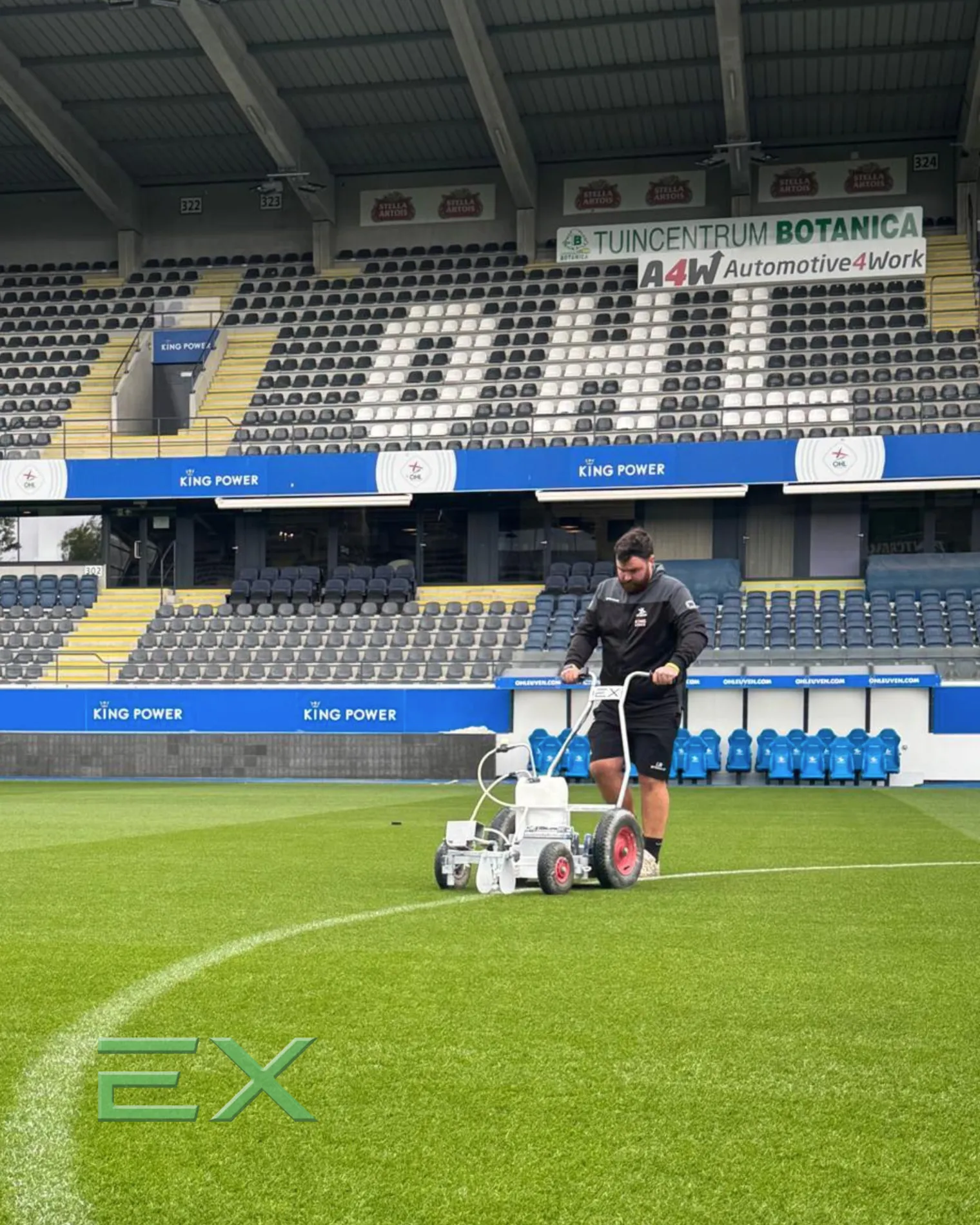
That is why, more than twenty years ago, Expo-Line came up with a unique product: line-marking paint that does not settle. Luke Russell, head groundsman at OHL Leuven, put it plainly: “For the first time, I can use up a whole jerrycan.” He described Expo-Line’s coatings as superior. Between 2000 and 2002, the line-marking manufacturer developed a ready-to-use product that did not settle. They describe it as nothing less than a system shift that should cut packaging by ninety per cent.
Bogaerts: “Today, the biggest innovation in pitch marking is not in robots or packaging, but in the coating. If it remains stable, settling disappears and residue is reduced. We literally get every last drop out of the container, so there is less waste.” By making the product more concentrated, only half the volume is now needed compared with twenty years ago. A double win.
Greater efficiency, less product
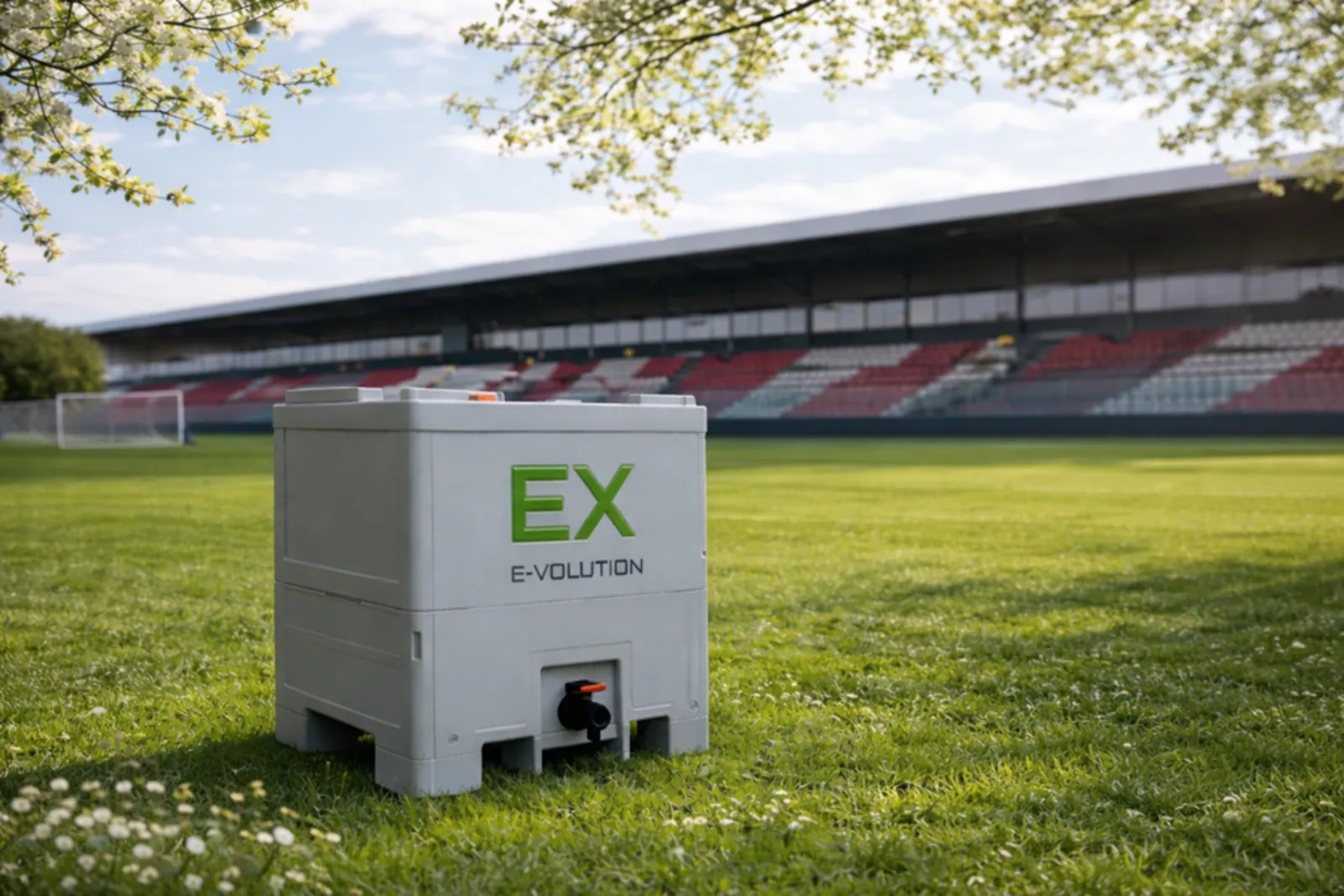
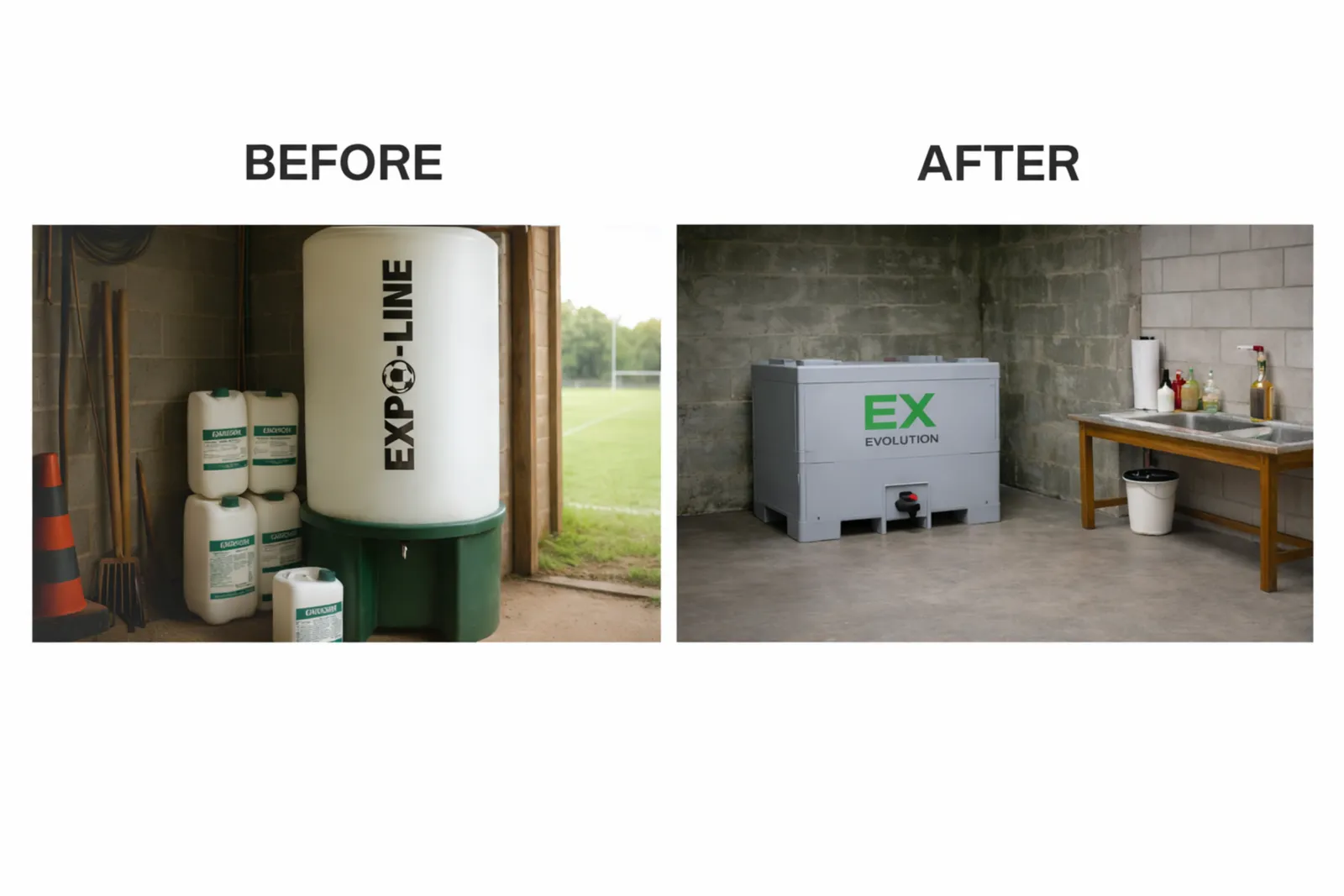
Expo-Line is now taking this a step further with the launch of bag-in-box packaging. “Like wine, but in 250-litre volumes,” Bogaerts explains.
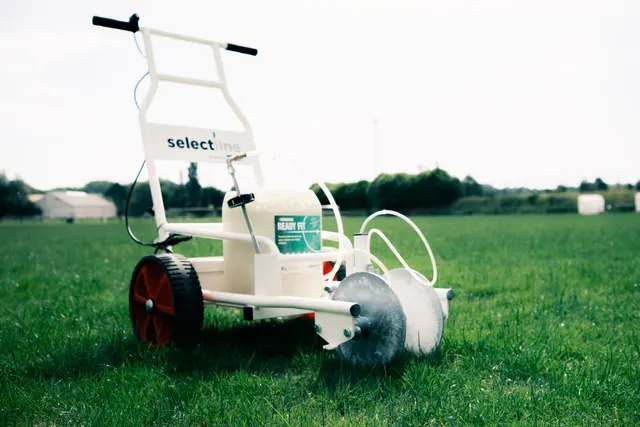
“This way, we take twenty-five jerrycans off the market for every barrel. It only works with a stable product like ours, because naturally you can’t shake a package that large. So it all starts with the coating.” Paint that does not settle is also easier to apply. Spray nozzles do not get clogged, which is also an advantage when using line-marking robots.
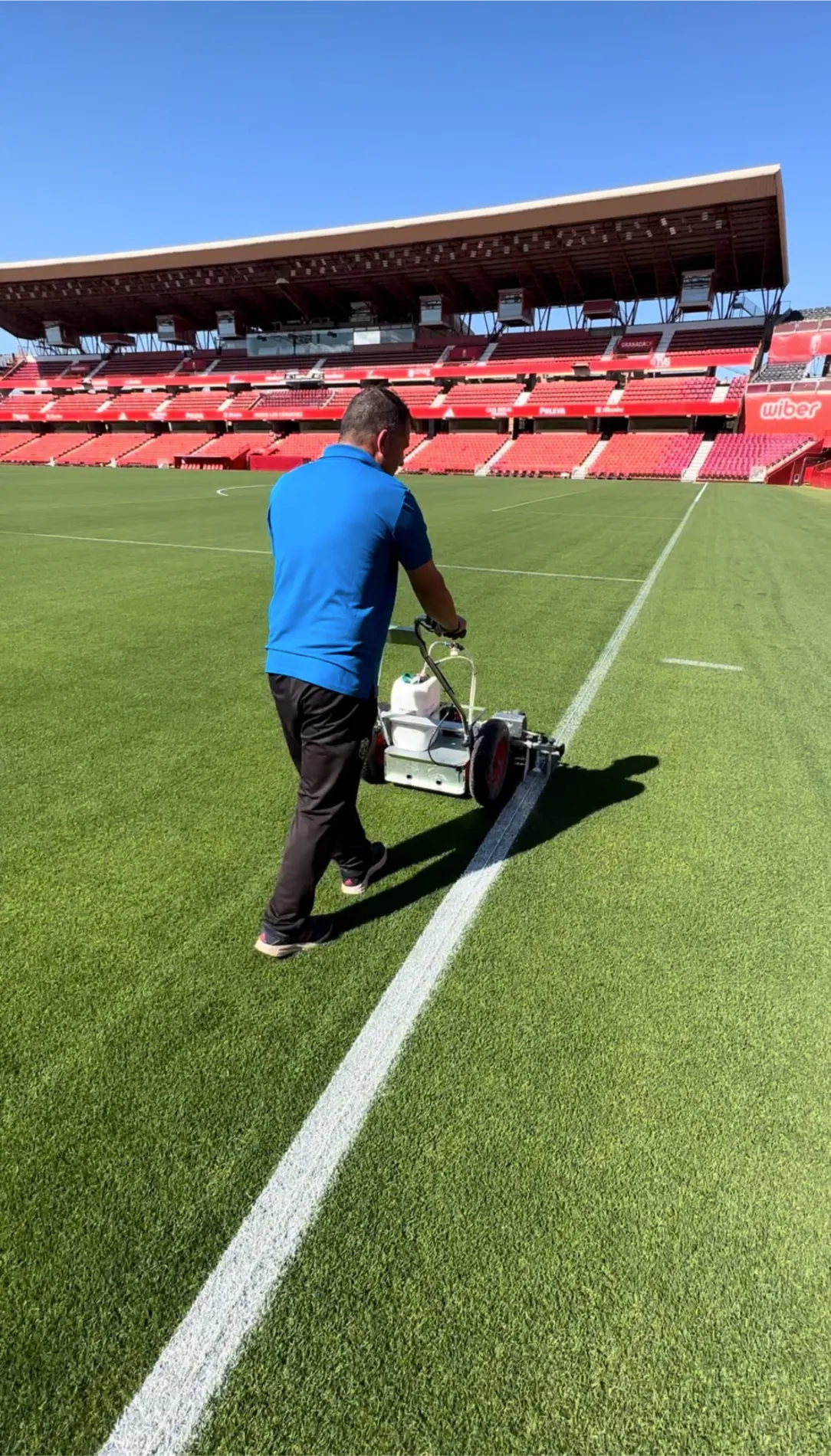
“How autonomous can a robot be if you have to intervene every time its spray nozzle gets clogged? We reduced robot consumption from twenty-two litres to five litres per pitch. Less product, less packaging, less transport and fewer interventions for smooth application: that benefits the entire supply chain.”
Controlled roll-out
This summer, Expo-Line is launching twenty pilot projects in Belgium, including with VC Westerlo and OHL Leuven. Talks are also under way in France about a controlled roll-out of the bag-in-box.
“Line marking may seem like a minor detail in the world of football. But by making the product more efficient and the packaging more compact, we are making a real difference,” Bogaerts concludes. “Ten years ago, no one but us was thinking about this. Today, it fits perfectly with the sustainability programmes of clubs at home and abroad.”
Question about this story? Ask your question
Keep following this
Get an email when a new story is published. No account needed.
- ThemeSports pitches under heavy use
- SubjectConstruction & management