Climate-resilient golf courses thanks to drainage
Text Elise NoyezImage De Ceuster
Greenkeepers and golf course operators have long been keeping a close eye on the effects of climate change. In recent years, the focus was mainly on prolonged periods of drought, but in 2024 it unexpectedly shifted to the other end of the spectrum: waterlogging. The golf industry has therefore also shown increased interest in drainage.
“Drainage can offer a solution to both waterlogging and water shortages,” emphasises Jan De Roye, infrastructure manager at agricultural contractor De Ceuster.
The past year was exceptionally wet. So wet that golfers sometimes seemed to be ploughing through marshland, and several golf clubs were forced to close their courses temporarily. Jan says: “In the past, there was little need for drainage on golf courses. It is only natural, then, that it was not a standard investment. This year, however, it became painfully clear that times are changing and many courses really are getting far too wet. Installing drainage is a smart move.”
Smart water management
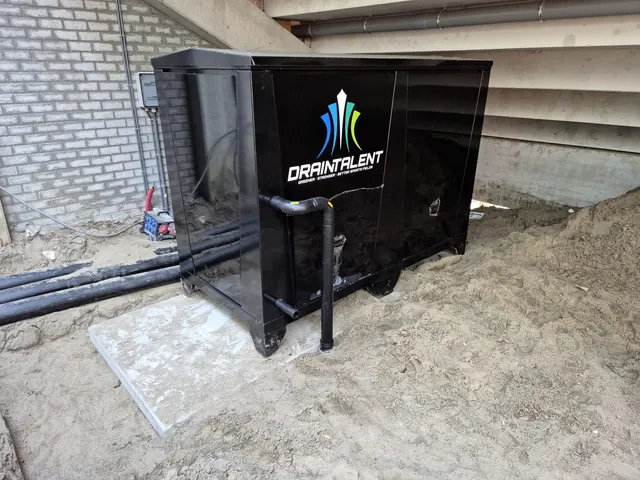
Jan is quick to clarify that drainage does not simply mean discharging water. “The days of allowing excess water to flow directly into watercourses are over. Controlled drainage, which allows the manager to regulate the groundwater level using a controlled water buffer, is the new norm.
This means water can be retained when needed and discharged only when there is a genuine surplus. In addition, we make as much use as possible of existing water storage on golf courses, such as ponds and other water features. Excess water is only discharged once these are full. This means drainage is used not only to prevent waterlogging, but also to build up reserves for periods of drought. That is a clear win-win.”
From survey to completion
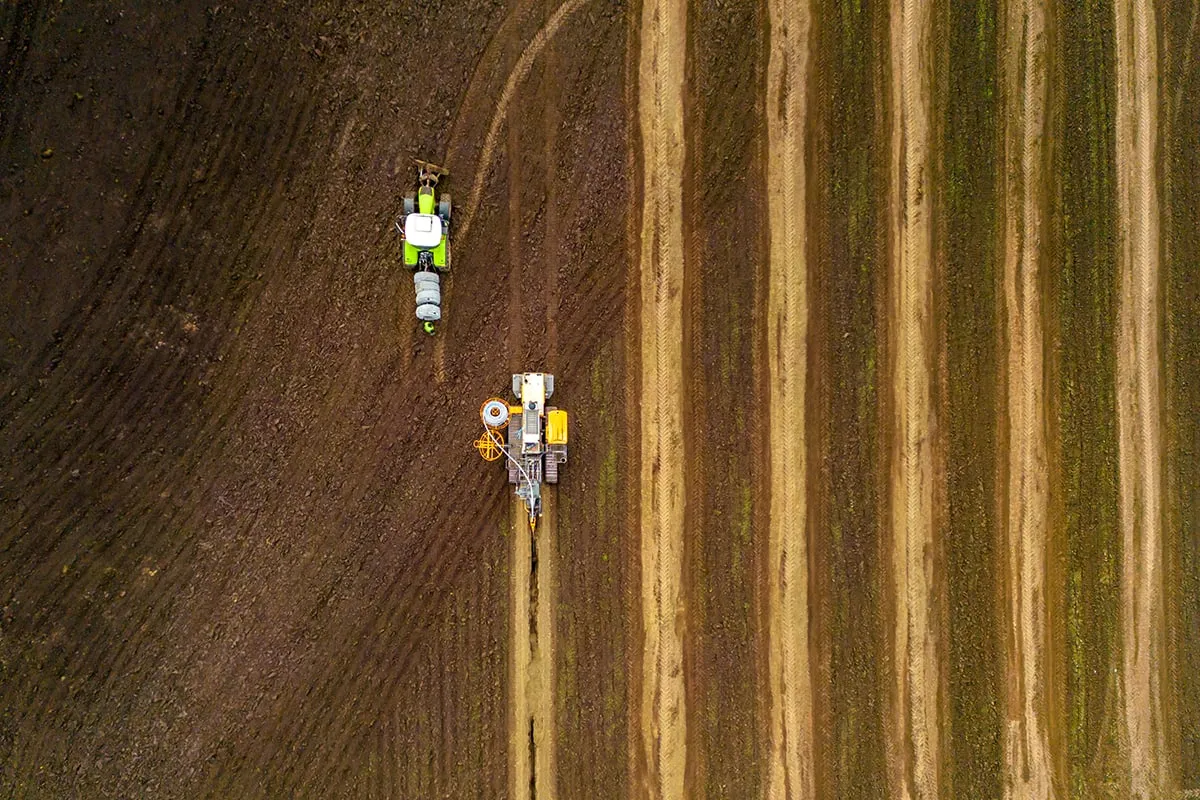
In recent months, De Ceuster has completed a new driving range, including drainage, at Golfclub Kampenhout, and installed drainage on six existing holes at Cleydael Golf & Country Club in Aartselaar. The agricultural contractor will soon also install drainage on several holes at Royal Keerbergen Golfclub. “Every project starts with a thorough survey of the site. These days, we do this using drones and 3D technology. This is an extremely efficient and accurate method, particularly on golf courses, which cover a large area and have considerable variations in elevation.
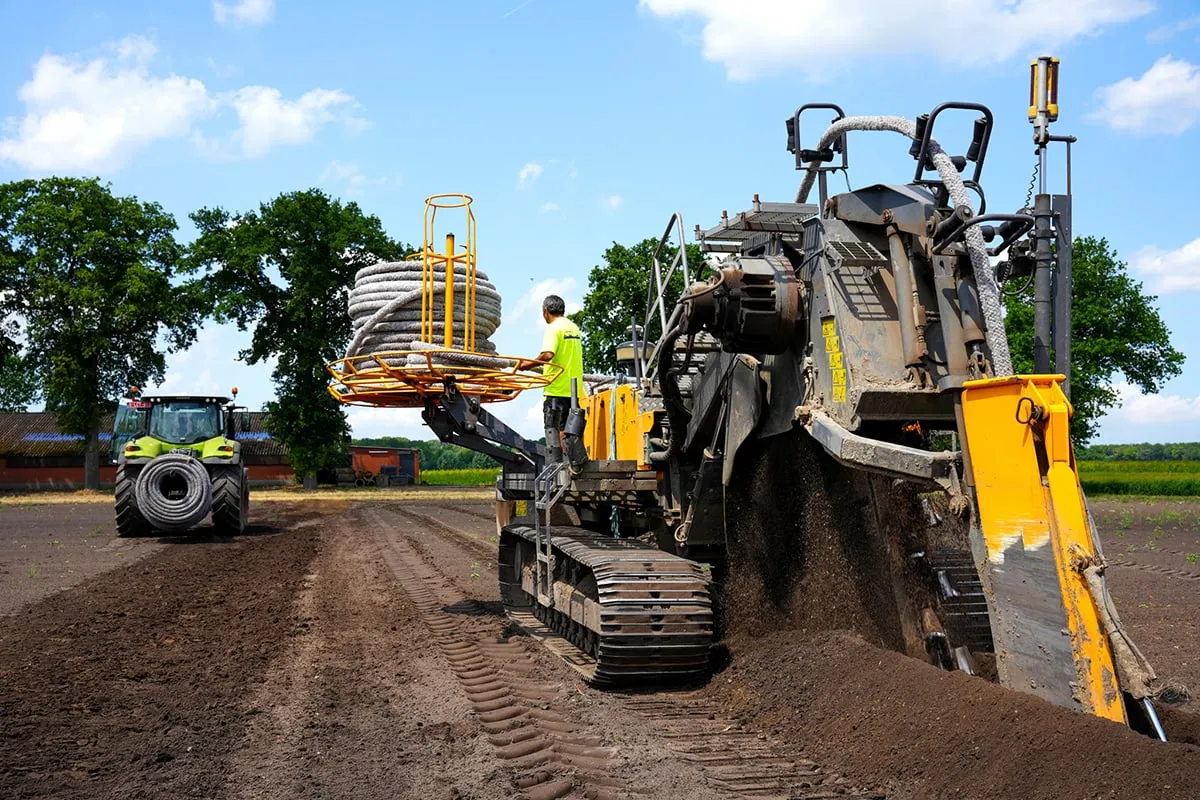
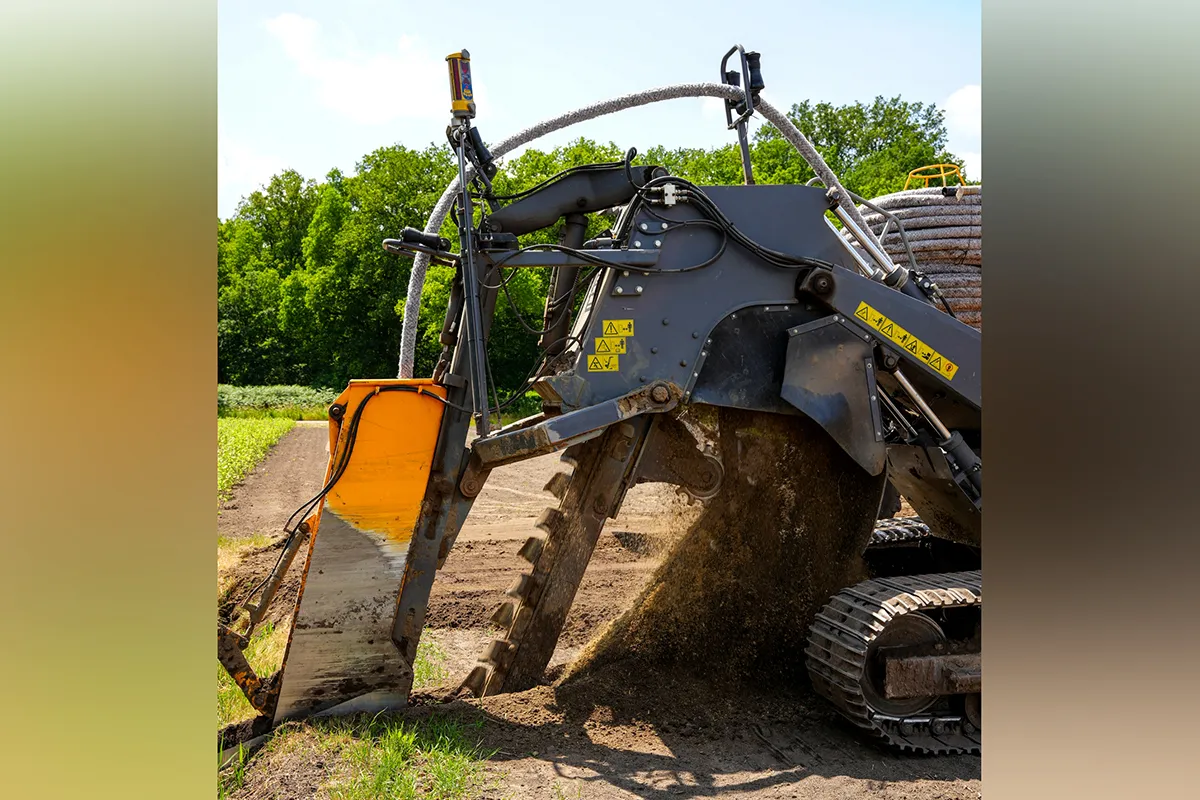
We draw up a detailed drainage plan and carry out an additional on-site check to ensure the work is also practically and logistically feasible. Once the lines and levels have been marked out on the course using GPS and laser, the real work begins: we cut trenches with a chain trencher, lay and connect the pipes, then backfill everything with sand and finish it neatly. In principle, after a few weeks there will be no sign of the work on the course.”
More than a quarter of a century of experience
Since taking over drainage company Christiaenen- Van Looveren in January 2023, De Ceuster has carried out all drainage work in-house. “We had a long-standing working relationship with Louis Christiaenen and his team, who worked for us as subcontractors. When Louis and his wife Yvonne wanted to hand over the reins, it made perfect sense for us to take over the business and for their employees to join us. In addition to our own expertise in all kinds of earthworks, we now have people on staff who have spent 25 to 30 years working exclusively in drainage. They know exactly how to approach a project and help complete our services for sports clubs, as well as for agriculture and horticulture. As an agricultural contractor, we can now provide the full service: from advice to drainage, installation and maintenance.”
Een zakelijke vraag aan De Ceuster NV? Get in touch
Companies in this story

Keep following this
Get an email when a new story is published. No account needed.
- ThemeHealthy soil beneath the pitch
- SubjectSoil & water
- CompanyDe Ceuster NV