Looking beyond tradition
Text Kris Vandekerckhove / Florian MansImage Stogger Turf Care
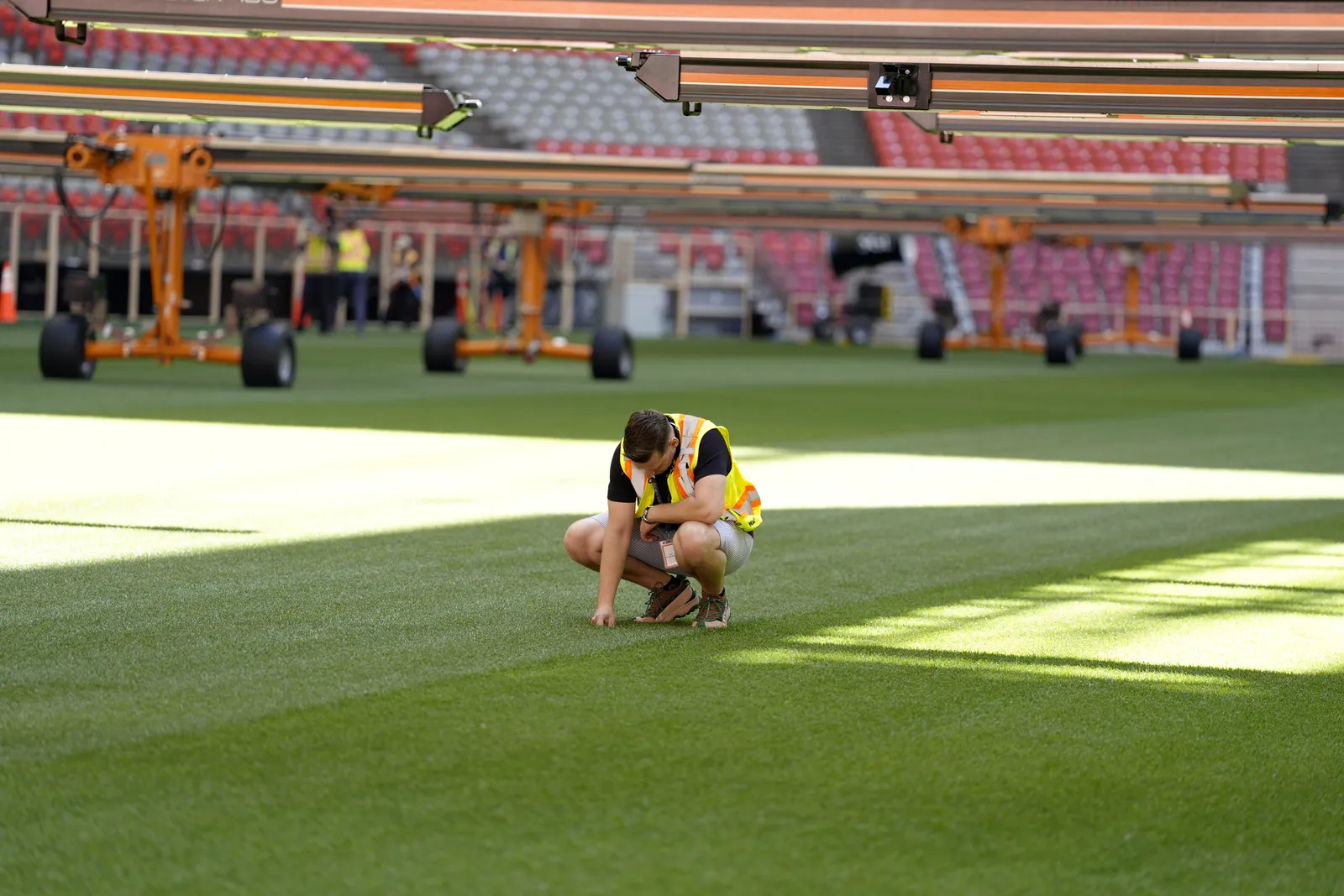
How the conversation about LED grow lighting is changing fundamentally
LED grow lighting has become a familiar part of professional stadium management. Yet the technology continues to evolve. New insights from horticulture and greenhouse cultivation are changing how the sports world views light, plant physiology and turf performance. The biggest advances do not necessarily come from more technology, but from a better understanding of what a plant really needs.
We spoke to Florian Mans, Chief Commercial Officer & co-owner of Stogger Turf Care, about lessons from horticulture, the evolution of LED grow lighting and the importance of sharing knowledge across the sector.
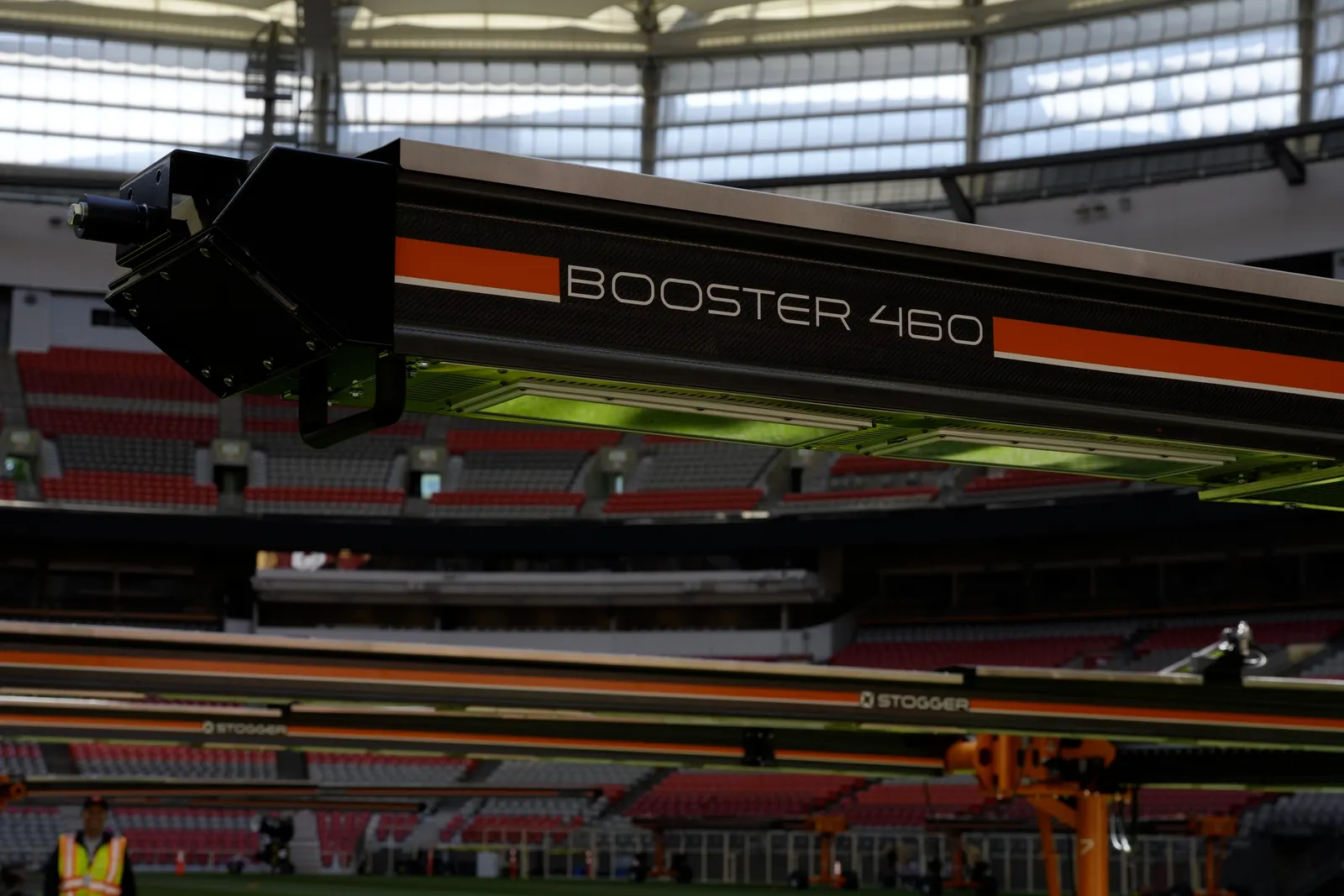
What the sports world can learn from horticulture
Before entering the sports sector, Stogger Turf Care developed its expertise in horticulture. There, it became clear just how strongly the development of LED technology is driven by the professional growing sector. Professional sports turf accounts for only around 0.5 per cent of the global market for LED grow lighting. The remaining 99.5 per cent is in horticulture and greenhouse cultivation, where the biggest investments are being made in LED efficiency, optics, spectrum development and thermal management. Mans says: “When we turned our attention to sports pitches, one thing immediately stood out. For years, the sports world assumed it already had the most advanced lighting technology. Today, the biggest technological advances often happen outside sport, making the exchange of knowledge between the two sectors increasingly relevant.”
Not more grass, but better grass
Where horticulture often focuses on maximising production, sports pitches have different objectives. “In elite sport, it’s not about maximising biomass production,” Mans explains. “We’re not trying to grow as much grass as possible. We want a strong, dense and resilient turf surface that can recover quickly. One that can withstand limited sunlight and continue to perform under the constant demands of modern stadium operations. That calls for a different philosophy around grow lighting, in which light is not seen as an end in itself, but as a tool for directing specific plant responses.”
Developing solutions from practical experience
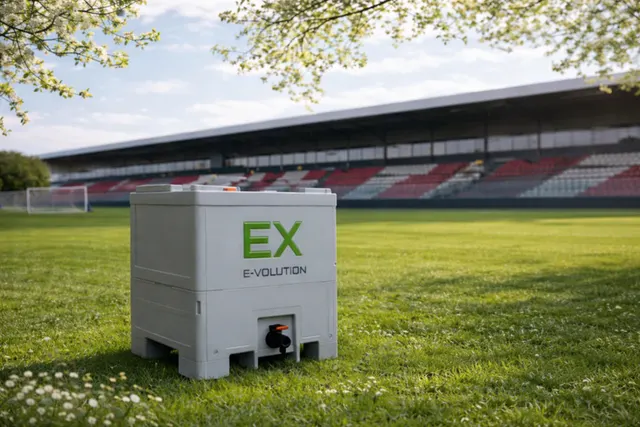
Stogger Turf Care has grown rapidly in recent years. In two and a half years, the company expanded from eight to 54 employees and developed nine LED grow lighting systems entirely in-house. Mans says: “We continually assess the latest developments in LED technology, optics, cooling systems and electronics, always asking ourselves one simple question: what is genuinely best for the end user? Not what is cheapest, not what is easiest to manufacture, but what gives grounds teams the best chance of success.”
Technology alone is not enough
According to Mans, the sector needs education just as much as it needs new technology. For a long
time, the conversation about LED grow lighting was dominated by established routines and assumptions. Today, however, grounds teams have new insights and tools that were not available just a few years ago: “Concepts such as Daily Light Integral (DLI), spectral control, uniformity and dynamic lighting strategies can have a fundamental impact on turf performance. Understanding these principles enables grounds teams to go beyond simply applying light and use it strategically. The sector wasn’t doing things wrong in the past, but technology and knowledge continue to evolve.”
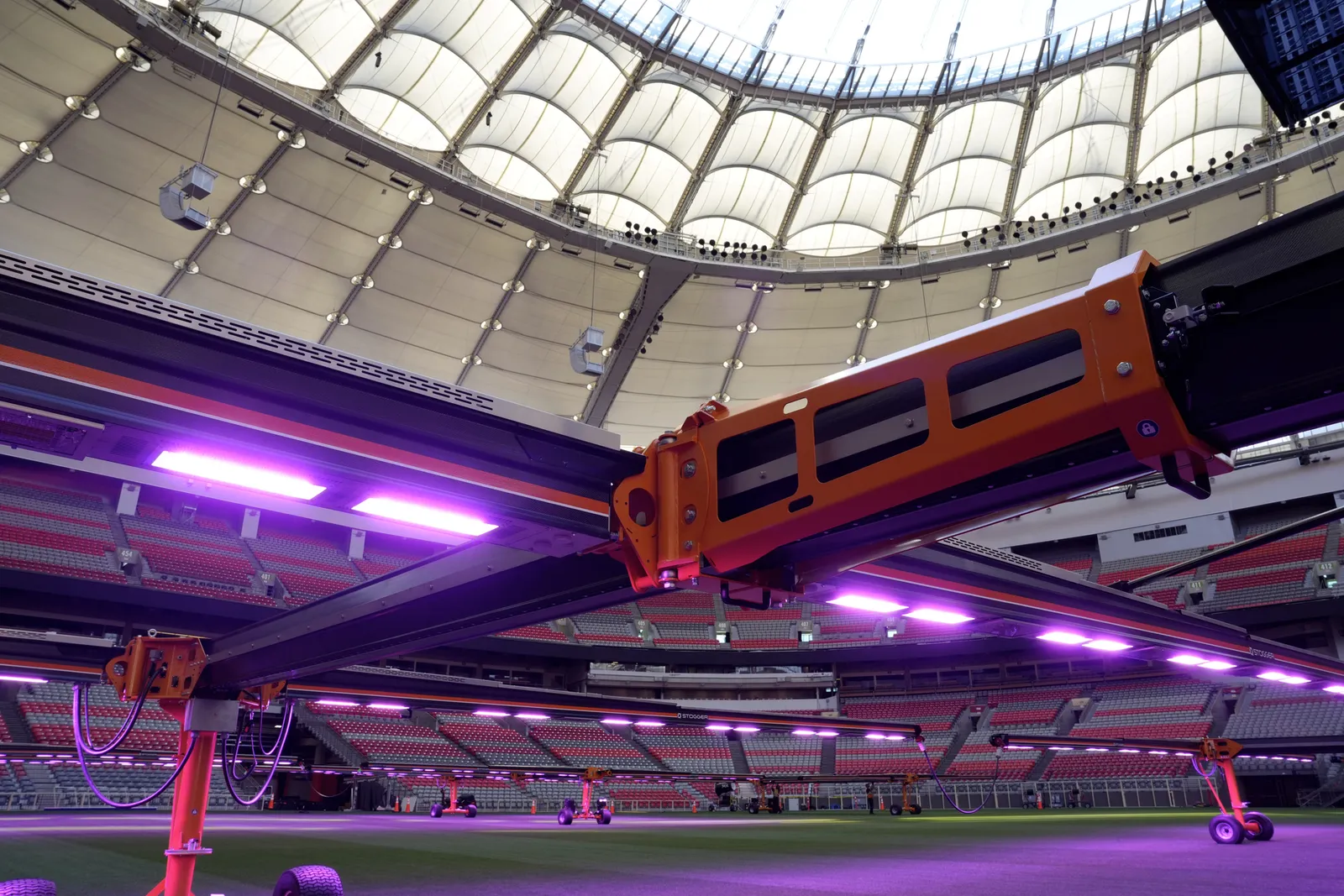
Evidence over promises
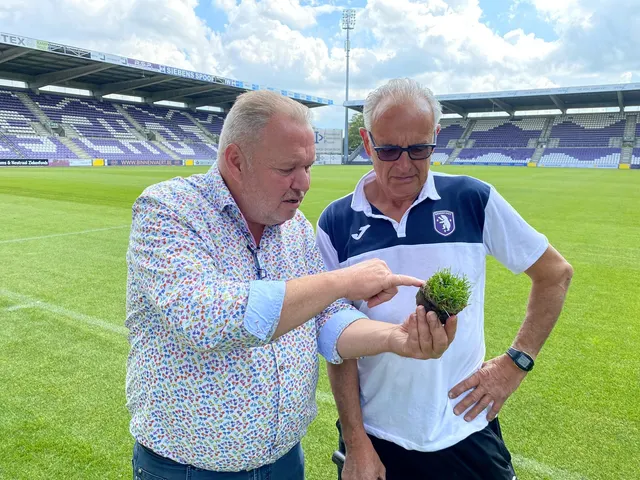
When it comes to innovation, Stogger Turf Care deliberately takes a pragmatic approach: “Perhaps that’s exactly why we’re not necessarily most proud of the number of machines we’ve sold, but of the number of people we’ve convinced through experience rather than promises.” The company has now installed more than a hundred demo units at clubs and organisations across Europe, allowing grounds teams to assess the results in their own conditions: “We chose simply to put our technology on the pitch and let the results speak for themselves. Presentations spark interest, but evidence builds trust.”
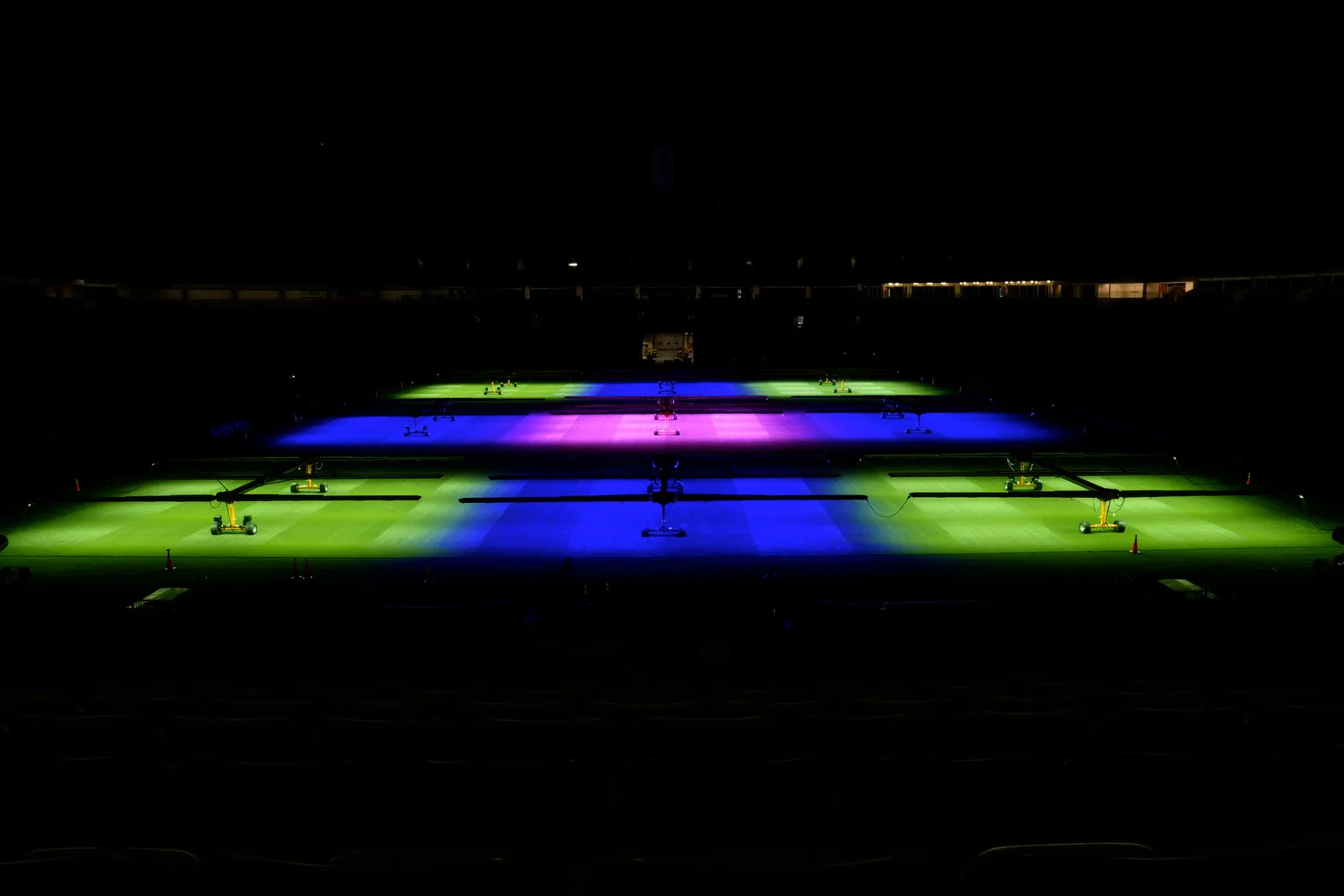
From VVV-Venlo to the FIFA World Cup
According to Mans, the first opportunities came from local clubs willing to give a relatively unknown player a chance. From there, the company grew steadily towards some of the biggest names in international football, including organisations such as Bayer Leverkusen, Borussia Dortmund, Brighton & Hove Albion FC and BC Place Stadium in Vancouver.
Through the latter, Stogger Turf Care is contributing to the biggest FIFA World Cup ever: “At BC Place Stadium in Vancouver, Canada, we are involved in one of the three largest LED grow lighting projects of the entire tournament.” At the same time, the stadium is considered one of the tournament’s most challenging venues because of its limited natural daylight. “Maintaining a world-class turf surface there takes much more than tradition alone. It requires innovation, expertise and trust,” says Mans.
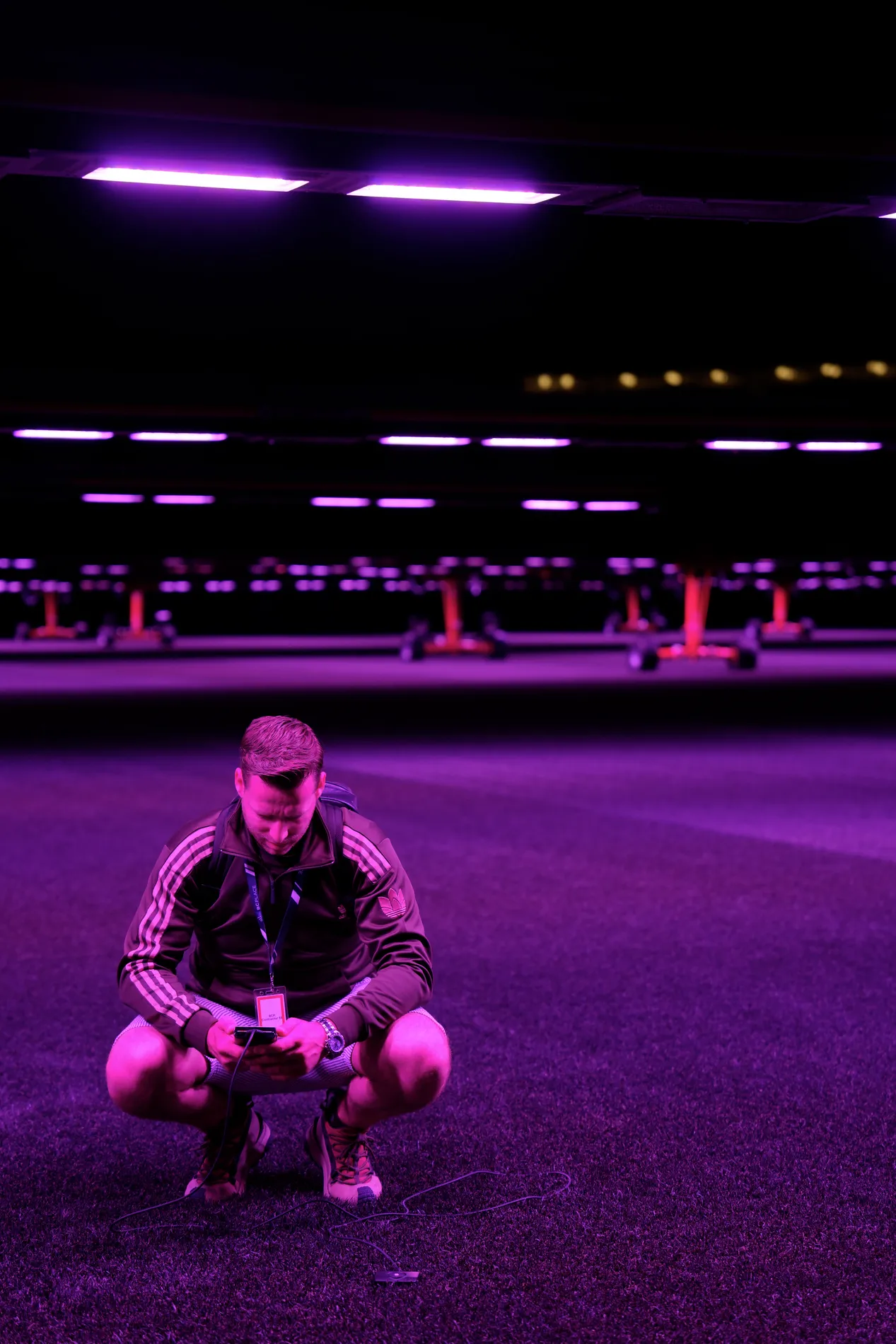
Putting the people behind the pitch first
Looking back on recent years, Mans stresses that the story, in his view, has never been solely about grow lights: “Every step of this journey has confirmed what we believed from the outset: innovation must be practical, knowledge must be shared, and every decision must start with the people who work with our technology.” Ultimately, he says, it is about the professionals responsible for the quality of the playing surfaces every day: “It’s about helping the people who arrive first and leave last, the grounds teams responsible for some of the most iconic playing surfaces in the world.” By providing better insights and greater confidence in an exceptionally demanding working environment, the company aims to support stronger decisions and better results on the pitch. “Our goal has never been to become the biggest player in the market. Our focus has always been on doing the right thing: building the best possible solutions, educating the market and helping our customers make better decisions. If that journey eventually leads to us becoming one of the biggest players, that would be a wonderful result of staying true to what we believe in,” concludes Florian Mans.
.
Question about this story? Ask your question
Keep following this
Get an email when a new story is published. No account needed.
- ThemeSports pitches under heavy use
- SubjectConstruction & management