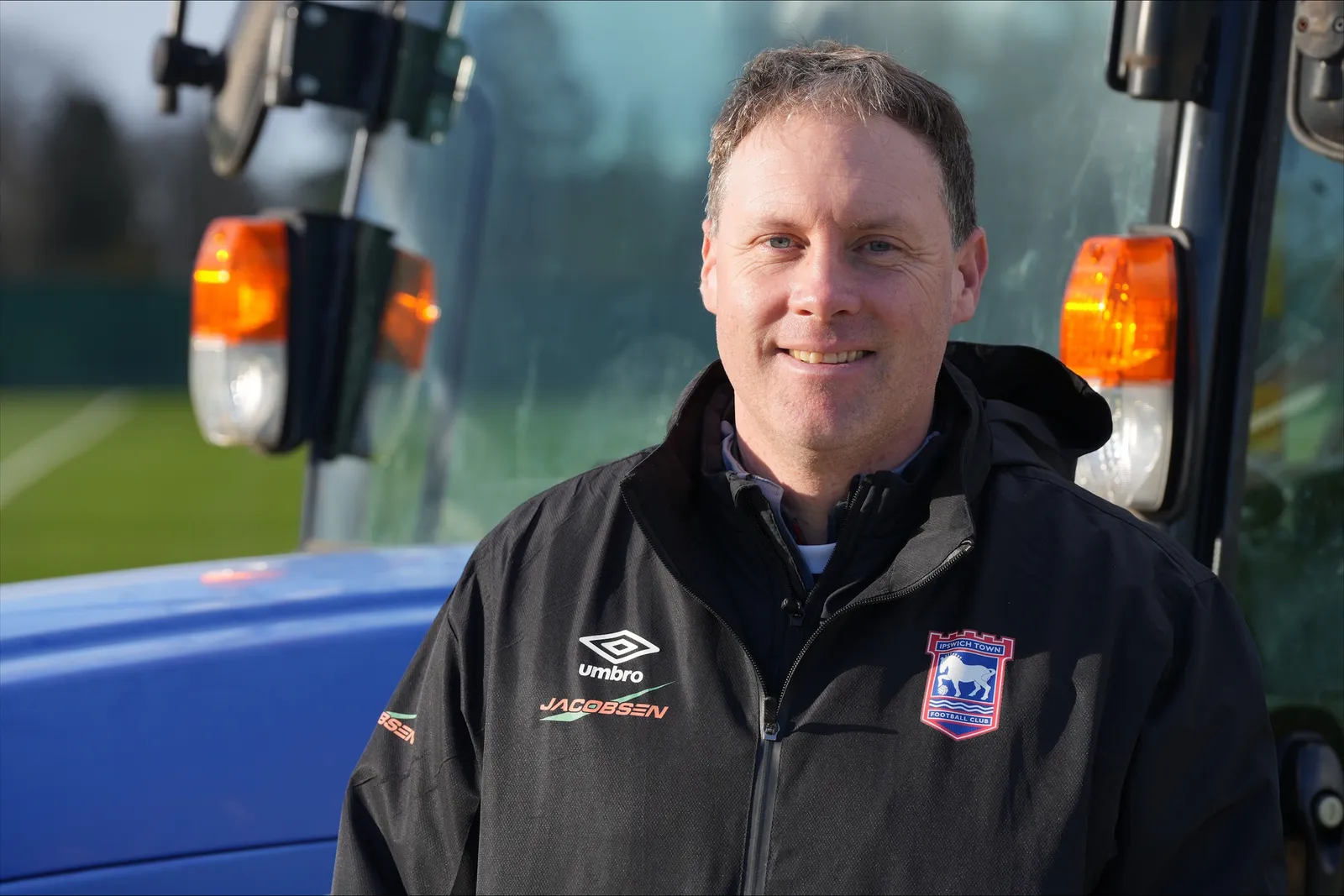
Ben Connell, the man behind the grass at Ipswich Town FC
Text Kris VandekerckhoveImage Ipswich Town FC / Blair Ferguson
How modern grounds management is evolving from craftsmanship to data, technology and elite-sport thinking
At Ipswich Town FC, success is measured in more than goals, points or promotions. Beneath every pass, sprint and tackle lies a crucial performance factor: the pitch. And Ben Connell is its guardian.
Connell has worked at Ipswich Town for fifteen years and has seen the role of grounds manager change fundamentally. Whereas he once spent most of his time mowing, marking out, fertilising and watering, his focus is now much more on strategy, planning, data and long-term development. “At first, I was right out on the pitch with the tools in my hands. Today, I spend much more time on strategic planning, pitch development and data testing,” he says.
From traditional grass pitch to elite-sport infrastructure
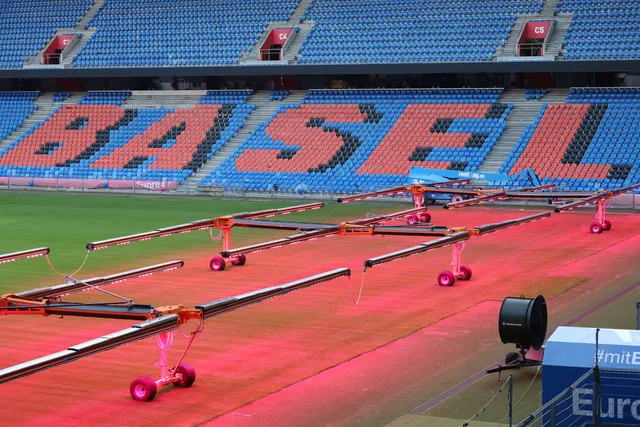
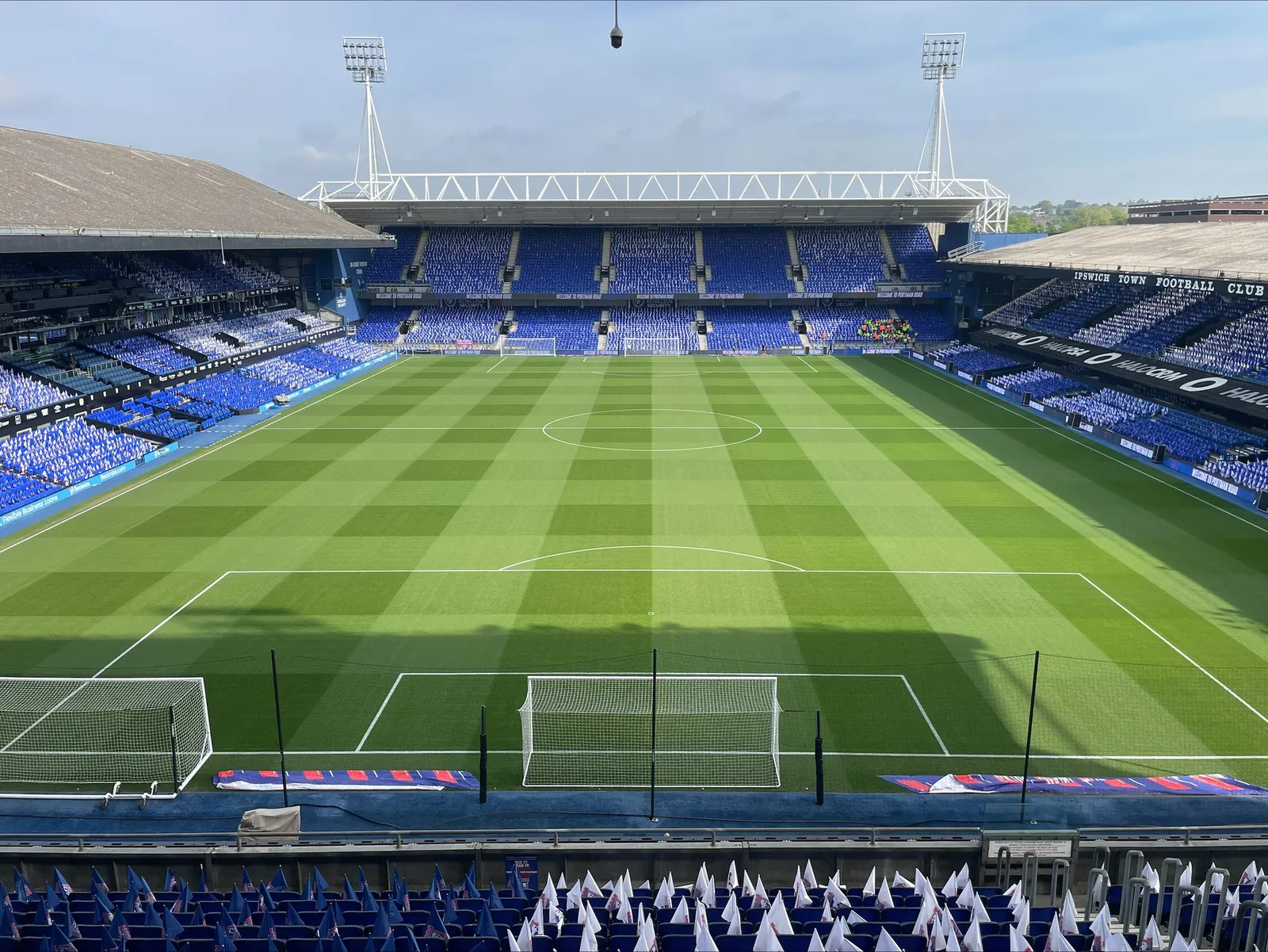
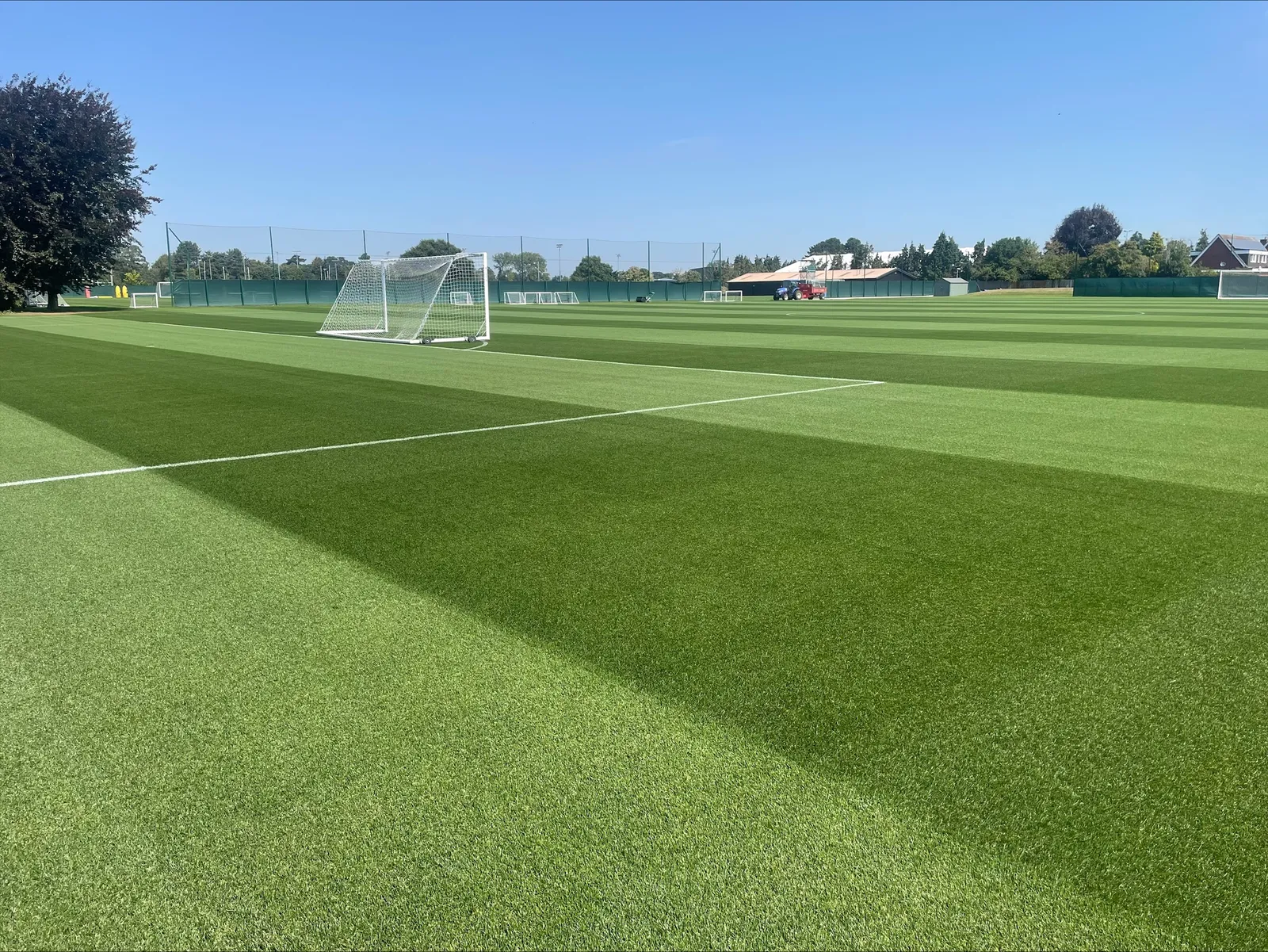
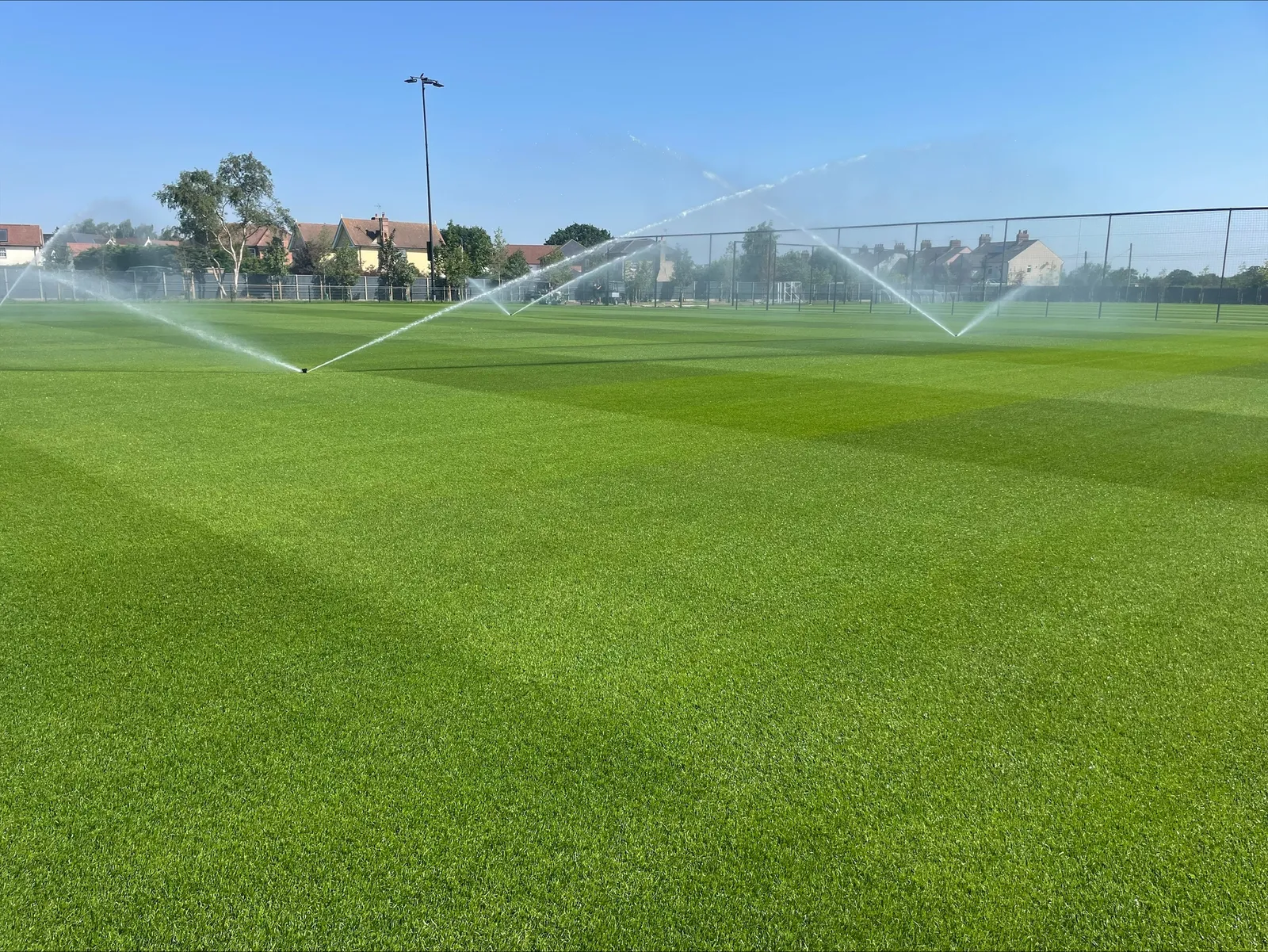
The transformation is visible across Ipswich’s pitches, too. Since 2022, the club has invested heavily in new pitches at its training ground and stadium. Old natural-grass pitches without drainage or fixed irrigation are being replaced with sand-based constructions, reinforced structures, proper drainage and full pop-up irrigation systems. “We’ve moved from travelling sprinklers to full pop-up systems, reinforced pitches and top-quality constructions,” says Connell. The club is now working on its eighth pitch out of ten as part of a wider renewal programme. These investments are not a luxury. In modern elite football, a perfect playing surface all year round has become the norm. This is especially true at Portman Road, which, according to Connell, is one of the most heavily shaded stadiums in the country. Artificial lighting, undersoil heating and intensive monitoring are therefore no longer extras, but essential tools.
The pitch as a performance tool
An ambitious football team such as Ipswich prefers to play on a fast pitch at all times. This has a direct impact on the work of Connell and his team. On matchdays, the grass is usually cut to 22 millimetres, and sometimes even to 20 millimetres. The pitch is also watered heavily to keep the ball moving quickly. “The manager expects a fast pitch,” says Connell. “We’re constantly looking at how we can maintain that pace for as long as possible, right up to half-time, when we can water the pitch again.” The medical and performance staff are also paying increasing attention to the pitch. Before matches, data on factors including hardness and traction are shared. This provides a clearer picture of the surface’s impact on fatigue, speed and injury risk.
The soil as the foundation
According to Connell, elite-level pitch management is ultimately not just about what is visible above ground, but above all about what happens beneath the turf. “If we manage the soil well, the grass usually takes care of itself,” he says. For Ipswich, that means constantly focusing on moisture balance, nutrients, application timing and soil health. The quality of a pitch is determined not just by mowing or watering, but above all by the condition of the underlying construction and rootzone.
According to Connell, this focus on the soil requires precision above all. “Elite-level pitches are created by carrying out the right tasks at the right time,” he says. Sometimes that also means working outside traditional hours, when weather conditions are better for certain applications.
Data and instinct
Connell does not believe technology replaces craftsmanship, however. On the contrary, he says the best results come from combining data with experience. “You have to be in tune with the grass,” he says. “Data is important, but you also need common sense. By looking at the weather and the condition of the pitch, you can sometimes spot problems before they become visible.” That may well be the essence of modern grounds management: measure what you can, but keep looking, feeling and interpreting.
Climate pressures and sustainability
The challenges are growing, meanwhile. Milder, wetter winters and warmer summers are changing the way pitches are managed. At the same time, pressure on water use, fertilisers and energy is increasing. “We know there will be restrictions on water and synthetic fertilisers,” says Connell. “But at the same time, we’re expected never to have matches called off. There is simply too much money involved in modern football.” Sustainability is therefore not a standalone issue, but a daily balancing act between environmental pressures and sporting certainty.
An industry that shares knowledge
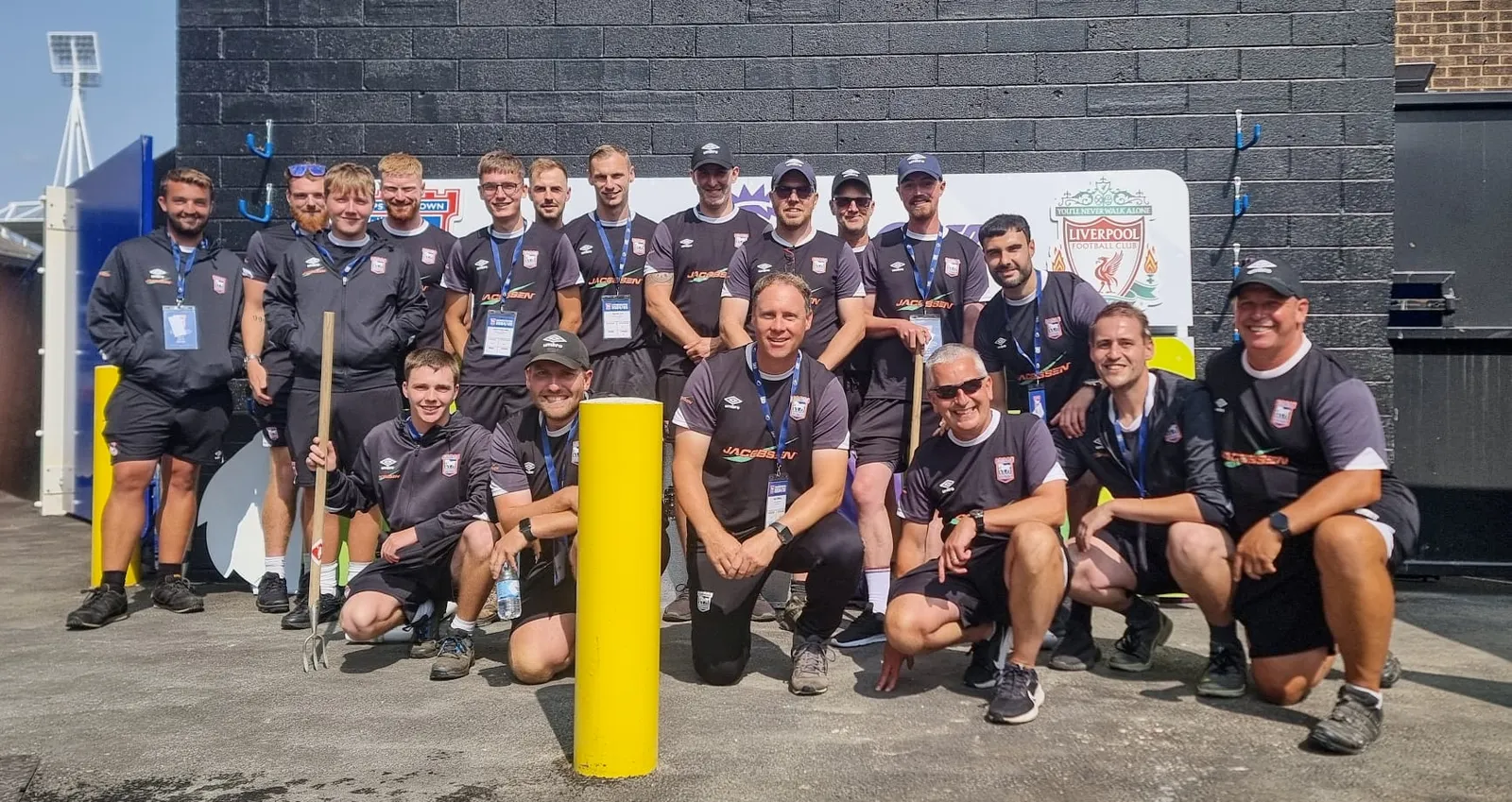
Behind the rivalries of professional football is an industry where sharing knowledge comes naturally. Connell says grounds managers exchange a great deal of information with one another about machinery, techniques, irrigation and pitch construction. “We’re in constant contact,” he says. “Ultimately, we all want top-quality pitches. That’s good for the players, the clubs and our industry.” At Ipswich, Connell now leads a team of sixteen people, responsible for ten full-size pitches and several smaller training areas. Apprenticeships also play an important role in bringing young people into the profession and keeping them in it.
The future: robots, AI and craftsmanship
Connell expects the profession to change significantly again over the next ten years. More robotics, automated data collection and AI-driven analysis will come into play. “It will tell us much more precisely which nutrients a pitch needs,” he predicts. “But I hope the skill of the grounds person doesn’t get diluted.”
Despite all the technology, Connell says grounds management is still primarily about people. His worst matchday nightmare? A sprinkler system suddenly switching on during a match. It may sound trivial, but that is precisely the reality of elite-level turf management: it is all about the details.
“The turf industry is a special world,” he concludes. “We could do more to show what goes on behind the scenes.”
Question about this story? Ask your question
Keep following this
Get an email when a new story is published. No account needed.
- SubjectGeneral