Electricity takes on Japanese knotweed
Text Kris VandekerckhoveImage eWeeding/Wimmersson
Royal Zoute Golf Club adopts innovative weed control machine
Pesticides often have worrying effects on both nature and human health. It is therefore no secret in the sector that extensive research is being carried out into sustainable and economically viable alternatives. Using electricity to control weeds is increasingly coming to the fore.
eWeeding offers a revolutionary approach to weed management using electricity, making it both efficient and environmentally friendly. Founded by Michel and Sonja Wimmers, the company is introducing an innovative method that points to a promising future for sustainable agriculture and landscape management. Michel Wimmers: “eWeeding grew out of a project I carried out at Bayer Cropscience. Electricity is essentially the answer to using plant protection products on sports fields and, by extension, in public spaces. This trend has been under way for more than ten years, of course. We want the public to come into contact with these products less often, for clear reasons demonstrated by numerous studies.”
The power of electrolysis
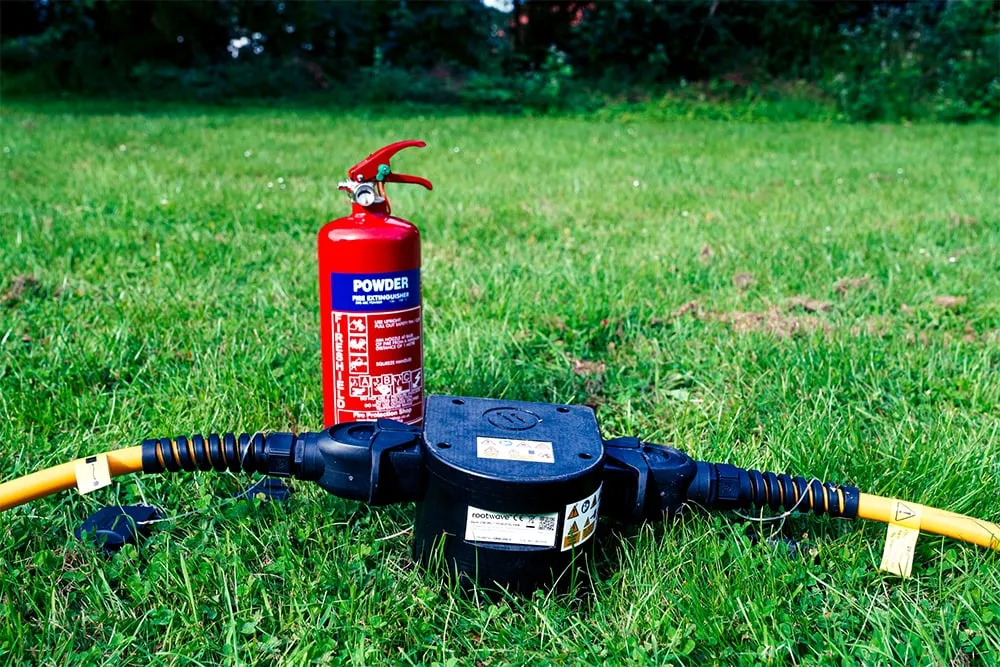
“The advantage of electricity? It ‘knows’ a plant’s root system,” Michel explains. “The electric current causes irreparable damage to the plant’s cells through electrolysis, resulting in the plant’s death. This process targets all parts of the plant, including the leaves, stems and roots, ensuring long-lasting effectiveness. So it affects not only the parts above ground, but also those below. And that is precisely what traditional chemical products did. The usual alternatives, such as brushing, burning, … only destroy everything above ground. As a result, after rain, it is back in full force within two to three weeks. We now have an effective alternative, but without the drawbacks of chemical compounds that remain in the soil and groundwater, and thus enter the food chain for people and animals.”
“For Bayer, it was too small to roll out worldwide, so we became independent to apply it in the Benelux. The Netherlands and Belgium are at the forefront when it comes to banning chemicals. Another advantage is that it is a relatively small region: you can drive from one end to the other in an hour or two, perhaps three.”
Pioneering safe and sustainable weed management
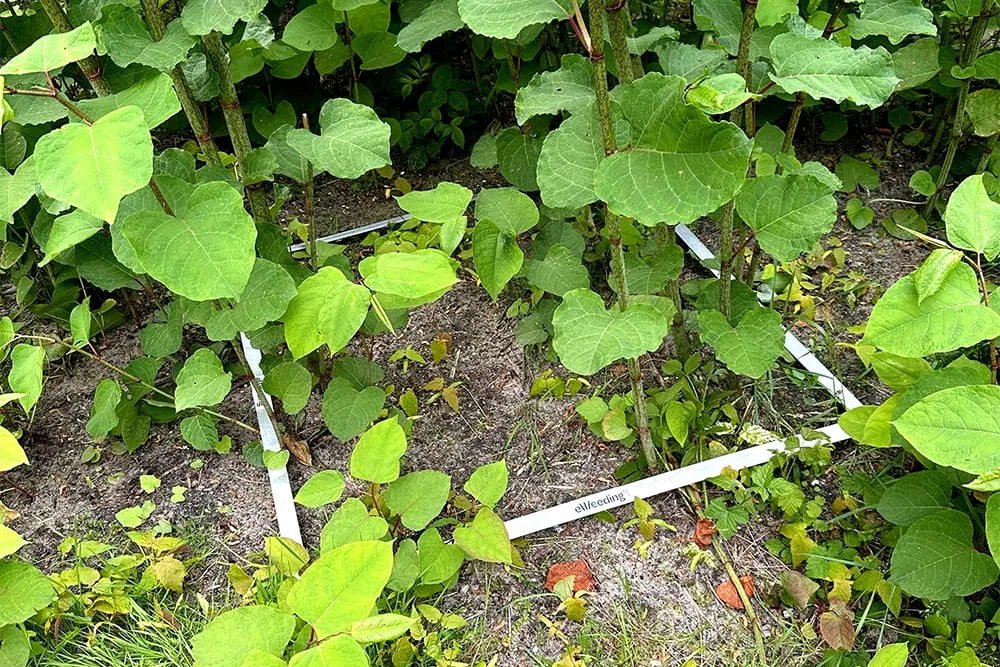
“We currently apply this technique mainly in two areas. The first is invasive alien species, such as giant hogweed and Japanese knotweed; the second is sustainable weed control on hard surfaces. At the outset, we focused on ensuring that the process could be carried out perfectly safely, as we work with high voltages of up to 5,000 V. We also looked at the effects on biodiversity and, finally, its long-term effectiveness. Once we had achieved more than satisfactory results on all three fronts, we began rolling it out.”
“First and foremost, our added value as a company is that we have all the necessary expertise in-house, as I helped set this up at Bayer myself back then. I use that expertise not only to bring machines and related services to market, but also to provide guidance and training. The aim, of course, is for as many people as possible to be able to use this approach,” Michel Wimmers concludes.

Innovative pilot project
A pilot project is currently being launched to control Japanese knotweed on the beautiful courses of the country’s finest and largest golf club, Royal Zoute Golf Club. Jos Vankriekelsvenne, director of Royal Zoute Golf Club: “I found out about eWeeding through an article in GreenPro, the well-known magazine for the green sector. We had signed up to the LIFE DUNIAS programme run by the Agency for Nature and Forests, which aims to restore the Flemish coastal dunes by removing invasive plants. That is how we came across Japanese knotweed, against which absolutely nothing works. The Agency for Nature and Forests suggested digging it all out. But when you see that these invasive plants are, among other places, growing near beautiful 80-year-old oak trees, that is absolutely not an option. After reading an online article by GreenPro, I sent eWeeding an email. Following discussions at the golf course and a plan of action drawn up on the basis of Wimmersson’s inspection, we decided to proceed with a three-year programme. We are naturally very keen to see the final results. What we have seen so far is certainly promising!”
Question about this story? Ask your question
Keep following this
Get an email when a new story is published. No account needed.
- ThemeLower-impact green space management
- SubjectConstruction & management