“Every detail has to be right on a golf course”
Text Elise NoyezImage DLF
New head greenkeeper brings Golfclub Broekpolder into balance
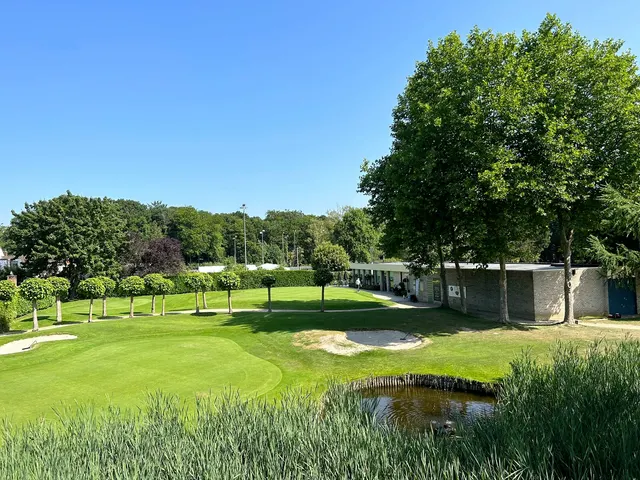
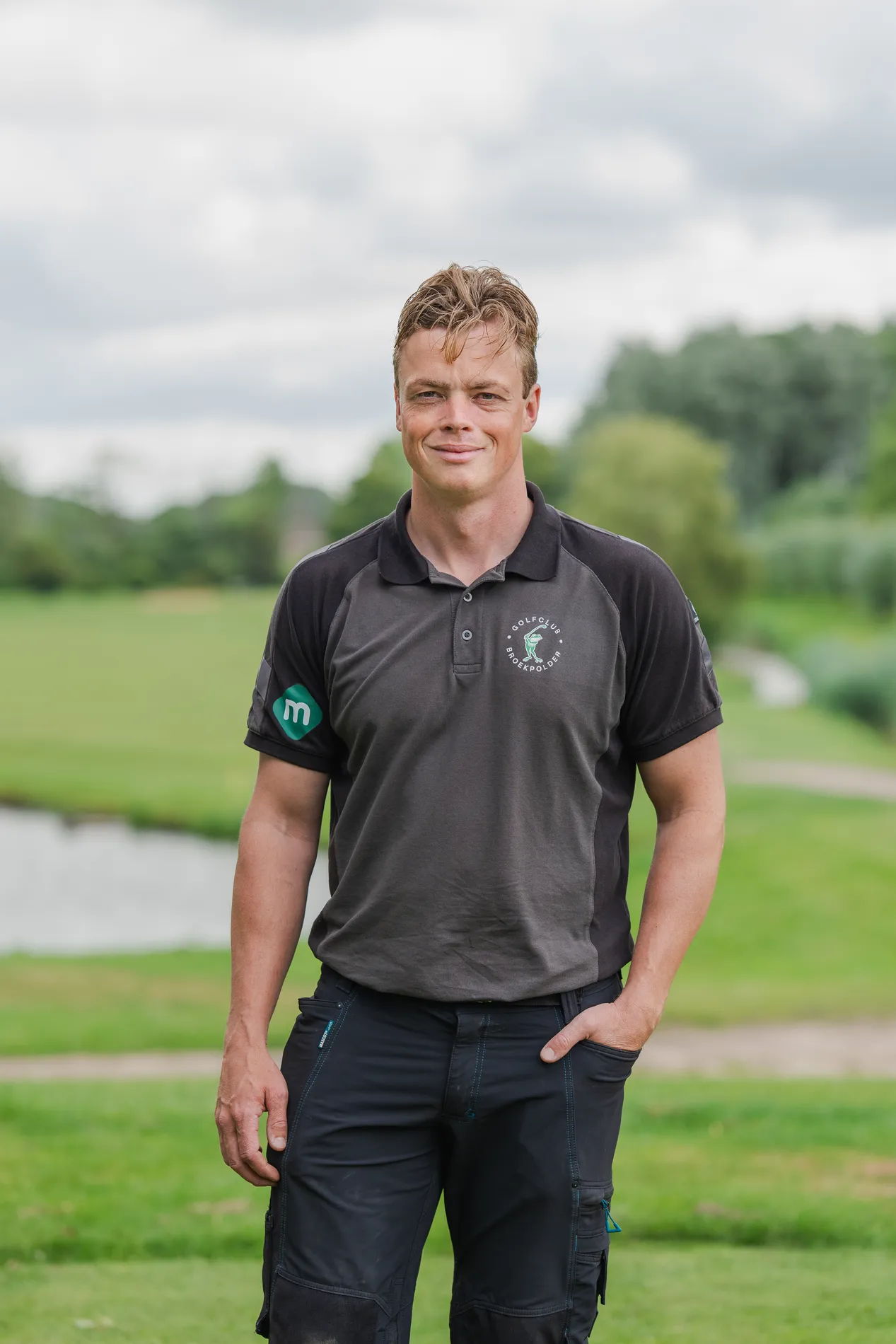
In February 2026, Golfclub Broekpolder in Vlaardingen appointed a new head greenkeeper, who was given a clear brief from the outset. Following the full renovation around three years ago, the club’s board is now dreaming of hosting a major tournament in 2030. “An ambition like that calls for attention to the smallest details,” says Milan den Dikken, “but above all, it takes time.” He is now working step by step, with the long term in mind, to get the club’s 18-hole course into top condition.
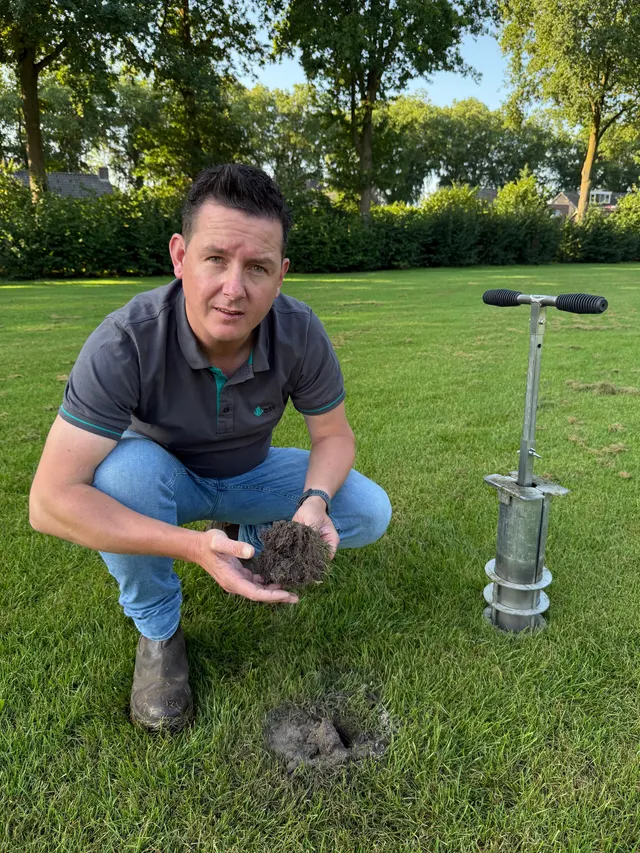
Before taking up his post as head greenkeeper at Golfclub Broekpolder in February, Milan den Dikken spent 15 years working as a greenkeeper for contractor AHA de Man. At Golfbaan Bentwoud, he first learnt the finer points of the trade under Kees IJsselstein, then went on to work as head greenkeeper for seven years, including at De Hoge Dijk in Amsterdam. In between, he also gained a year’s experience in the United States through The Ohio State University. “That taught me how to work towards a tournament like this,” he says. “Although we shouldn’t take their maintenance practices as a model. Everything gets sprayed flat, and in the end they simply paint the course green. That won’t happen here. It has to look tidy, but a dense, strong sward is our absolute top priority.”
A balanced grass composition
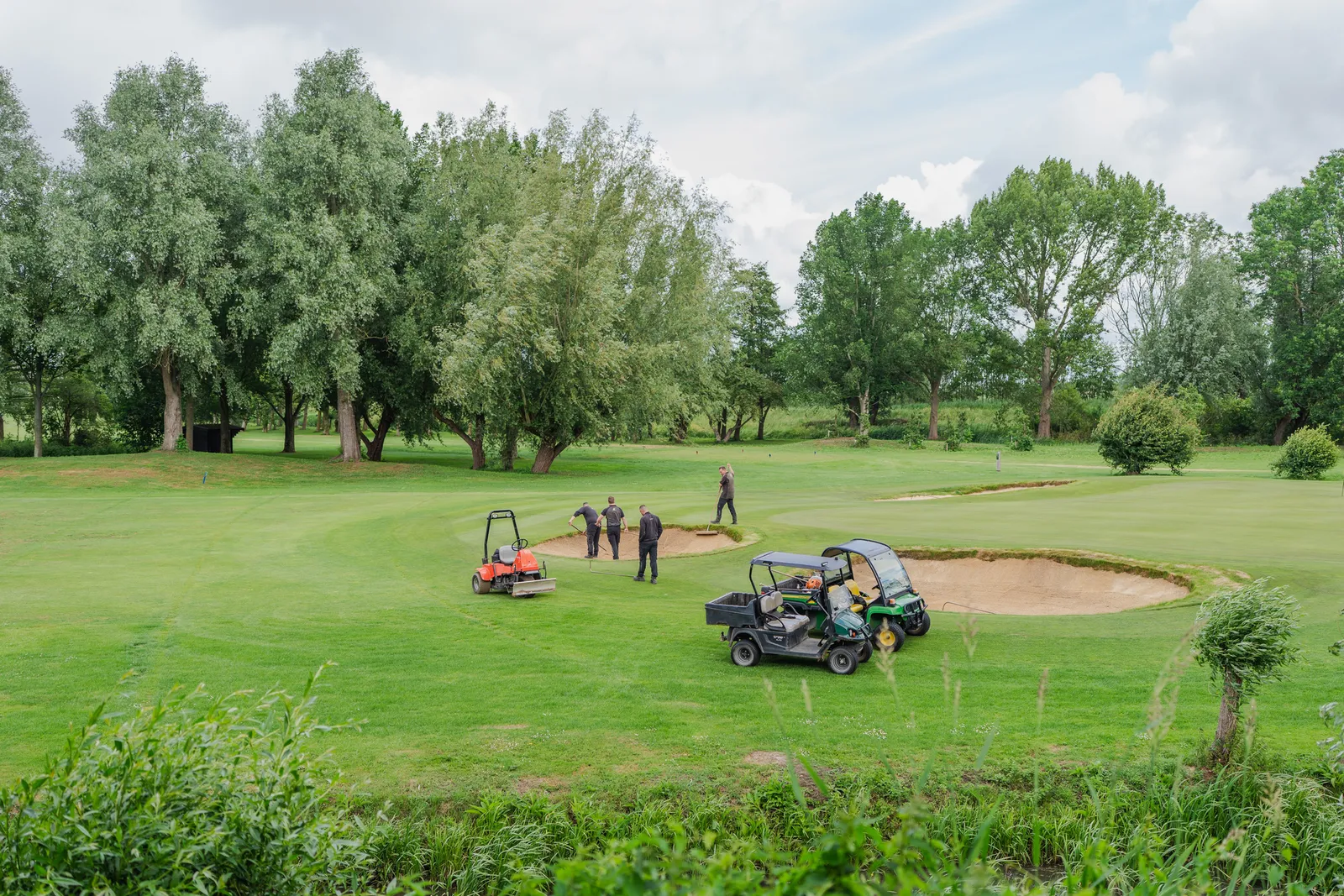
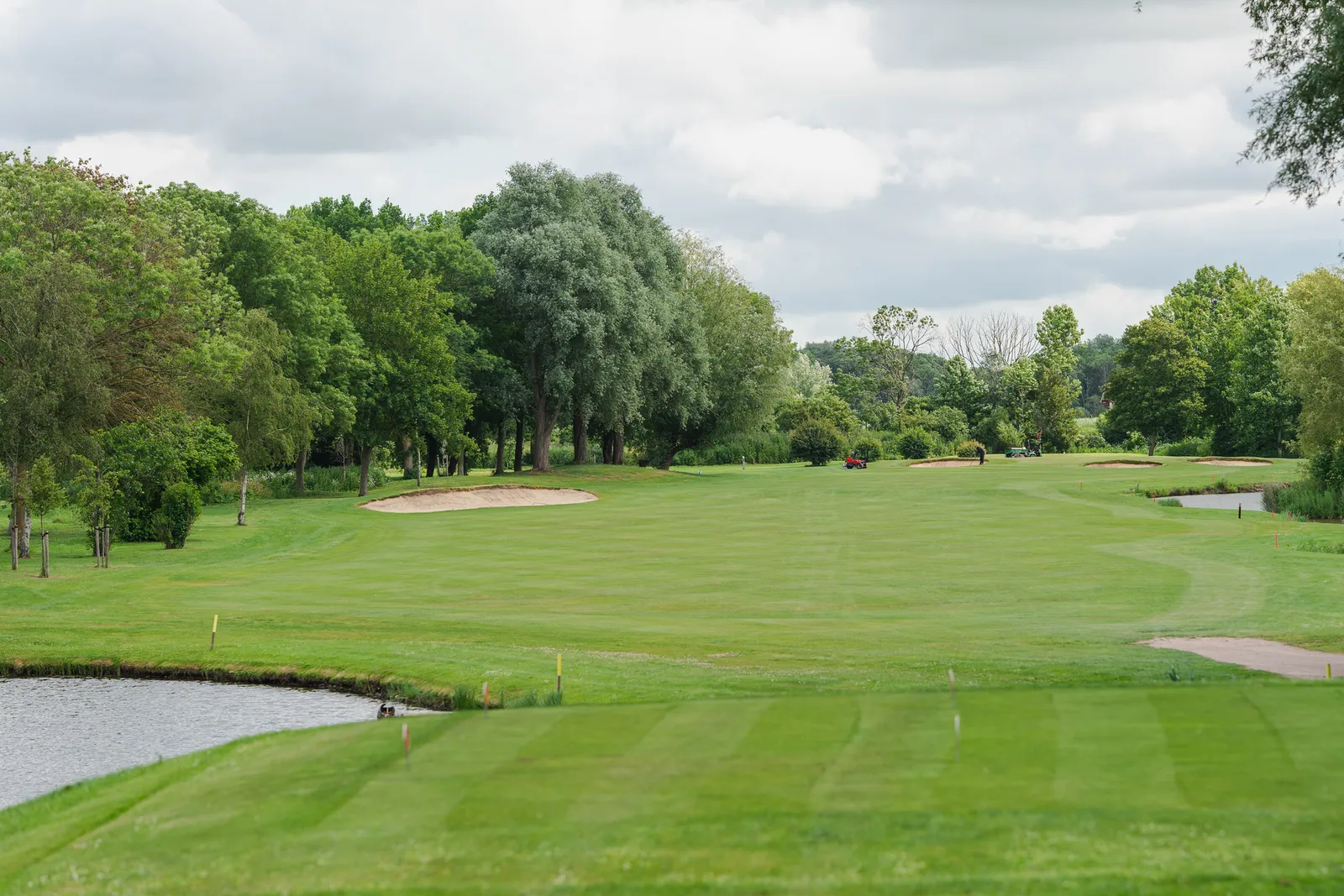
Between 2021 and 2023, Golfclub Broekpolder underwent a full renovation. Golf course architect Frank Pont created a new design, and all 18 holes were seeded with DLF grass seed mixtures. Den Dikken says: “The expectation at the time was apparently that a renovation would immediately produce a top-class course, but of course it doesn’t work like that. The course required a different approach because of changes to working practices and the lack of, for example, fairway irrigation. Both the greens and fairways had many bare patches, and the limited moisture control meant we had problems with moss, weeds and annual meadow-grass, among other things.”
To restore the grass composition, the focus is now first and foremost on overseeding with the right cultivars. On the greens, where annual meadow-grass pressure is a particular problem, den Dikken is working with DLF to find the right grass species. On the fairways, the focus will shift from smooth-stalked meadow-grass to perennial ryegrass. “We want a fine-leaved cultivar that is still strong enough to compete with what’s there today,” he explains. “We’ll wait a little longer before overseeding, though, until the fairway irrigation system is installed soon. It will allow us to keep the soil moist enough and apply plenty of sand.”
A gradual approach
Den Dikken takes a more natural approach to golf course maintenance. Less nitrogen is used, granular fertilisers are replaced with small applications of liquid fertiliser (foliar feeding), and spraying is as targeted as possible. From next year, the head greenkeeper hopes to use a spot sprayer for this, so that no unnecessary products are applied. To give the sward a chance to recover after several challenging years, the cutting height is temporarily set a little higher. “Our grass has been through a lot in recent years. Now we want to give it a chance to rest. Only once it has recovered will we lower the cutting height again.”
“Like many other young greenkeepers, Milan den Dikken realises that you can’t put everything right in a single year,” concludes Erik Dolstra, amenity grass specialist at DLF. “Grass needs time. You have to guide it gradually and find the right balance. This focus on the durability and health of the sward is characteristic of a new generation of greenkeepers and helps deliver golf courses of sustainable quality.”
Een zakelijke vraag aan DLF BV? Get in touch
Companies in this story

Keep following this
Get an email when a new story is published. No account needed.
- ThemeKeeping golf courses playable all year round
- SubjectSports grounds & golf courses
- CompanyDLF BV