Creeping bentgrass takes on dollar spot
Text Elise NoyezImage DLF
Evolving turfgrass diseases call for adapted selection and strategies
A healthy-looking turfgrass surface can no longer be taken for granted. Climate change, together with increasingly strict regulations on the use of pesticides and fungicides, is presenting greenkeepers with ever more challenges. Existing diseases are appearing more often, while new diseases are also spreading from other regions or sectors. This calls not only for adapted mechanical maintenance, but above all for the development and selection of grass species with greater disease tolerance.
Every year, grass seed breeder DLF circulates its so-called ‘disease survey’ among European greenkeepers and landscape professionals. The online questionnaire asks about the diseases and problems they have encountered on their turf over the past year. “The survey is an important pillar of our activities,” says product development manager Anne Mette Jensen. “It gives us insight into both our customers’ current and future challenges, allowing us to target the development of new grass varieties accordingly. The more responses we receive, the better we can ultimately help users.”
Rising number of diseases
The ‘disease survey’ was sent out for the fourth time last year. “Based on previous years, we can already identify a number of trends,” says Jensen. “It is clear that diseases are becoming more common in general. We are also seeing diseases that traditionally occurred mainly on golf courses now appearing on football pitches and even in private gardens. In addition, diseases typically associated with southern Europe are continuing to spread northwards. English football leagues are increasingly having to contend with gray leaf spot, while dollar spot is becoming a major challenge for golf clubs in Belgium and the Netherlands.”
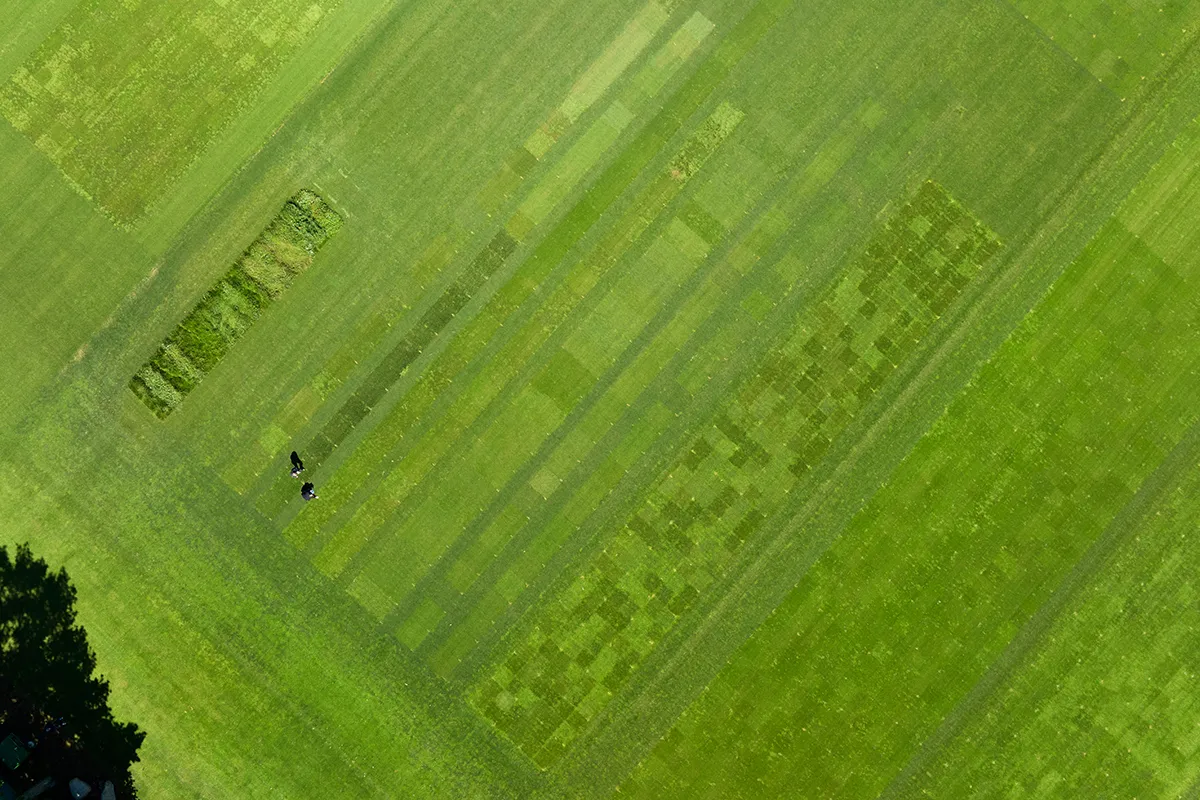
Dollar spot
Dollar spot is a foliar fungal disease characterised by small, brown, slightly sunken patches in the turf. It is caused by the fungus Scerotinia Homeocarpa, which thrives in warm, humid weather. “Dollar spot is a complex disease,” stresses Jensen. “It is not caused by a single fungus, but by a whole group of related types. In other words, the variant found in one location may be quite different from the one found elsewhere. That is why our research centre devotes considerable attention to building up knowledge of the disease. Only by truly understanding it can we offer solutions.”
DLF now employs several pathologists who investigate the genetic make-up of the isolates and map which types occur where. “These insights help us determine which grasses already have good tolerance and how we can develop even stronger varieties through breeding.”
Resistant on three levels
One grass variety that shows a high level of tolerance to dollar spot is Flagstick. “American research shows that this creeping bentgrass is highly tolerant at DNA level to many common isolates,” says Erik Dolstra, DLF specialist in recreational grasses. “What’s more, Flagstick also contributes indirectly to greater disease tolerance. Its rapid establishment helps suppress the much more susceptible annual meadow-grass, and it uses water very efficiently. This drought tolerance is of course a major asset in the context of climate change, but it is also a strategic element in disease control. Because the grass plant retains water so well, you can keep the surface layer nicely dry. This in turn gives fungi far less opportunity to develop. Taken together, this makes Flagstick, which is also characterised by high salt tolerance, an excellent choice for a healthy green.”
Een zakelijke vraag aan DLF BV? Get in touch
Companies in this story
Keep following this
Get an email when a new story is published. No account needed.
- ThemeKeeping turf strong and playable
- SubjectTurf management
- CompanyDLF BV