Building a global sports turf community in an era of intense stadium pressure
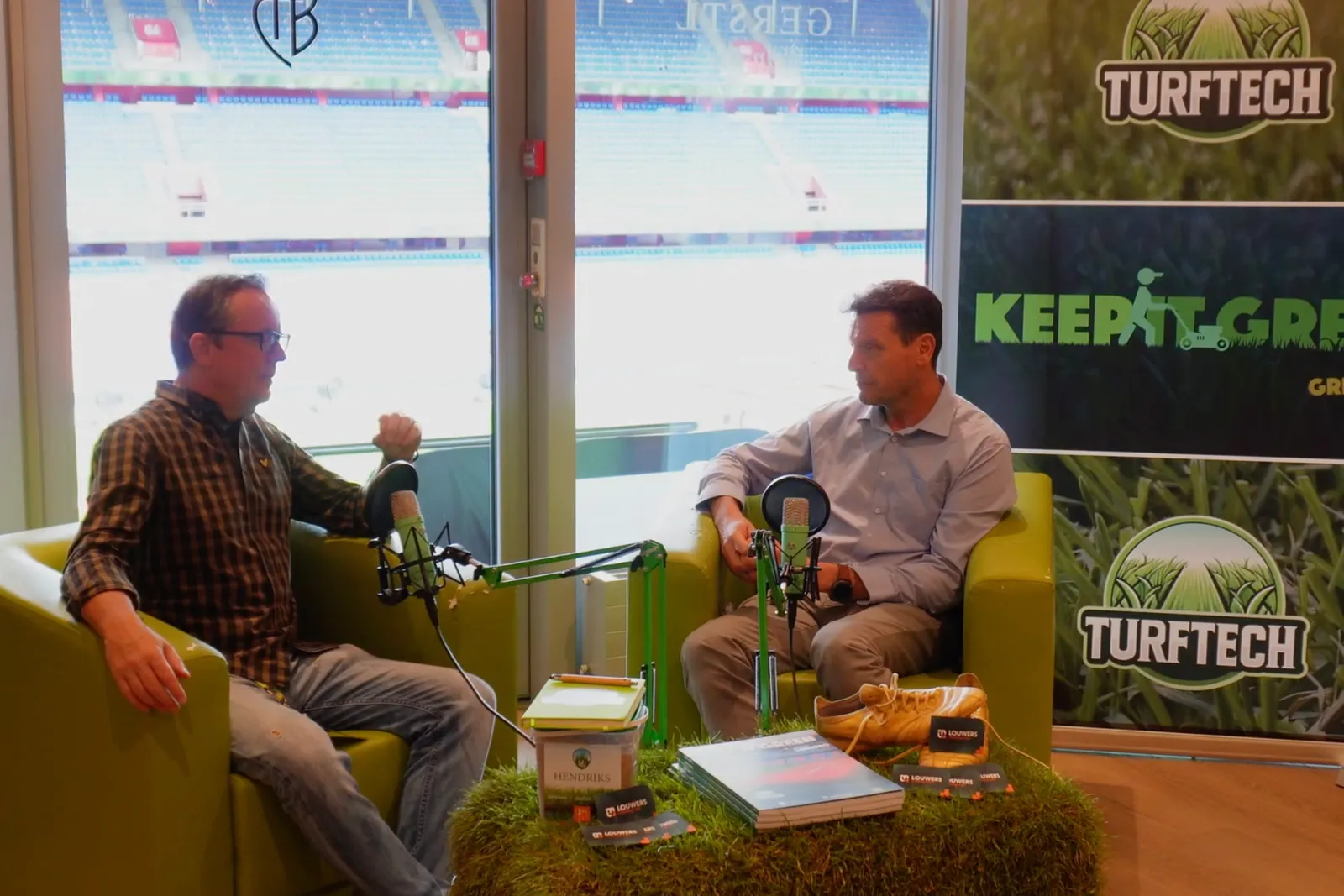
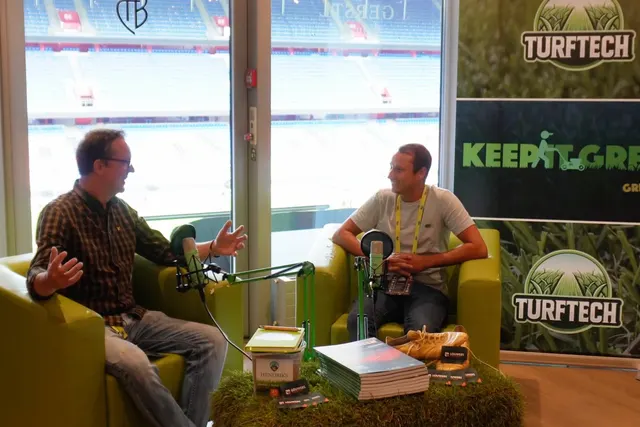
At TurfTech 2025 in Basel, we spoke to David Roberts, founder of the International Sports Turf Managers Association (ISTMA) and one of the most experienced professionals in international sports turf management.
Host: Kris Vandekerckhove
Guest: David Roberts, Founder ISTMA
Podcast: Keep It Green, TurfTech 2025
With a career spanning several decades at top clubs such as Southampton FC and Olympique de Marseille, David has worked in the UK and across Europe, witnessing first-hand the evolution of modern stadium operations. From traditional 12-week renovation periods to today’s one-week turnaround between concerts and league matches, he has seen the management of top-level multi-purpose stadiums become increasingly complex.
In this episode, we discuss:
- The origins and mission of ISTMA, and why sharing knowledge globally is essential to the future of the profession;
- Cultural differences between the UK and the European sports turf industry, particularly in communication and collaboration;
- The pressures of modern stadium management in multi-purpose venues with minimal recovery time;
- The rise of data-driven young professionals and how technology is changing sports turf management;
- The concept of the “accidental manager” and the leadership challenges faced by recently promoted grounds professionals;
- The importance of resilience, networking and industry-wide support systems.
An open conversation about mentoring, communication, work-life balance and our shared responsibility to strengthen the international sports turf sector and make it fit for the future.
Full transcript
Alle hoofdstukken (12)
- David Roberts on his role
- How ISTMA came about
- The younger generation and the accidental manager
- Modern stadiums as multi-purpose venues
- Weather, quality and expectations
- Problem-solving around the world
- The data-driven younger generation
- The pitch as your baby
- The future and ISTMA
- First stadium experience and support from the industry
- Knowledge-sharing versus competition
- Reflections on the event
David Roberts on his role
David Roberts I’m just a groundsman who’s been lucky enough to work at some incredible venues with great teams.
How ISTMA came about
Kris Vandekerckhove Yes, yes. I’d like to talk a bit about ISTMA. Yes, ISTMA, or IS(T)MA, however you want to pronounce it. It was, oh yes, that’s what we call it, that’s actually easier. Yes, OK.
David Roberts It came out of a conversation a few years ago. That conversation was with Dean Gilasbey. Dean was a groundsman in the UK and worked abroad as a consultant. I’d just left Liverpool and was living in Portugal, doing some consultancy and advisory work. We were simply comparing our experiences of working outside the UK, to see what it was like.
David Roberts One of the things is that we’re really quite spoilt in the UK because we have so many good shows. The GMA represents grounds managers and BIGGA represents greenkeepers, and lots of people get involved and share knowledge and experience. That was probably one of the biggest differences we noticed outside the UK.
David Roberts We talked about whether we could do something. We both felt that we’d been in the industry for a long time and had got a lot out of it. We wanted to give something back. How could we do that? I don’t want to recreate the GMA. I wanted to do something that belonged to us, not us personally, but all of us: all grounds managers, everyone in sports turf, something built from the ground up. People need to be involved.
David Roberts The main thing we noticed was the level of communication. Let me give you an example. In the UK, if I had a problem when I was working at Southampton Football Club, I could pick up the phone and call Steve Braddock, who was at Arsenal Football Club at the time. Steve, I’ve got a problem with the pitch. I had something similar last year. This is what I did. Give it a try. Or I’d speak to someone else: I want to try this product, I think you’ve used it, what do you think? Yes, yes, we use it at this rate and at this time of year.
David Roberts So there was a huge exchange of knowledge and experience, helping each other, camaraderie. It happens in Europe too, but very slowly. We thought it would be good to encourage that and find a way for people to communicate, share ideas and knowledge, and support one another. That’s the idea behind ISTMA.
David Roberts International Sports Turf Managers Association.
Read the full transcriptCollapse transcriptnog 10 hoofdstukken
The younger generation and the accidental manager
Kris Vandekerckhove I think it could be ideal for the younger generation, so all the knowledge you and your staff have built up can be shared with younger people. The people I spoke to at Manchester City are 25 or 26.
David Roberts They can’t have the experience or knowledge you have yet. I often use the term accidental manager. I’ve seen it so many times in the UK and other countries: if you’re really good as a groundsman and produce a good pitch to a decent standard, you get promoted to manager. But often you don’t get the support you need. And suddenly you go from being someone who’s good at pitch maintenance to someone who has to deal with board members, head coaches and medical teams. That level of communication can create enormous pressure.
David Roberts Some people then leave the industry. And when they leave, the assistant steps up and the learning process starts all over again. That’s why it’s important to support people and help them with the problems they face.
Modern stadiums as multi-purpose venues
Kris Vandekerckhove Impressive. And you also talked about communicating with different levels of stakeholders.
David Roberts Yes.
Kris Vandekerckhove That’s different today. And it’s no longer just about football on the main pitches.
David Roberts Many stadiums today are multi-venue, multi-purpose facilities. You have to think completely differently. When I started at Southampton Football Club, we had 12 weeks in the summer to renovate, seed and get the pitch strong enough for the season. When I worked at Olympique de Marseille, as soon as the season ended, the pitch came out and the concert flooring went down. The first concert was the following week, then one concert after another all summer. After the last concert, you have one week to lay new turf, stitch it in, mark it out and play the first match. That change from 12 weeks to one week is frightening.
Weather, quality and expectations
Kris Vandekerckhove Yes, that’s frightening. It’s a very tight window, and you have to manage not only the pitch but also the weather.
David Roberts If it pours with rain that week or it’s 38 degrees. It’s a real challenge, and you lose some control over the quality of the material coming in, whereas with seeding you can have more control over that quality. And you also have to manage expectations, because teams expect a perfect pitch. And if it’s not 100 per cent perfect, but 95 per cent, and they don’t play well, then
Kris Vandekerckhove It’s your fault.
David Roberts Yes, yes.
Problem-solving around the world
Kris Vandekerckhove What’s one thing you’ve taken away from working around the world that you still use today?
David Roberts It’s difficult to name just one thing. What I really value is how good groundsmen and sports turf managers are at problem-solving. Wherever I go in the world, I ask: what’s your biggest challenge? Then they explain how they tackle it. It’s impressive.
David Roberts: It could be the climate. It could be the budget. It could be pests. Or diseases. It could be a lack of renovation time or insufficient support. There are so many factors. We’re very resilient as sports turf managers. We have to be. What I’ve really taken away is just how strong and resilient our industry is.
The data-driven younger generation
Kris Vandekerckhove Am I wrong to think that the younger generation is finding its way in the profession? It’s a 24/7 job. Very stressful.
David Roberts I think the younger generation’s strength lies in working with data. Traditional groundsmen relied more on experience and observation. Younger professionals work much more with data.
Kris Vandekerckhove I spoke to someone at the Arena, 26 or 27 years old. He’s installed cameras to monitor the grass. And I’m serious. He watches it at home. He wants to know everything. He’s obsessed with the grass and the soil. And he’s only 26 or 27. That’s fantastic.
The pitch as your baby
David Roberts The danger in our industry is that the pitch becomes your master. We call the pitch our baby. How’s the baby doing? It almost becomes more important than your own family. Finding a good work-life balance is very difficult. You have to be able to switch off and make time for your partner and children. Often your baby, the pitch, becomes your priority. It doesn’t look good, it needs attention, so you go back to work.
Kris Vandekerckhove You have to do this. That’s what you told me. I think that’s so passionate.
David Roberts They’re all like that. Very, very passionate about their baby.
The future and ISTMA
David Roberts What does the future hold? I don’t know. I turned 60 this year, and at a time like that you look back and ahead. I really want ISTMA to work. I want people to contribute their ideas. It mustn’t be David Roberts’ idea, but an idea shared by all groundsmen. If there are challenges that aren’t being addressed, let’s talk to WSPA. Let’s look for solutions together. And if there’s a problem I don’t know about, let people come to us so we can solve it together.
Kris Vandekerckhove Are you that approachable?
David Roberts I think so. I share my number and email address. I can’t solve everything, but we can talk about it.
Kris Vandekerckhove That also brings stress.
David Roberts Yes. But it’s important.
First stadium experience and support from the industry
David Roberts When I started in 1994, I worked for a contractor maintaining school pitches and pitches for the Ministry of Defence. I’d never worked in a stadium. My first job at Southampton was straight in as the sole groundsman for a match against Arsenal. I’d never prepared a stadium pitch. The pressure was enormous. You have to deliver straight away. I called Steve Braddock at Arsenal. I didn’t know him. He said: come to Highbury, I’ll show you how we do it. That feeling of being part of a team is important. On your own on a pitch, you can feel very isolated. Sharing problems helps you find solutions. It’s difficult on your own.
Knowledge-sharing versus competition
Kris Vandekerckhove There’s no competition between groundsmen in the UK.
David Roberts I’ve seen that on my travels. In many countries, clubs use contractors. They have their own way of working and don’t want to share it with competitors. That creates a barrier to communication. In the UK, most grounds teams work directly for the club. Golf is different: members can move to another club, so competition is greater there. In football, the fans keep coming. That means we can communicate openly. Pitches in France, Germany and Spain have improved significantly. The UK has made rapid progress through communication and knowledge-sharing.
Reflections on the event
Kris Vandekerckhove What do you take away from an event like this?
David Roberts You get together with like-minded people. You network, share experiences and meet old and new friends. You go home with a smile. Florian has done a fantastic job.
Kris Vandekerckhove That’s right. Will you see him in the UK next year?
David Roberts Certainly. Absolutely.
Kris Vandekerckhove I’d encourage everyone to come to TurfTech. Thank you, David.
David Roberts It’s been a pleasure speaking with you. Thank you for taking the time.
Keep following this
Get an email when a new story is published. No account needed.
- ThemeSports pitches under heavy use
- SubjectTurfTech