Golf and nature: an opportunity!
Text and images Golf Vlaanderen
On misconceptions and prejudices
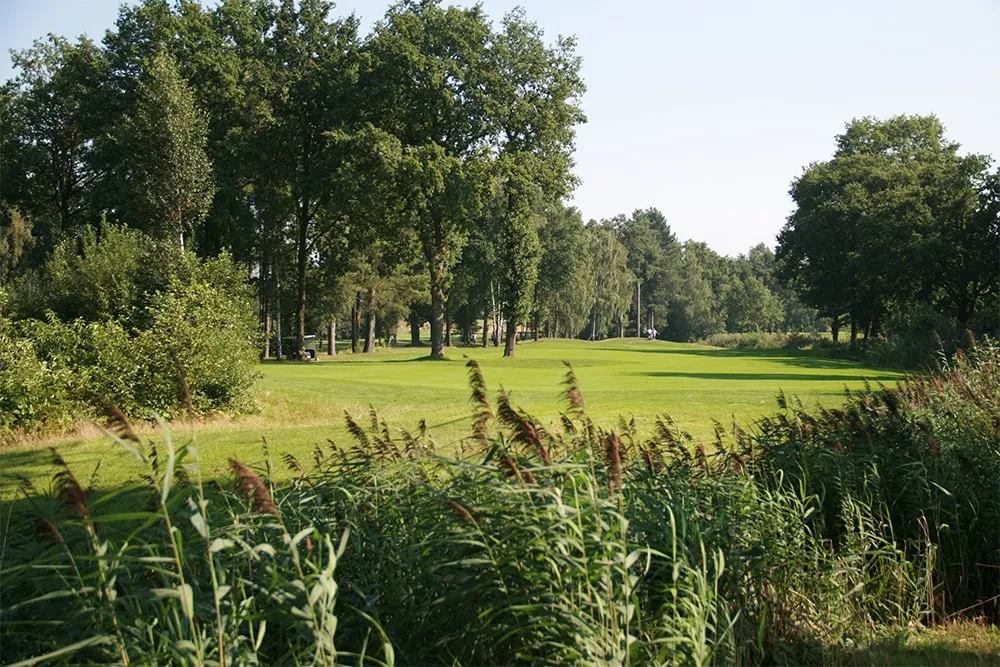
Golf and nature are definitely on the same wavelength. It may not seem that way to some at first (or yet), but we are happy to show that nature conservation and golf go hand in hand.
For a long time, the mistaken belief prevailed that golf courses would harm nature, alongside the idea that golf is a Sunday pastime that few can afford. These are mainly misconceptions based on prejudice and misinformation.
Golf is more popular than ever. Flanders now has more than 50,000 golfers, all members of one of the 55 golf clubs in Flanders and Brussels. They are spread across 10 golf schools (15 ha on average each), 18 9-hole golf courses (20 to 30 ha on average each), and 27 golf courses with 18 or more holes (50 to 70 ha on average each).
Tees, greens, fairways, roughs and ‘out-of-play areas’
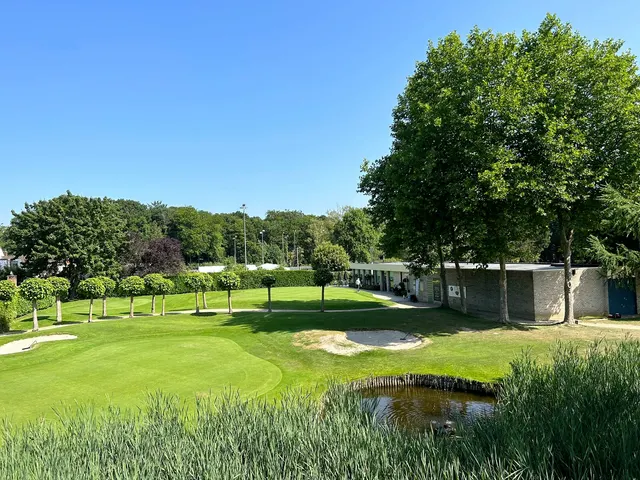
While the US and its meticulously maintained courses were the focus in the 1970s and 1980s, today we have moved towards more natural courses, such as those that first developed in Scotland. These courses have more lightly played areas and ‘out-of-play areas’, which automatically offer greater opportunities for nature to flourish. On golf courses in Belgium, which average 60 ha, out-of-play areas typically account for half the land. The rest consists of areas used for play: teeing areas, greens and fairways. Out-of-play areas and roughs in particular offer great potential for nature and landscape management.
In harmony with nature for over 100 years
Golf has been taking a responsible approach to nature and open space for more than a hundred years. The various rare vegetation types found on golf courses are one example of this. For people, the presence of open green spaces helps relieve stress and promote a sense of calm. Playing a round in the fresh air and enjoying peaceful surroundings rich in flora and fauna is one of the best remedies for the hectic pace of everyday life.
But there is more. Golf courses can work perfectly well as buffer zones or ecological corridors between residential areas and agricultural or natural areas. Often, unattractive transition areas are given a new purpose in this way, allowing a patch of ‘new nature’ to develop. For example, former landfill sites have been replaced by open green space, showing that sound spatial planning and the ecological value of a site can create a win-win situation.
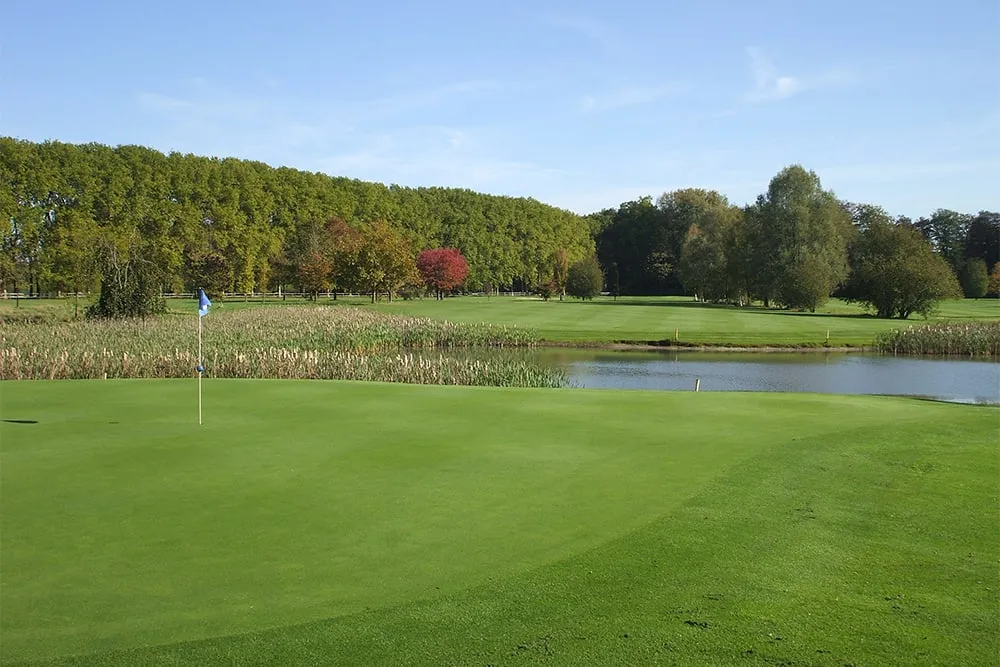
Maintaining the areas used for play on a golf course involves several considerations: water, fertilisation, the use of plant protection products and mowing regimes. Integrated management is essential to the successful management of a golf course, with the aim of achieving optimal soil conditions. The sport also requires intensive care of greens and tees in some places to meet specific playing requirements, such as grass species and mowing height, so that, for example, ball speed is not adversely affected.
The large proportion of land outside the playing areas creates many opportunities for nature development and landscape management. Golf courses are home not only to many plant and animal species, but also to a significant diversity of land uses, including grassland, woodland, hedges and ponds.
Natural features are important reference points for golfers and give the course a clear structure. They also provide the foundations for flora and fauna. Promoting native species in suitable locations can further enhance the natural value of a course. Finally, they naturally add to the overall experience for golfers. This is where golf and nature truly come together!
Scientific research, guidance, education and monitoring have helped minimise the environmental impact of golf course maintenance. Greens and tees already occupy the smallest areas of a golf course (less than 1 ha). By sowing the latest grass varieties and following a specific maintenance programme carried out by greenkeepers, the need to use products is kept to an absolute minimum. Compared with average figures for agriculture in Belgium, a golf course uses 7 times less nitrate and 4 times less phosphate fertiliser per unit of area.
This is the result of a policy that combines the most modern resources with high-quality training for course staff. Professionalism and efficiency are the watchwords.
Conclusion: Nature and golf for everyone!
Golf has evolved into a healthy sport played in nature. During a round of around 18 holes, golfers walk more than 8 kilometres and have to concentrate for 4 hours to play the ball towards the hole accurately, ideally in as few strokes as possible.
Every golfer can do their bit and help greenkeepers in their fantastic work to keep providing us with a beautiful golf course.
Videos: Together, we look after the course!
Under the motto ‘together, we look after the course’, a small effort by golfers can make a big difference to the golf club, fellow players and nature!
We have created a fun poster and some videos about:
• How do you repair a pitch mark correctly?
• How do I replace a divot correctly?
• Where can I drive my buggy?
• What should I do when greenkeepers are working on the course?
• How do I rake a bunker correctly?
• When should I shout fore?
https://www.golfvlaanderen.be/samen-zorgen-we-voor-de-baan
Question about this story? Ask your question
Keep following this
Get an email when a new story is published. No account needed.
- ThemeKeeping golf courses playable all year round
- SubjectSports grounds & golf courses