Techniques for preparing a site for seeding
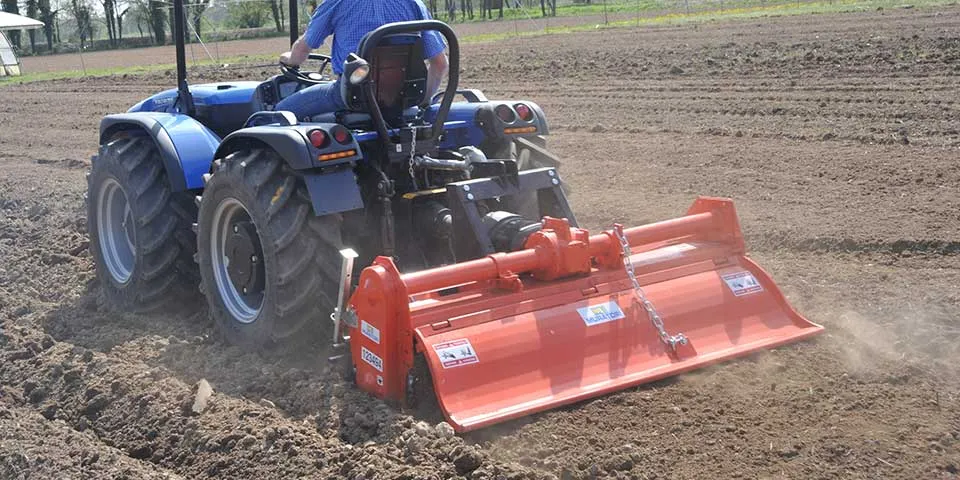
There are several ways to prepare a site for seeding. The method used depends on the type of ground, access to the site and the base machine available. A site can be prepared for seeding using a traditional rotary tiller and power harrow, but nowadays a reverse-rotation rotary tiller is used much more often. Below, you can find the advantages and/or disadvantages of both methods.
Rotary tilling
A rotary tiller consists of a frame with a horizontally mounted rotor fitted with curved or angled blades. The rotor turns in the same direction as the wheels of the base machine, either a single-axle tractor or a tractor. The rotating blades break the soil into smaller clods. The slower the forward speed, the finer the soil is broken up. The number of blades fitted to the rotor also affects the finish. Rotary tilling introduces extra air into the soil, increasing its volume and improving its structure, which in turn makes it more fertile. As the rotor turns in the same direction as the wheels, a rotary tiller encounters less resistance and therefore requires less power from the base machine.
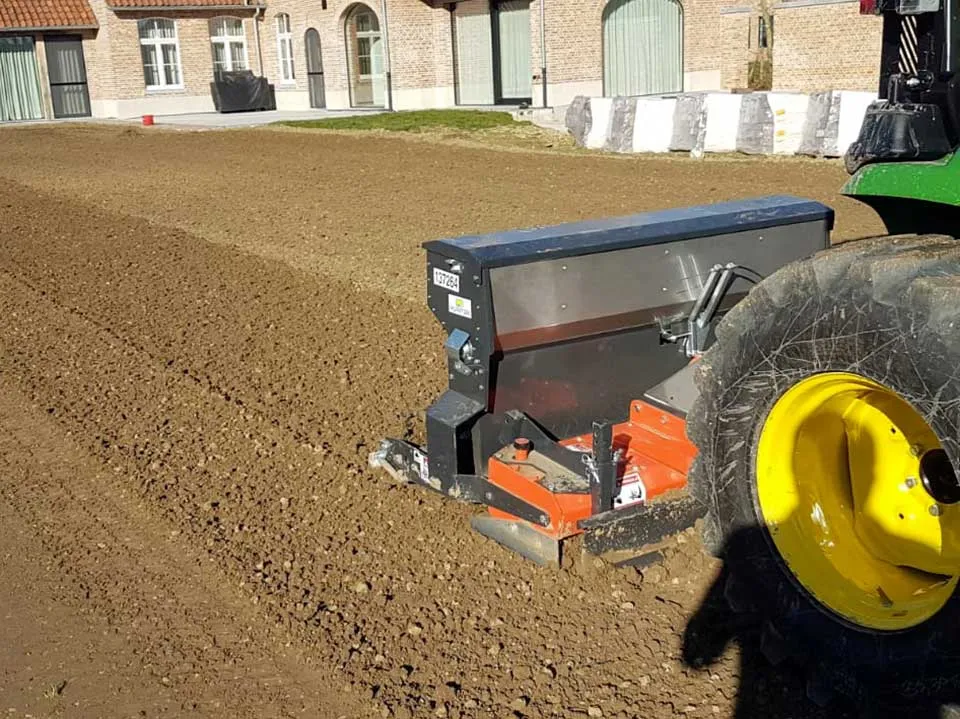
After rotary tilling, the site is not yet ready for seeding. Clods are still left behind, so at least one more pass with a power harrow is needed before sowing.
Preparing a seedbed with a power harrow
After rotary tilling, clods of earth are still too large for immediate sowing. A power harrow can solve this problem. Its angled blades rotate horizontally, breaking up the remaining large clods. A power harrow is also fitted with a levelling board and a press roller to level the ground behind it.
A mesh roller is usually used before sowing, with a spiral inside to push soil outwards. Other options include a cage roller or a smooth roller. The power harrow can be fitted with a seed drill, allowing the ground to be levelled and sown in a single pass.
The perfect seedbed with a reverse-rotation rotary tiller
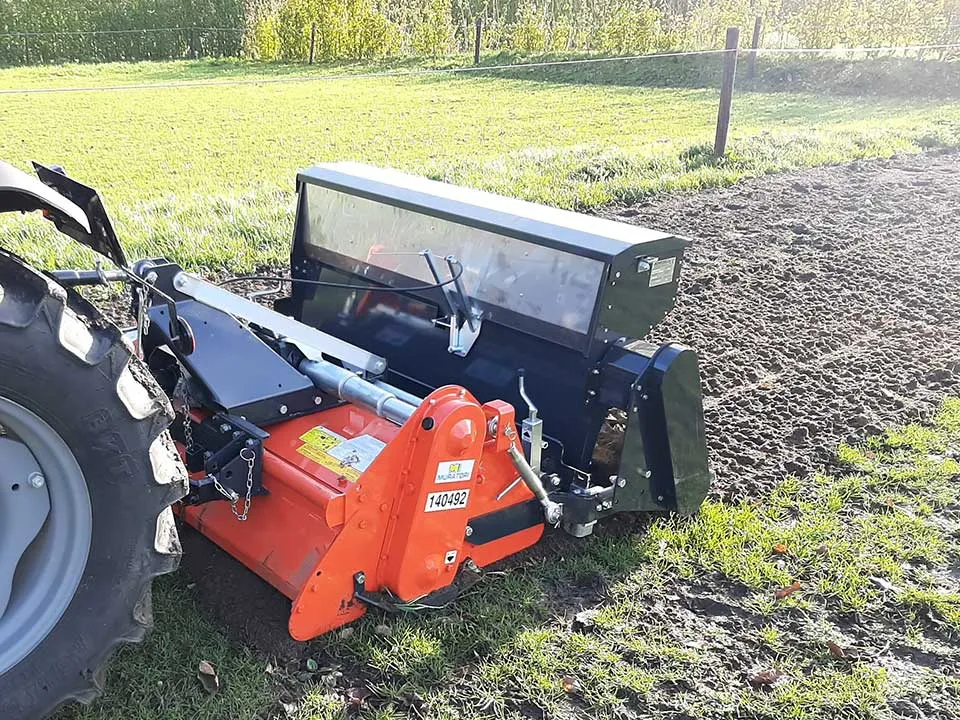
The difference between a rotary tiller and a reverse-rotation rotary tiller lies in the direction in which the rotor turns. On a standard rotary tiller, it turns in the same direction as the tractor is travelling, whereas the rotor on a reverse-rotation rotary tiller turns in the opposite direction. A reverse-rotation rotary tiller is always fitted with a levelling board and press roller. The opposite rotation buries larger clods and stones beneath a layer of finely broken soil, creating a perfectly even seedbed. A reverse-rotation rotary tiller can be fitted with a seed drill, so the soil can be broken up, levelled and sown in a single pass. As its rotor turns in the opposite direction, a reverse-rotation rotary tiller requires more power from a tractor than a standard rotary tiller. It also operates at a lower working speed than a standard rotary tiller.
Pivabo has the solution
Pivabo, the Belgian importer of brands including Kersten and Muratori, offers a complete range of professional soil-working equipment. Pivabo keeps an extensive stock of machines available for delivery within 48 hours. The Pivabo website makes it easy to find the machine you need. Pivabo also has a number of technical advisers who help customers find the right machine for the job.
Question about this story? Ask your question
Companies in this story
Keep following this
Get an email when a new story is published. No account needed.
- SubjectProduct information
- CompanyPivabo