Plastic track mats prevent damage to the ground
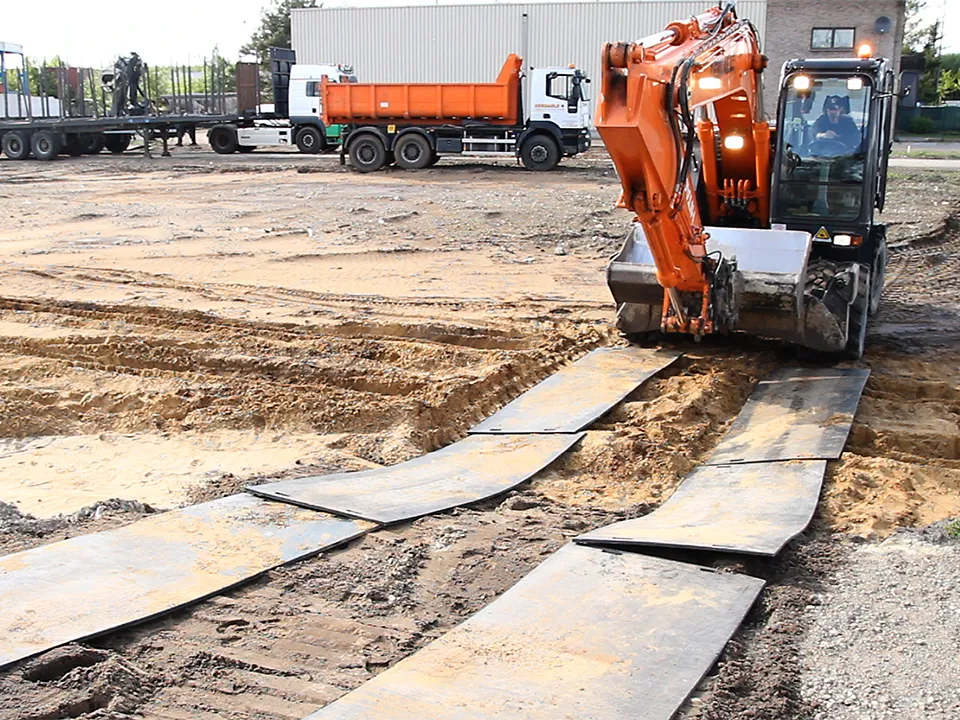
‘Easy to lay and move, without extra labour or equipment’
As a garden contractor, you are expected to enhance your customers’ outdoor spaces. But if you are not careful, the equipment you use to do so, particularly tracked loaders and small excavators, can have precisely the opposite effect. Marks in the grass, sunken driveways or piles of churned-up earth on bends and turns: these are unfortunate consequences that can easily be avoided.
Based in Lommel, Induplates, a division of plastics specialist Indupack, has been manufacturing and selling plastic track mats for the temporary surfacing of site roads for more than fifteen years. “Garden contractors make widespread use of this solution,” says managing director Vincent Van Baelen, “primarily to protect existing surfaces. After all, how often are you brought in to carry out just a few minor alterations somewhere at the back of a garden? Your customer would certainly not appreciate you damaging their perfectly laid lawn. But track mats also give you the traction you need. You can manoeuvre more easily without causing damage, and on waterlogged ground there is far less risk of getting bogged down.”
Weight matters
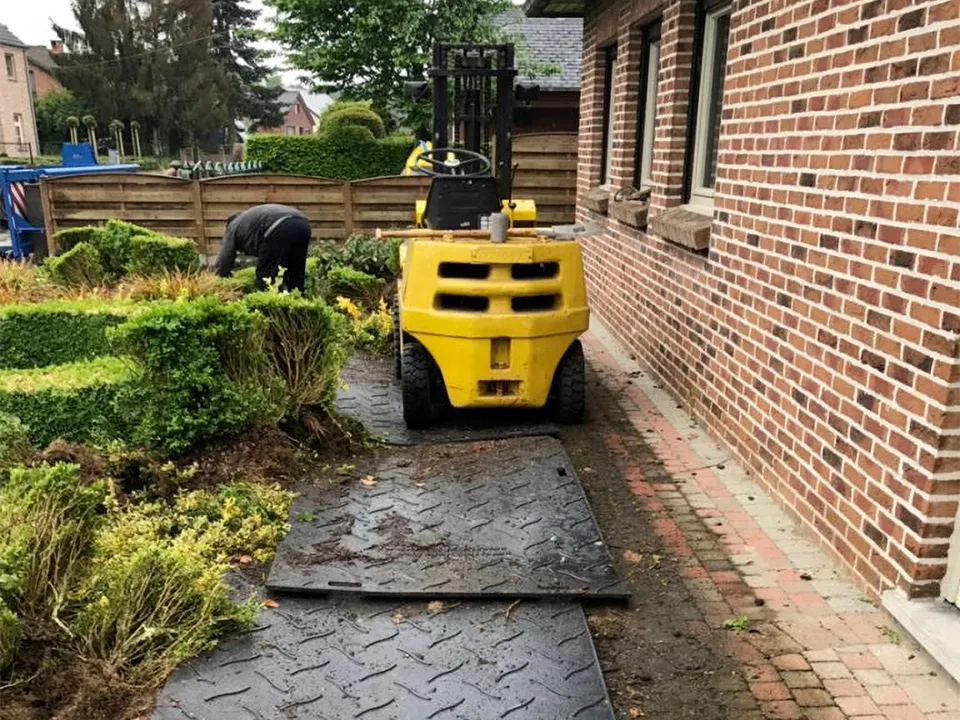
Garden landscaping jobs rarely last very long, so in most cases track mats remain in one place for only a few days. They also often need to be laid on relatively narrow paths or in hard-to-reach places. “Weight and ergonomics are therefore important factors when choosing a track mat. You want to be able to lay and move them quickly and easily, without needing extra labour or equipment.”
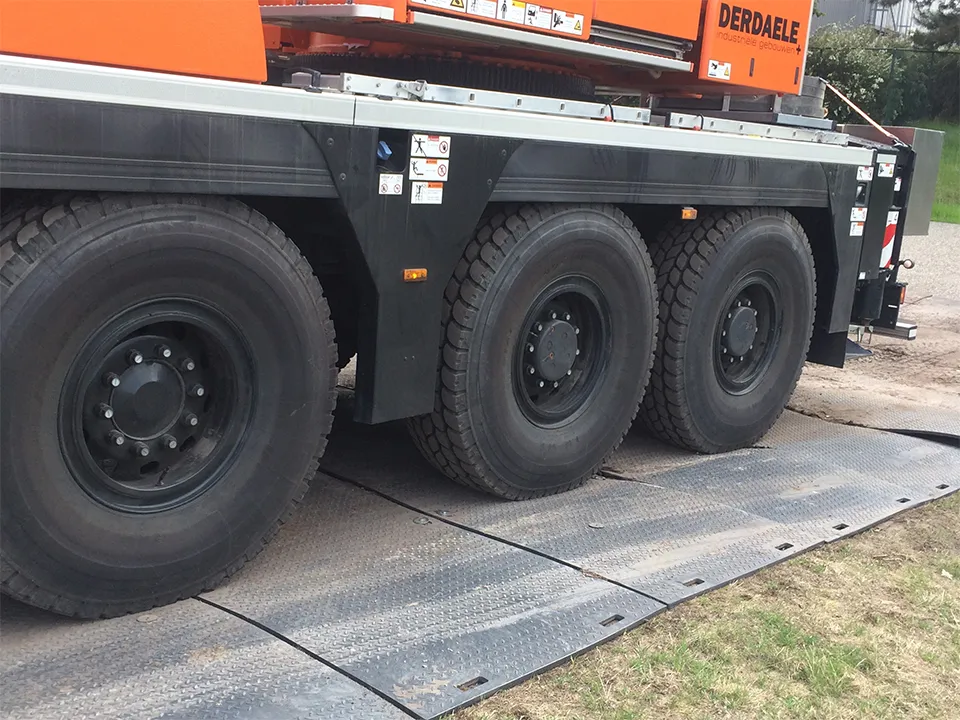
In this respect, plastic has a clear advantage over the more industrial steel track mats. “The 750 x 3,000 x 15 millimetre plastic track mat, with a handle at each end, weighing 34 kilograms and with a load capacity of 15 tonnes, is probably the most popular model in our range among garden contractors, although we also have lighter models for lower loads. If you are dealing with particularly boggy ground, you can simply lay two of the same mats on top of each other. This gives you extra load capacity while the individual mats remain easy to handle.”
Built to take a knock
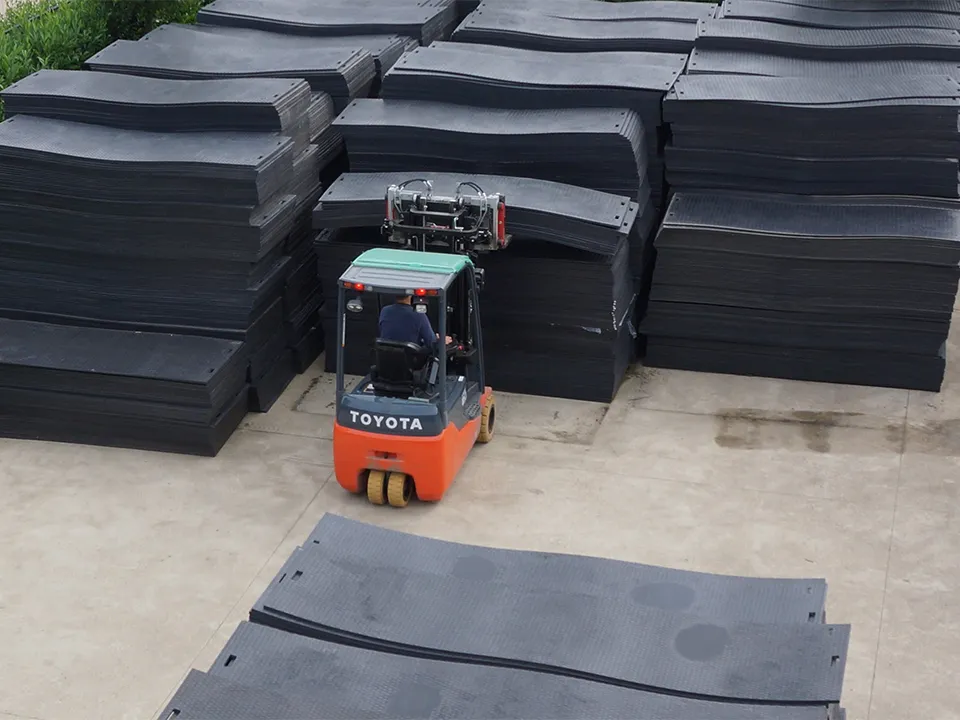
A track mat that has to bear heavy traffic every day, is dragged from one location to another and spends most of its time outdoors needs to be built to take a knock. “People sometimes use wooden beams or sheet material instead of track mats,” says Van Baelen. “That works once, but as soon as the wood gets wet, it starts to break. You do not have that risk with plastic track mats. They do not rot and are also fully resistant to frost and UV rays.”
Thanks to their flexibility, plastic track mats adapt neatly to the ground and the load, without leaving a permanent impression afterwards. “The mat simply returns to its original flat shape. What is more, we subject every mat to extensive testing at our factory, which means we can confidently offer a two-year guarantee against cracking and breakage. To prevent theft or disputes on site, we also give customers the option of having their name or company name engraved on the mats.”
Gentle on the ground and the environment
Another benefit of the mats’ flexibility is that they are gentle on hard surfaces too. “If you lay a steel track mat on a surface such as paving blocks or cobbles, its sharp edges can leave scratches. Rust can also cause stains. Again, that is something your customer will not thank you for.”
Induplates track mats are made from 100% recycled polyethylene. “When they reach the end of their service life, they can be fully recycled again. In other words, no new raw materials are used, and we do not add to the ever-growing mountain of waste. Quite the opposite!”
Question about this story? Ask your question
Keep following this
Get an email when a new story is published. No account needed.
- SubjectProduct information