Less is more
There are two ways to innovate. You can keep adding new components and features to an existing concept, or keep refining the concept to optimise its performance. Belgarde, manufacturer of GTM wood chippers, has been following the second approach for more than twenty years, continually producing new machines that stand out for their simplicity and efficiency.
Belgarde distils the wood chipper to its essentials
Since the De Wild family expanded its activities as a distributor of tools and machinery in 1995 to include the development and manufacture of wood chippers, simplicity and efficiency have been its top priorities.
“Green professionals don’t need all kinds of technical gimmicks that make using and maintaining a wood chipper unnecessarily complicated,” says Diana de Keijzer. “Their main aim is to turn pruned branches into chips as quickly and easily as possible, ideally with the option of using them elsewhere afterwards. Those are the principles that drive our engineers.”
The right angle
Over the past 25 years, designing and developing GTM Chippers has involved plenty of thought and testing.
“Seemingly small adjustments can make a big difference,” says De Keijzer. “We pay a great deal of attention to the angle at which branches enter the chipping system, as well as to the angle of the blades themselves. Cutting cleanly across the fibres makes chipping much faster and more efficient.”
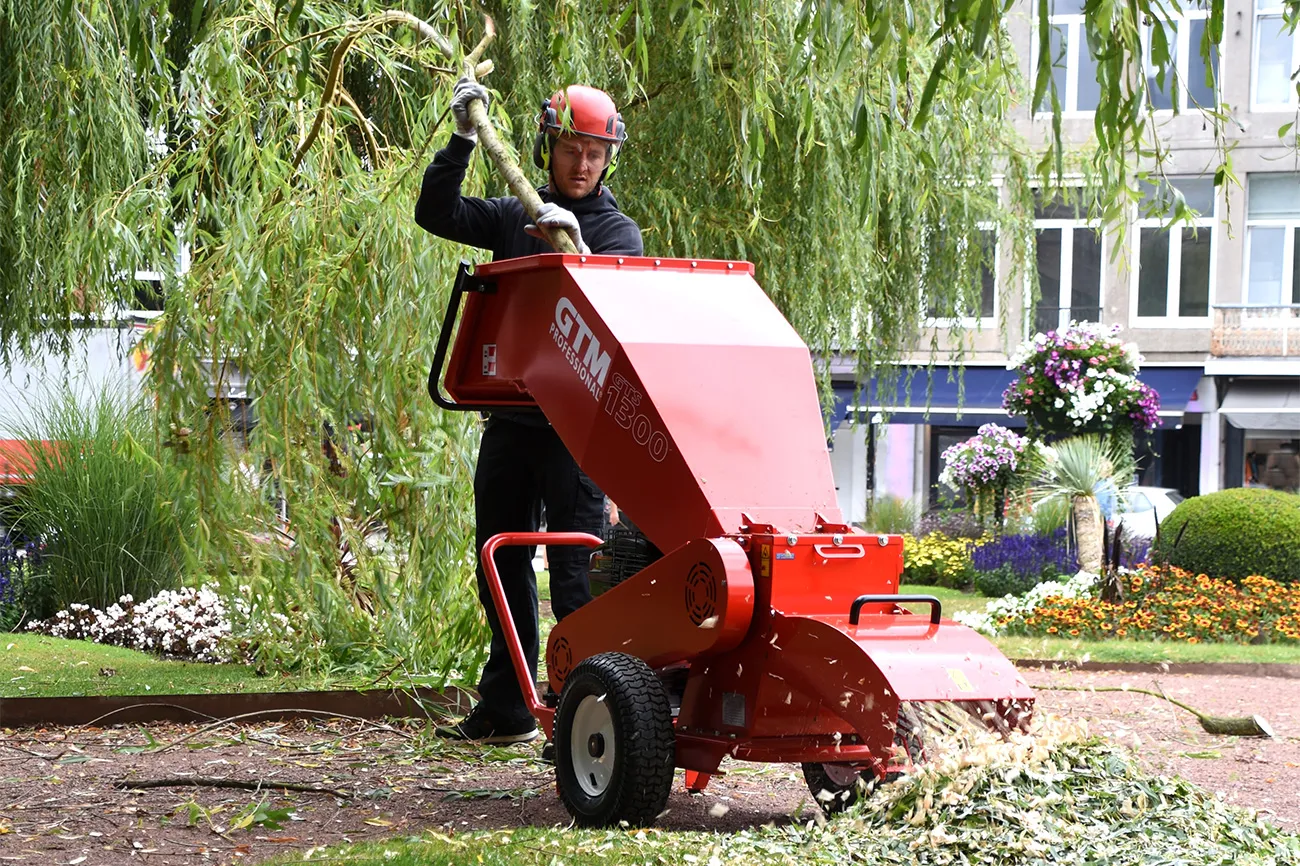
Landscape contractor Boris Renders of Barborist agrees. “The GTS1800WD takes branches in its stride. I just have to feed in the material and let go, and by the time I’ve picked up the next branch, it’s already been processed. That speed is really important for a self-employed landscape contractor like me, because it determines how much work I can take on. I can also always rely on the chipper to do its job, even when I push it to the limit in my pursuit of speed. That’s unheard of.”

A smart combination
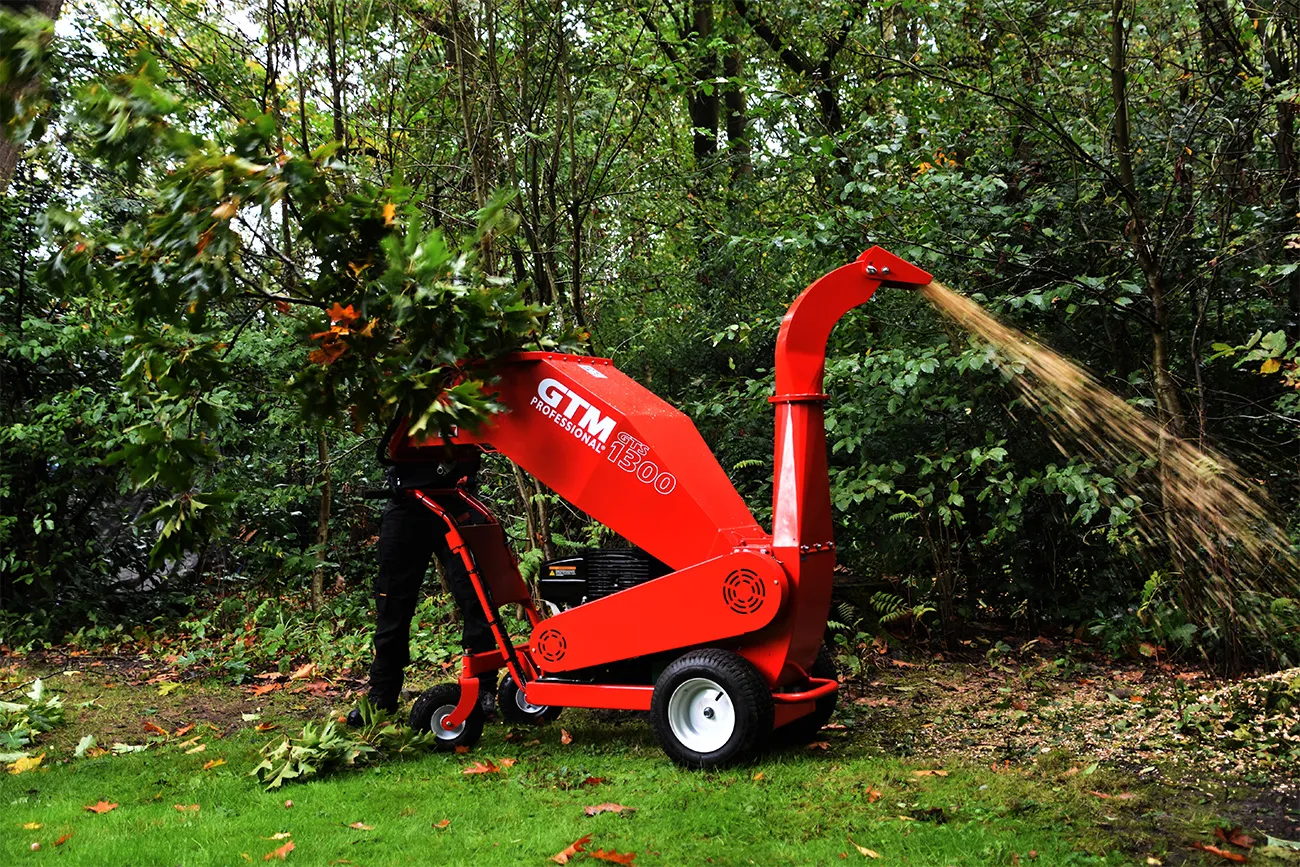
The wide infeed and rotor chipping system on GTM machines also contribute to their high output. “The rotor’s rotation also blows the wood chips straight out,” says De Keijzer. “That means there’s no need for a separate system, keeping the machine simpler and more compact.”
Compactness is a defining feature of these wood chippers, with even the largest models passing easily through a garden gate. “We use as little material as possible, but make sure it’s good quality, and make very deliberate use of the machine’s shape. For example, we’ve positioned the engine in the space traditionally found beneath the infeed. This keeps the machine compact and also gives it excellent balance.”
“You get the power of a trailer-mounted chipper with the convenience of a mobile machine,” says Renders. “The new Wheel Driven models go a step further, taking all the strain off me, whatever the terrain.”
A focus on reuse
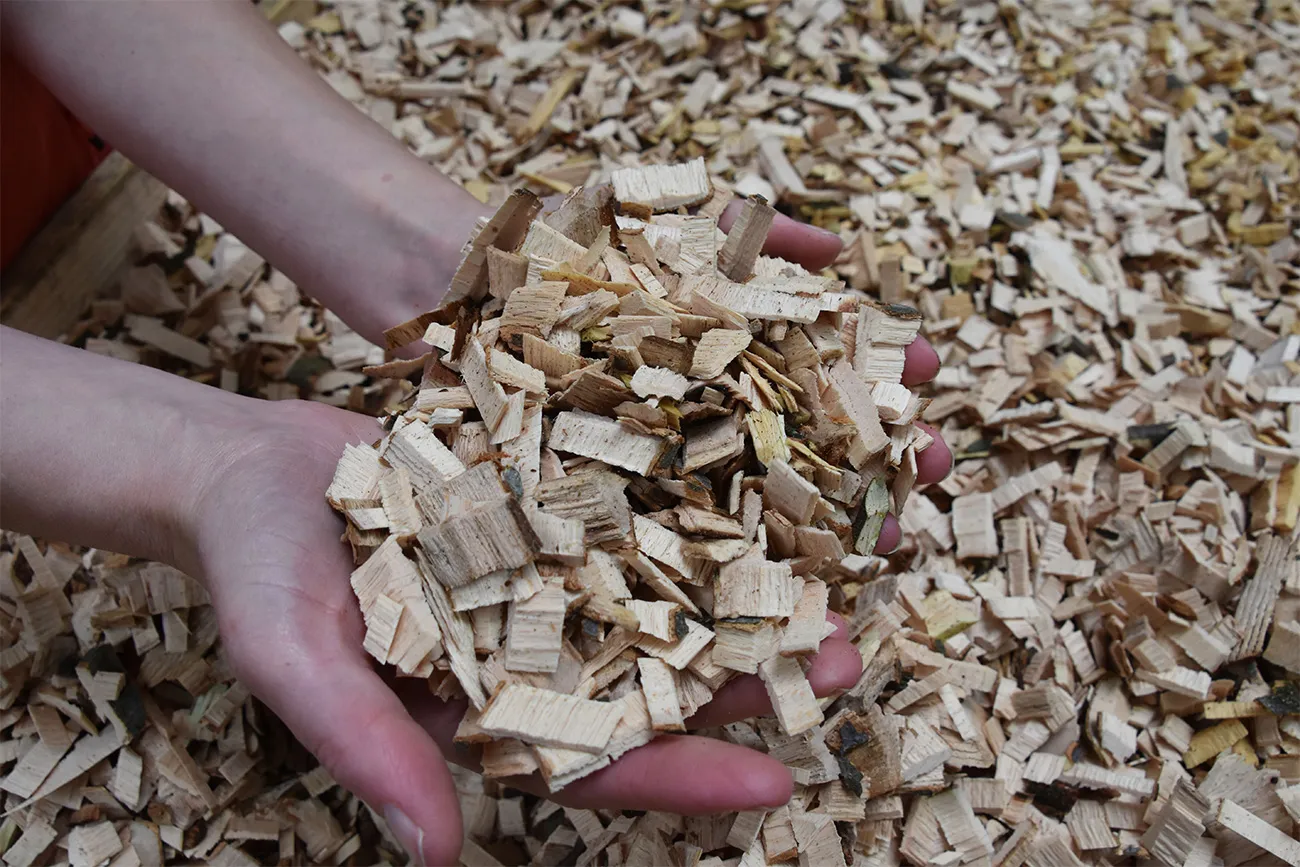
Finally, Renders notes that customers are increasingly inclined to process and reuse pruning waste on site. “The more attractive and uniform the wood chips, the more likely people are to actually do something with them,” says De Keijzer. “That’s why our chipping system has been designed and shaped to produce consistently high-quality chips. They are ideal as ground cover or for ecological soil improvement, regeneration and protection using the so-called RCW method (Ramial Chipped Wood).”
Since last year, Belgarde has also offered two compo models that can produce finer chips and process large quantities of soft organic material. “Simply adding an extra grid causes the wood chips to bounce back inside the machine and pass through the rotor a second time. This can speed up the composting process if desired.”
Question about this story? Ask your question
Companies in this story

Keep following this
Get an email when a new story is published. No account needed.
- SubjectProduct information
- CompanyBelgarde BV