How to keep your bay laurel looking beautiful and healthy
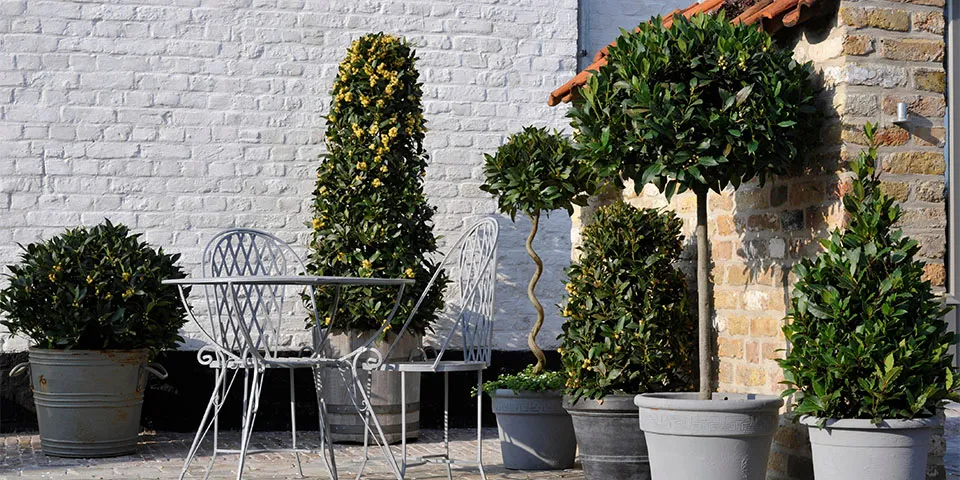
Bay laurel is an attractive, long-lasting plant. With the right care and maintenance, it will retain its beauty for years. Laurica-plants/Lauretum in Jabbeke has specialised in growing bay laurel for many years. Every plant that leaves the company carries its distinctive orange quality label. Marian Maenhoudt shares some care tips for the best results.
Care tips from specialist Marian Maenhoudt

The Laurica orange quality label.
Pruning
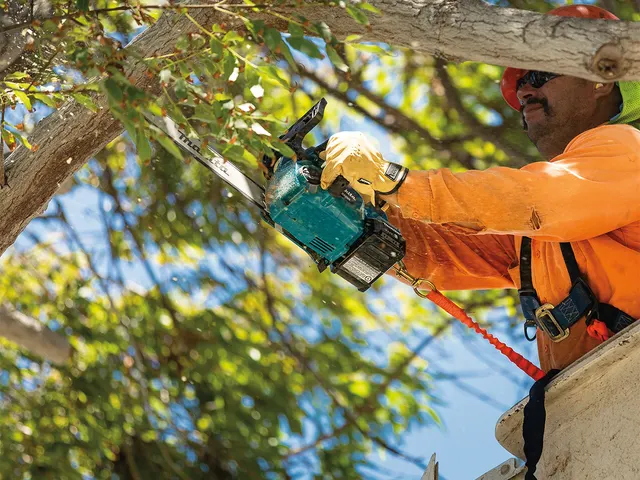
Regular pruning keeps plants full and compact. Hand-pruning with secateurs produces the best results. Larger specimens can also be pruned with hedge shears. Prune twice a year, at the start of summer and during winter.
Summer pruning is intended to keep the plant in good shape. For slightly older plants (from 4 to 5 years old), it is best to prune back the strongest shoots before July. The stronger the shoot, the further back it can be pruned, and the more vigorously it will grow again afterwards. Judicious pruning results in a full, compact plant.
Winter pruning, or shaping, is best carried out between November and March. The aim is to balance the plant and neaten its spherical or pyramidal shape. It is important to increase the plant's diameter by only a few centimetres each year. A compact shape helps the plant withstand rain and wind.
Pruning, particularly of younger plants, can be done by eye. For older, larger specimens, it is easier to use a pruning template or measuring cord.

Fertilise twice a year.
Repotting
Bay laurel can be repotted at any time of year, but September is ideal. From then on, the plant gradually enters its winter dormancy. Its root system is still fairly active, however, so the
new soil will be partly colonised by roots before winter.
During the first few years, it is best to repot bay laurel every year. After a while, repotting every two years is sufficient. Plants more than ten years old need repotting only every four to five years. Specimens more than fifty years old need repotting only every ten to fifteen years. Never prune the roots when repotting!
At each successive repotting, use a slightly larger container, perforated at the base and optionally containing a layer of expanded clay aggregate or lava to ensure good drainage. A watering rim of around two to three centimetres is important to ensure that enough water can be
applied each time.
For the pot, it is best to use potting compost for conservatory plants, pre-fertilised and mixed with clay. This helps retain water as a reserve.
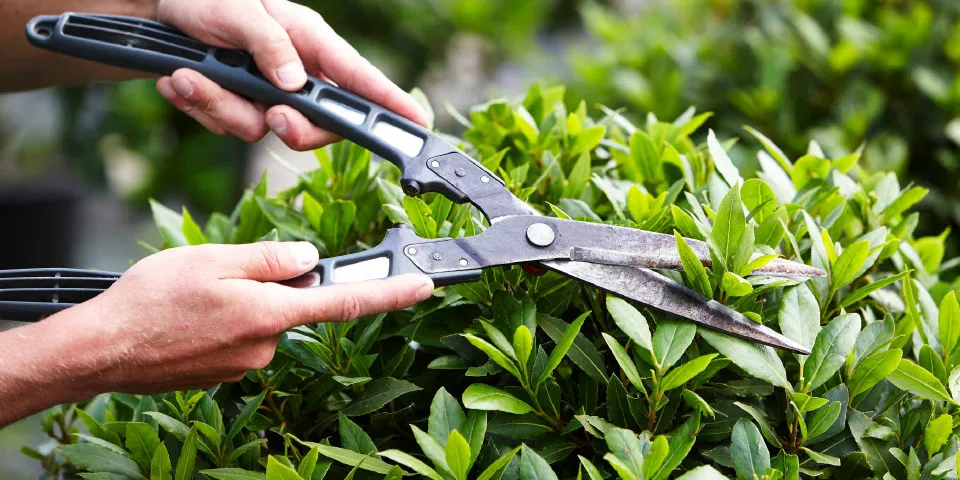
Pruning for shape and growth.
Fertilising
A slow-release organic fertiliser with a high nitrogen content promotes healthy plants, strong growth and attractive green foliage. Specially formulated fertilisers are available commercially.
Ideally, fertilise twice a year: first in April-May and again in July-August. The plant grows fastest during these periods and needs extra nutrients. The amount of fertiliser depends on the size of the pot and the age of the plant.
Watering
As pot plants take up less rainwater than plants growing in the ground, regular watering is essential. The amount and frequency of watering depend on the size of the pot, the location and the season. Always water from above and avoid leaving excess water in the pot or saucer, as this can cause root rot.
From March through to midsummer, watering can be increased gradually. The plant needs plenty of water on the hottest summer days. Watering can be reduced from September onwards. In winter, while the plant is dormant, the root ball can be allowed to dry out more, but must not
dry out completely.
Pest and disease control
Despite the best care, bay laurel can still fall prey to diseases and pests. Scale insects on the underside of the leaves, along with the characteristic black sooty mould, can be treated with a solution of natural soap, followed if necessary by an insecticide for scale insects.
Bay sucker can be identified by small white spots on the (curling) leaves. Always remove affected leaves and, if necessary, use an insecticide for leafhoppers.
Overwintering
Bay laurel can withstand light frosts without difficulty (down to -5°C). In more severe frost, it is best to overwinter plants in an unheated but frost-free garage or conservatory. Protect plants left outdoors by wrapping the trunk and roots in breathable material (fleece, hessian, an old blanket…). Remember to water them occasionally during winter too. Once the worst of the night frosts have passed, the plants can go back outside from March onwards.
Question about this story? Ask your question
Companies in this story

Keep following this
Get an email when a new story is published. No account needed.
- SubjectProduct information
- CompanyLaurica Plants