Precision mowing for a denser, greener lawn
Text Luc OphalsImage Belrobotics
Maintaining the beauty of a sports pitch
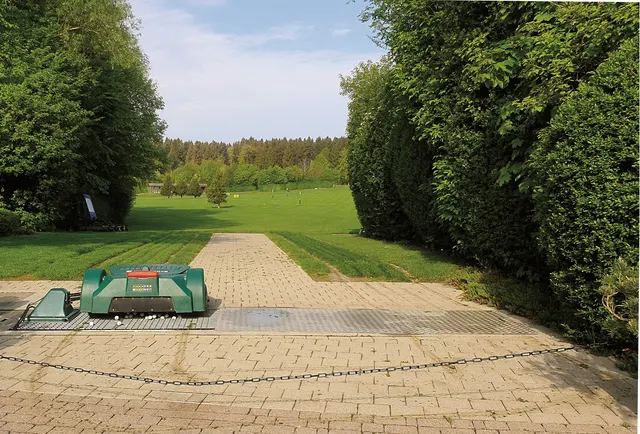
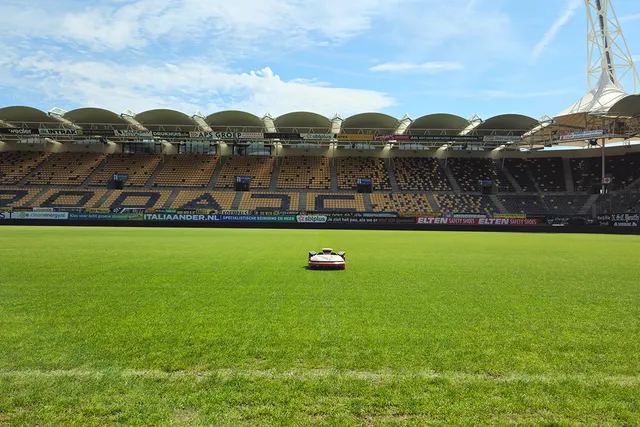
With the arrival of robotic mowers a few years ago, the workload for groundsmen and greenkeepers was already significantly reduced. Ongoing technological advances make it even easier to manage sports turf maintenance and simplify daily mowing as much as possible, thanks to advanced system management, additional features and increasingly powerful software. Rachid Rabhi, managing director of Berobot, discusses several aspects of this automated approach to maintaining large sports pitches during a conversation beside one of the football pitches at Royal Union Lasne Ohain.
Let’s start with the obvious: maintaining a sports pitch is no easy task and brings many challenges every day. Alternating periods of heatwaves, drought and rain make it very difficult to plan work and manage irrigation and topdressing. In addition, sports pitches are being used more intensively, with the competition season getting longer and longer. This means more frequent training sessions and more sporting events, placing even greater demands on the turf. In this context of more intensive use, mowing this large grass area is even more important.
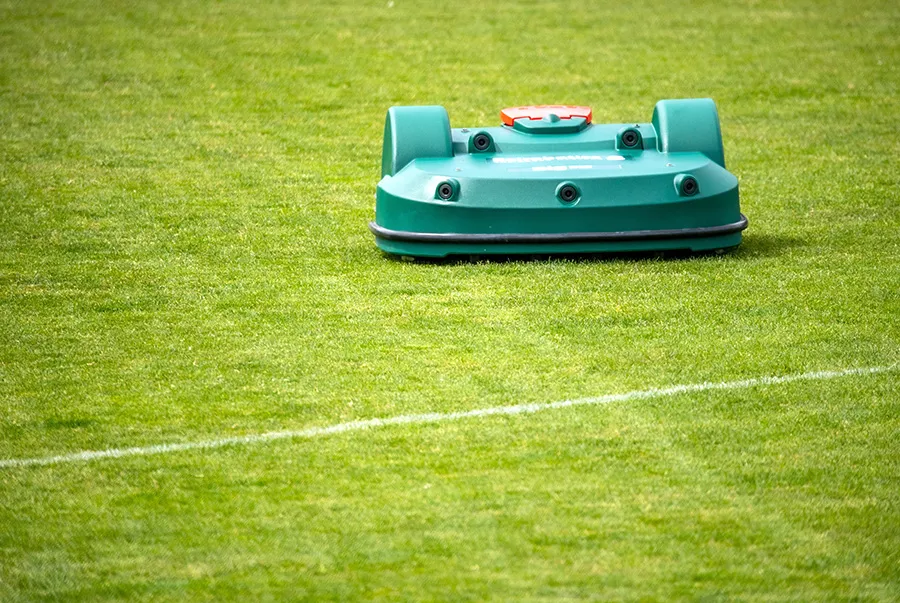
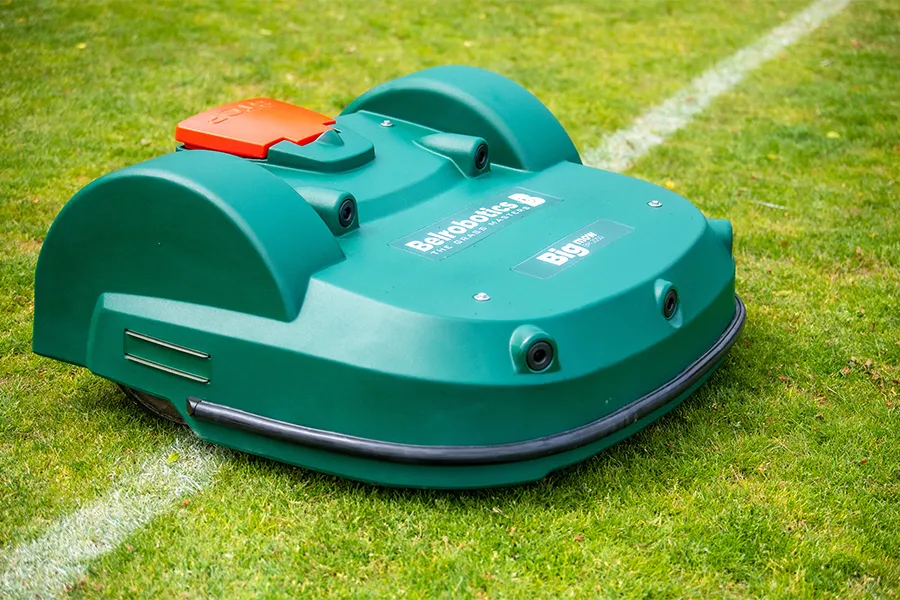
Rachid Rabhi: “I have been working in the parks and gardens sector since 1994. In 2004, I started selling garden machinery to landscapers and private customers, and I soon became interested in robotic mowers and the many benefits they offer for small and large areas. Since November 2021, I have focused exclusively on autonomous mowing and battery-powered machinery, including tractors, mowers and handheld tools. My clear focus is on robotic mowers for small and large areas, up to 7.5 hectares, using Belrobotics’ RTK technology. For large areas, I still consider the Belrobotics robotic mower the best mower in every respect, and the best ally for a groundsman or greenkeeper. Random-pattern mowing is precise, flawless, ecological and fast.”
No two sports pitches are alike
To preserve biodiversity as much as possible, the local council encourages mowing during the day and bans mowing at night. “A private lawn is a near-natural habitat, much appreciated by our friends the hedgehogs. It is a well-known fact that hedgehogs tend to curl up into a ball when they sense danger, rather than flee. Contact with a robotic mower can therefore have disastrous consequences for these little animals, which can suffer serious or even fatal injuries. So I am not in favour of mowing at night,” says Rachid Rabhi. He adds: “Although there are fewer moles and hedgehogs on a sports pitch, it is a good idea to make sure the robotic mower only operates during the day.” The location of the sports pitch must also be taken into account from an environmental perspective. Rachid Rabhi:
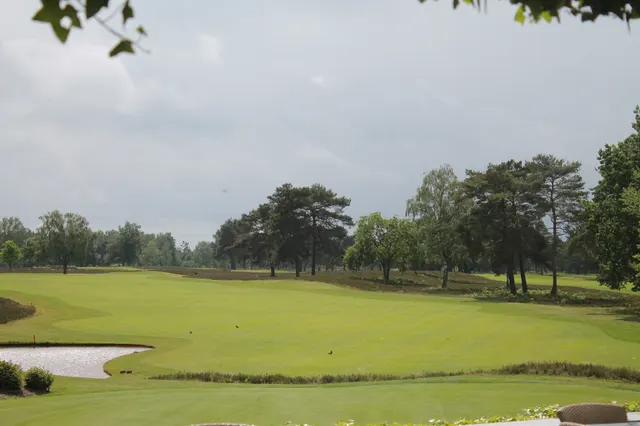
“As you can see here, we have two adjacent football pitches. The first pitch, which is used for official matches, has no obstacles and does not need a perimeter wire to guide the robotic mower.
The second pitch, the training ground, is surrounded by trees, all of which are obstacles that could block the GPS signal. A perimeter wire is indeed necessary here. But we use the same base station and the same robotic mower.”
Time and cost savings
Automated management of sports pitch maintenance, including mowing, saves a considerable amount of time. For example, there is no need to mow every day of the week.
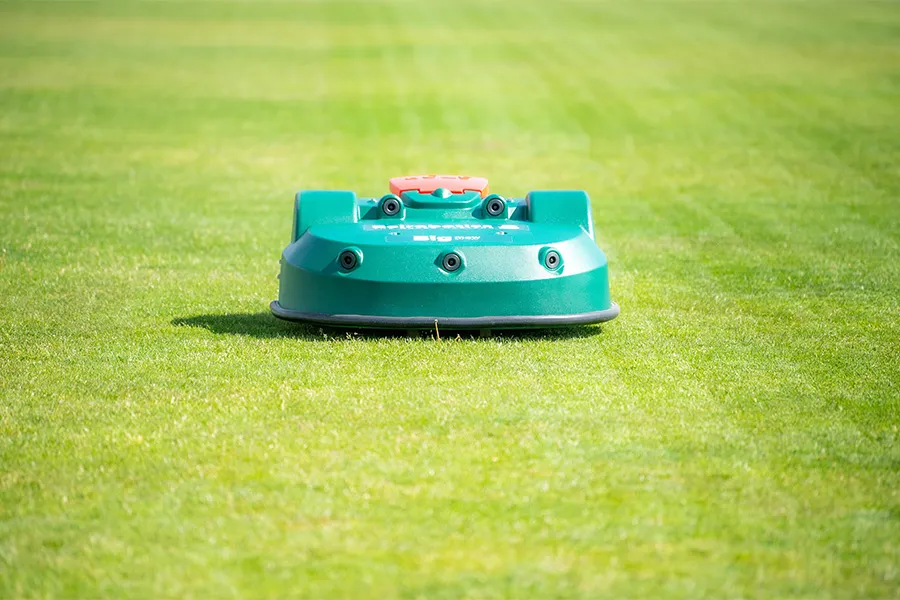
“Taking into account pitch irrigation and scheduled training sessions and matches, the robotic mower only runs for a few hours at a time. Maintenance staff can therefore turn their attention to other tasks. In addition, maintaining a robotic mower is much less demanding than maintaining a large conventional machine.
For example, the cost of replacing blades is only a fraction of the cost of replacing damaged parts on a cylinder mower or ride-on mower. It also has the added benefit of mulching the soil, enriching it and limiting the need for nutrients, while improving lawn density,” concludes Rachid Rabhi.
Question about this story? Ask your question
Keep following this
Get an email when a new story is published. No account needed.
- ThemeMachinery for professional grounds maintenance
- SubjectMachinery & equipment