Help, there’s a body in the garden!
How to bring a dead lawn back to life
This was the cry for help heard by many landscape contractors around mid-August. Almost every lawn in Belgium was fighting for survival. The lack of rainfall in spring had brought soil water reserves down to a minimum. Much of the grass had already turned pale before summer had even properly begun. The heatwave that followed was the final straw, making the death of the grass inevitable. As a result, almost every Belgian with a garden is looking out over a barren expanse of dried-out grass.
As a landscape contractor and green-space expert, you are expected to offer desperate lawn owners a solution. The damage has, of course, already been done. The dried-out grass blades can no longer be revived and, in their current state, are actually contaminating the lawn. This dry grass breaks down poorly and forms an inert, suffocating layer.
Scarifying
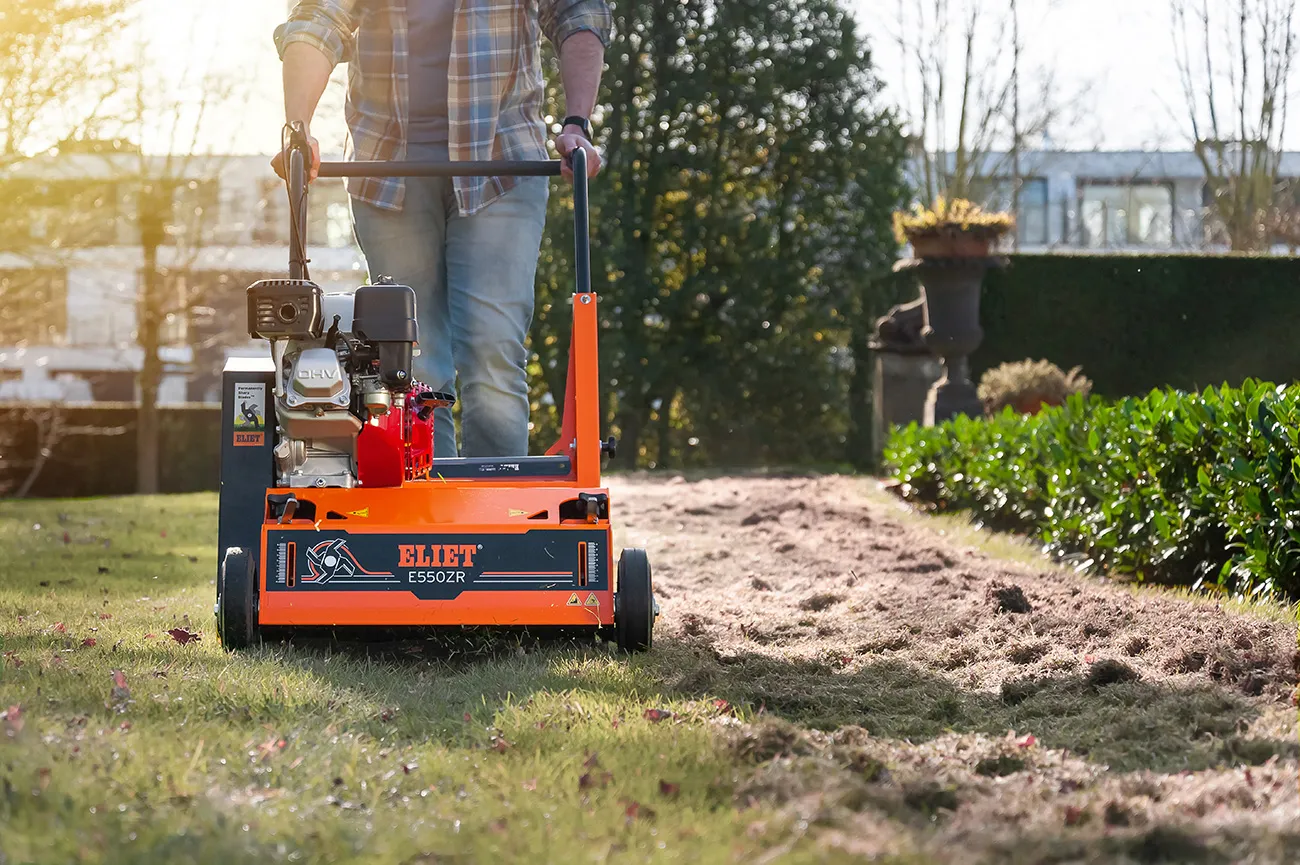
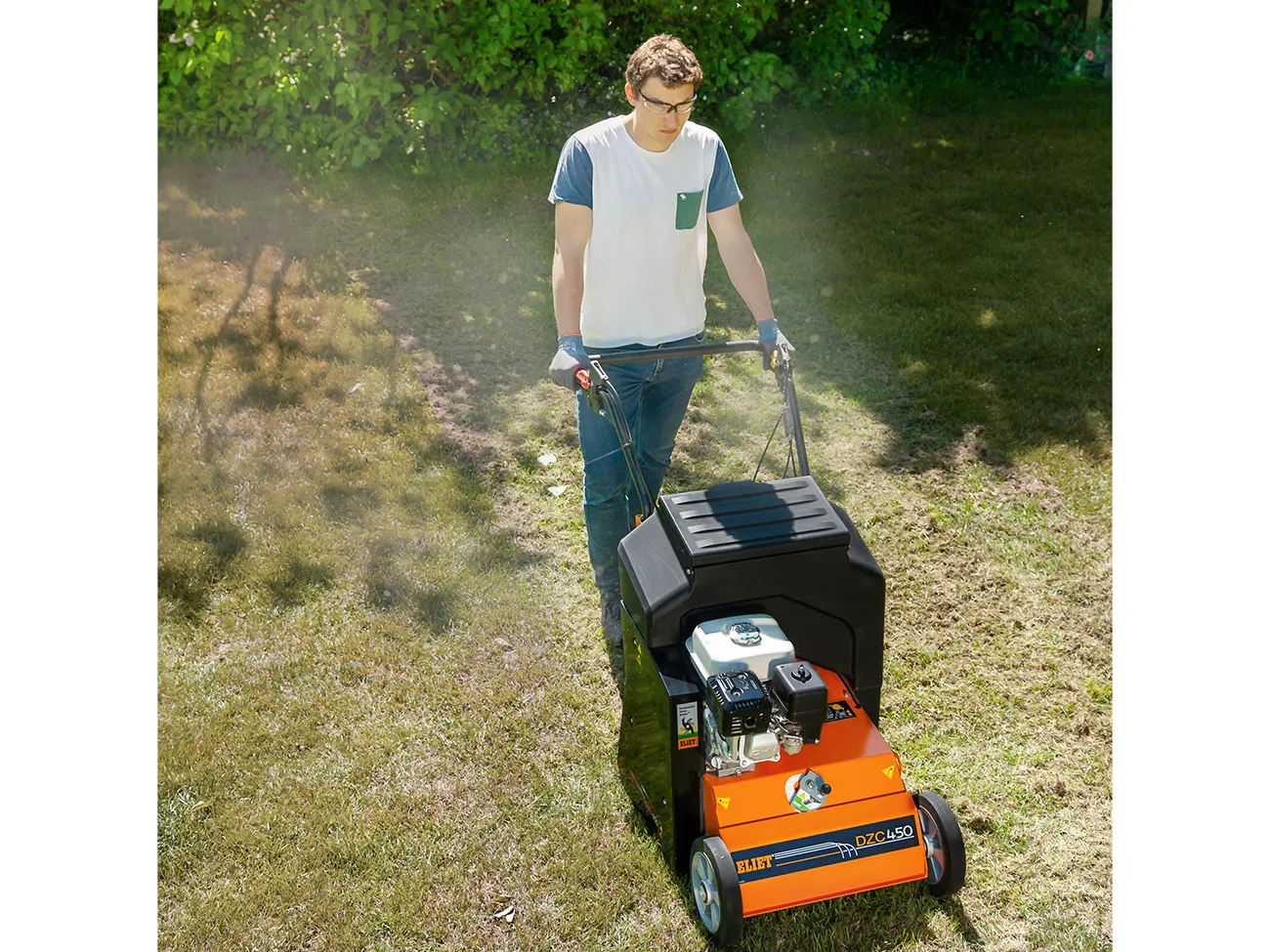
The advice is to remove it as soon as possible to allow the lawn to recover. Thorough scarification is essential. It is best to scarify the day before rain is forecast. Given the large amount of dried grass, you will need to make several passes over the lawn to rake it all out carefully. Alongside the drought, this operation puts extra strain on the grass that has survived.
However, you can limit the impact of scarification. ELIET’s latest-generation ZR scarifiers have been specially developed to clean the turf very intensively while causing minimal damage to the lawn. These self-propelled machines have a large number of ultra-thin blades mounted close together, with a spacing of 15 mm, which also rotate over the top. This means they rake out up to 50% more dry grass in a single pass. The number of passes needed to clear the area can therefore be significantly reduced.
Overseeding
After a thorough clean-up, the surviving grass has room to grow again. It is remarkable how an apparently dead expanse can come back to life after a little rain. Of course, the drought has taken its toll and the grass cover has become very thin. It is important to restore lawn density in autumn to prevent weeds from invading. Overseeding is the technique of choice. September and October provide ideal conditions for this. During these months, soil temperatures are generally between 15 and 20°C, and average rainfall of around 100 mm/m² can help grass germinate in record time.
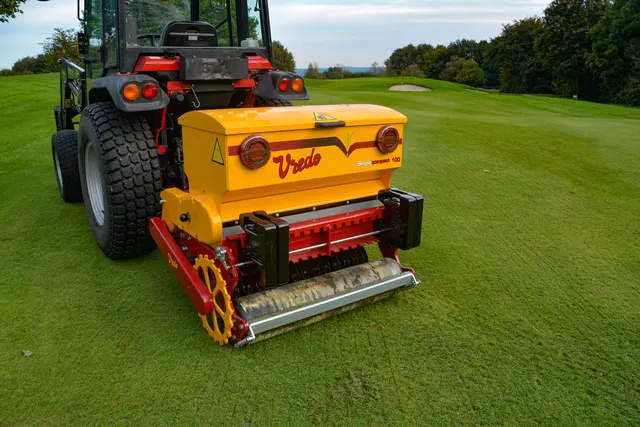
To take advantage of these favourable conditions, the grass seed must be placed neatly in the soil during overseeding. ELIET overseeders have a patented seed distribution system that places the grass seed precisely at a depth of 1 cm in the soil. The machine also immediately covers and presses down the injected seed. Timing is just as important when overseeding. Natural rainfall is what the grass seed needs to kick-start germination. Then make sure the soil does not dry out again, so irrigation may be necessary. After that, it is only a matter of days before the first blades of grass emerge.
When overseeding, you can be generous with the grass seed. Apply 25 gr/m² and, once it emerges, the young grass will quickly turn the area green. The older grass that survived the drought will be able to hold its own among this flush of new growth, thanks to its more developed root system. Overseeding in late summer has several advantages: you can enjoy the fresh green lawn after the seed has emerged, while also giving the young grass several weeks to develop its roots properly. A well-developed root system is insurance against coming through a dry spell the following summer unscathed.
For maintaining an ornamental lawn, renovation through scarifying and overseeding is the fastest and most cost-effective approach, and it also offers an almost guaranteed successful result. Put your clients out of their misery and recommend this approach.
Question about this story? Ask your question
Keep following this
Get an email when a new story is published. No account needed.
- ThemeKeeping turf strong and playable
- SubjectMachinery & equipment