









With thanks to grower Hugo Maes: the unstoppable rise of the holm oak and kermes oak
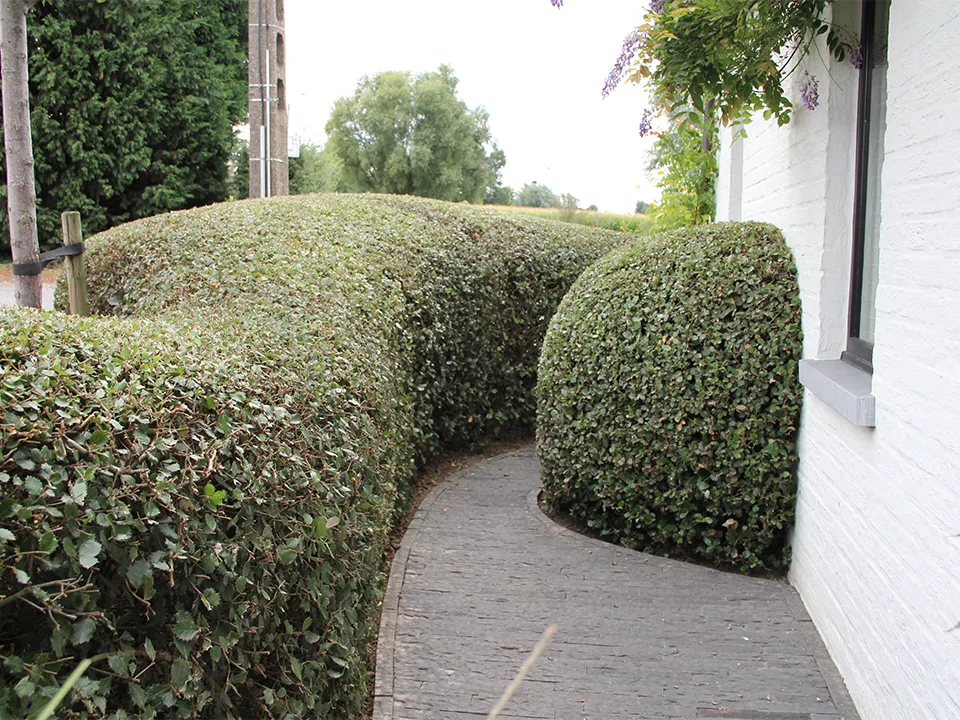
The unstoppable rise of holm oak and kermes oak in Flemish and Walloon gardens is largely thanks to the work of one man: perennial plant grower Hugo Maes from Waregem. One of the few growers in Belgium to specialise in cultivating this hardy woody plant from southern Europe and North Africa, he champions the use of holm oak in hedges or planting beds. It is an exceptionally beautiful, robust and fully fledged alternative to holly, yew or hornbeam hedges, and above all to box hedges, which have come under heavy pressure in recent years in our part of the world.
Hardy and decorative
Holm oak is characterised by its thick, leathery, dark green leaves, with a felted grey-silver underside. In late spring, it produces an abundance of soft yellow flowers. Its leaves can have smooth or holly-like serrated edges. Quercus ilex is evergreen, but may lose some of its leaves during prolonged cold spells. These are quickly replaced by fresh new growth. Its evergreen nature makes holm oak particularly suitable for planting as a hedge.
Home-grown
Every year, Hugo Maes travels to southern France to collect ripe holm oak acorns. He germinates them himself and grows them on into hedge plants. Thanks to meticulous seed selection, holm oaks grown in Belgium have much smaller leaves than imported specimens from Italy. This allows the plants to adapt to our climate and soil conditions, and makes them hardy down to at least -18°C.
Regular pruning and careful attention to young plants help them develop into well-branched, dense specimens that establish quickly in their new surroundings after transplanting. Unlike other hedging plants, Quercus ilex is unaffected by disease, damage or insect pests.
Hugo Maes’s many years of pioneering work have led more and more garden designers to specify in their project briefs that plants must be of Belgian origin, specifically because of their leaf shape and size.
For every garden
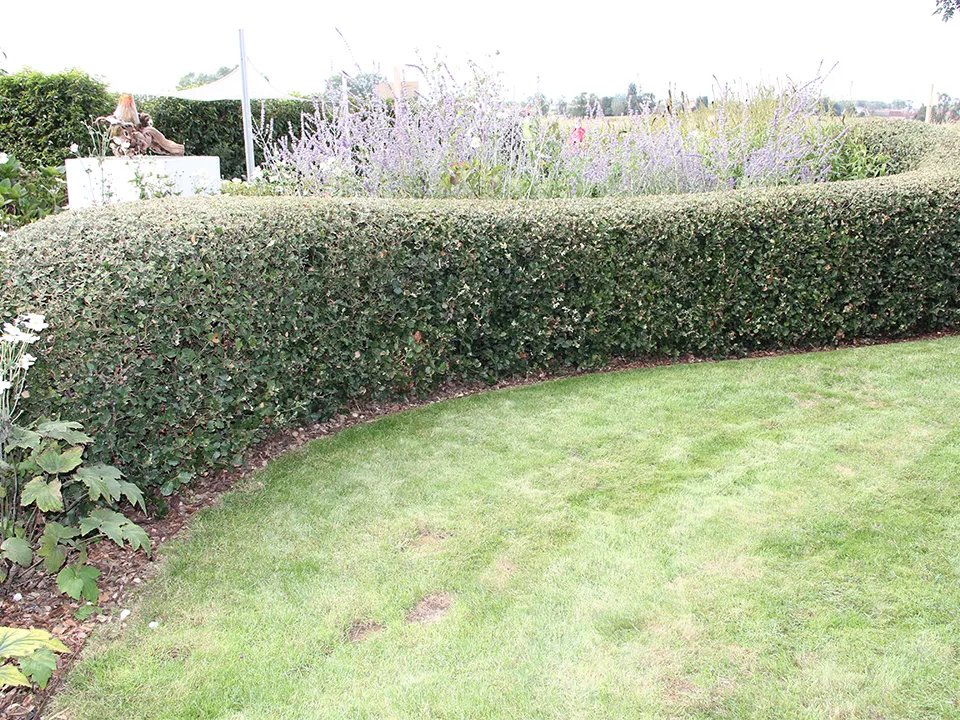
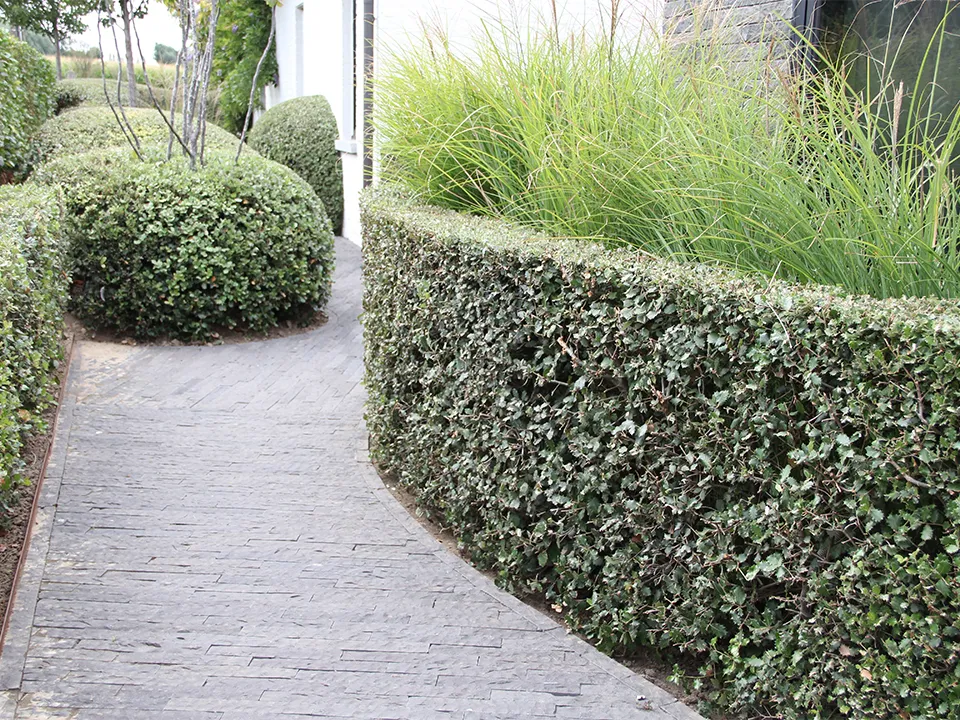
Holm oak hedges can be used in almost any garden as an impenetrable boundary. Pruning twice a year keeps them neat and well-defined. More informal shapes are also possible, requiring just one pruning a year. They can also be used to create beautiful, intimate garden rooms. Quercus ilex also thrives in salty, often windy coastal climates, which is why it is frequently planted as a resilient evergreen windbreak.
The little brother
The kermes oak, or Quercus coccifera, is a miniature version of Quercus ilex. It is also known as holly oak because of its small, hard, spiny leaves. Quercus coccifera is smaller and more compact than holm oak in every respect. In southern Europe, it grows abundantly as an impenetrable understorey in woodland. In spring, kermes oak takes on a soft bronze hue. In our part of the world, it is a valuable alternative to traditional groundcover planting. As a low-maintenance groundcover, kermes oak also looks particularly attractive beneath holm oak
trees.
Ideal for our climate
Climate change is becoming increasingly apparent, including in our part of the world. Extreme weather events are occurring more and more often. Periods of heavy rainfall alternate with scorching heat and drought. Many plants struggle in these conditions, but not holm oak or kermes oak. Quercus thrives in our climate and will do well in all conditions, provided the soil is sufficiently calcareous and well drained.
Vraag over dit verhaal? Stel je vraag
Blijf dit volgen
Bij een nieuw verhaal krijg je een e-mail. Geen account nodig.
- OnderwerpGeneral







