









Uses for lava chippings and lava fines: small particles, big impact
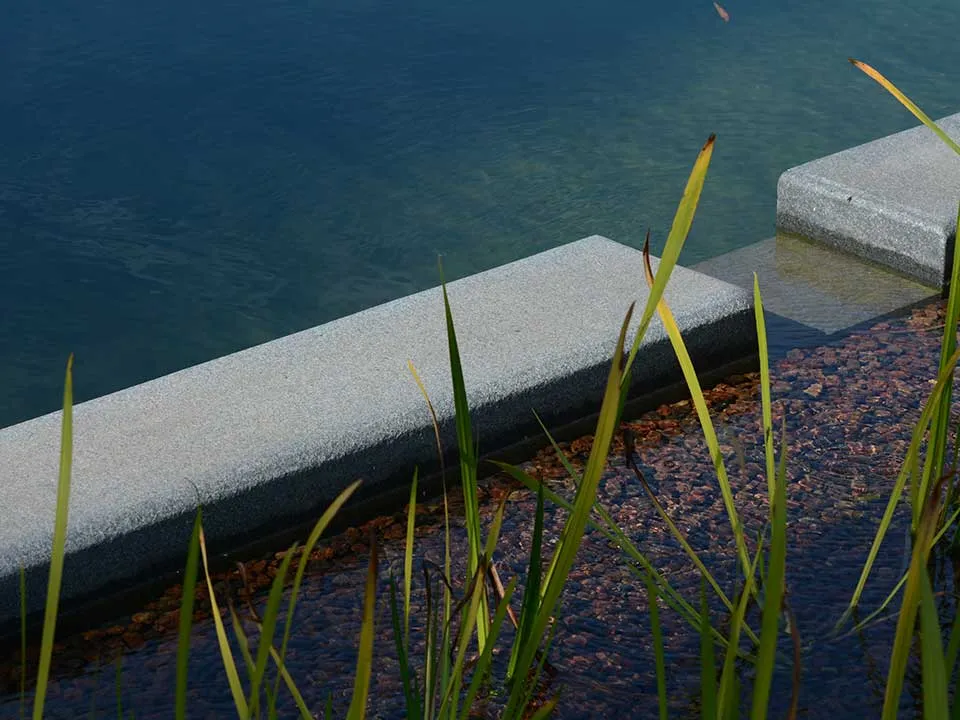
Lava, the porous rock formed when molten lava cools and solidifies, has a range of uses in the garden.
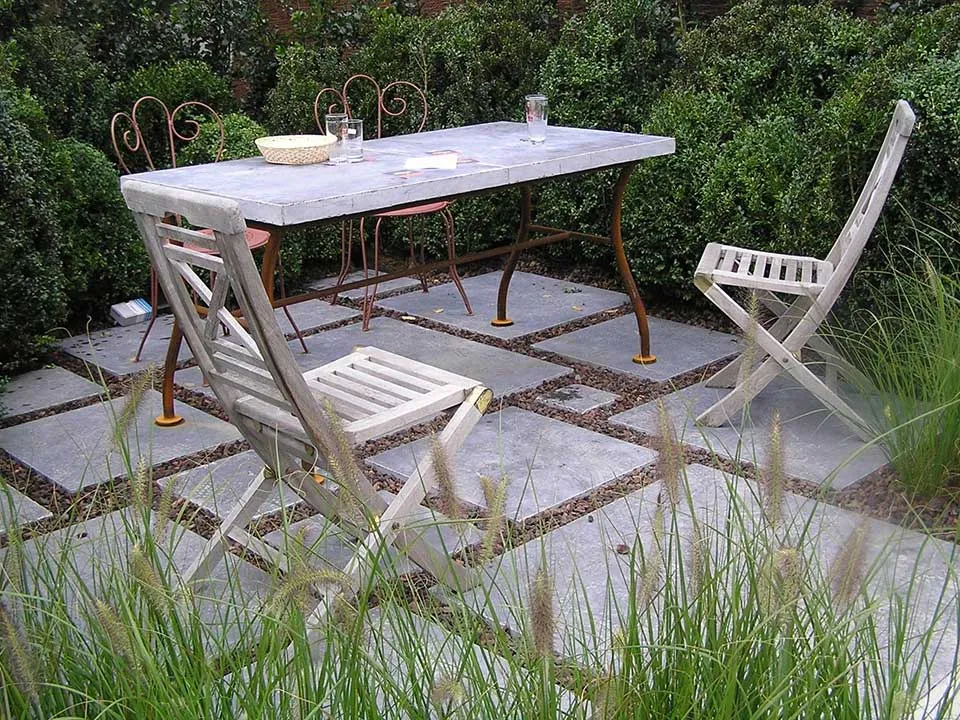
Lava chippings are best known for their use as a substrate in the wetland zone of a natural swimming pond. But they also make an ideal visual and functional top dressing in the increasingly popular prairie garden. Even the lava fines that are normally screened out have many useful applications, according to Els Meynen of E.L.S. Garden.
The idea of circularity is now gaining ground across construction, industry and society. Even those unfamiliar with the term understand that we need to use raw materials wisely, and that waste or by-products from one product can add functional value in another application. The same is true of lava.
“We screen all our gravel and chippings to remove fines from particles measuring 12 millimetres and upwards,” explains Els Meynen of garden materials supplier E.L.S. Garden. “As a result, our bulk bags of lava chippings contain only clean material, but of course this also leaves us with a fine-grade by-product. These lava fines, in turn, are useful elsewhere in the garden.”
Four key benefits
Lava’s distinctive properties mean it can be used in a range of grades and applications. “Because it cools so quickly, gas and air have no time to escape, leaving tiny bubbles trapped in the rock. This gives the material its porosity, as well as its drainage and moisture-regulating properties. Lava gradually absorbs moisture and releases it very slowly during dry spells, whether it is in larger grades or as much finer by-product. Lava fines in particular also help to stabilise the ground and, when laid in thick layers, suppress weeds.”
In the swimming pond
Lava’s porous nature makes it an excellent filter material for swimming ponds. “Lava chippings act as a physical filter, but they also play an important role in microbiological purification. The bacteria responsible for purifying the water need oxygen, and the many cavities in the lava stones readily trap it.”
However, the wrong type of lava can also have negative effects on bacterial life, Meynen warns. “For swimming ponds, we always recommend using washed lava. Washing cleans the pores, allowing beneficial bacteria to attach more readily. Washed lava is also lighter and less likely to cause sediment build-up and discolouration of the water.”
“The particle size is also important. In this case, 25/50 is the main grade. Sometimes a coarse 50/100 layer is laid at the bottom of the filter, with a 12/18 or 7/12 top layer, but finer material such as lava fines is not suitable here. It would simply cause blockages.”
As a ground cover
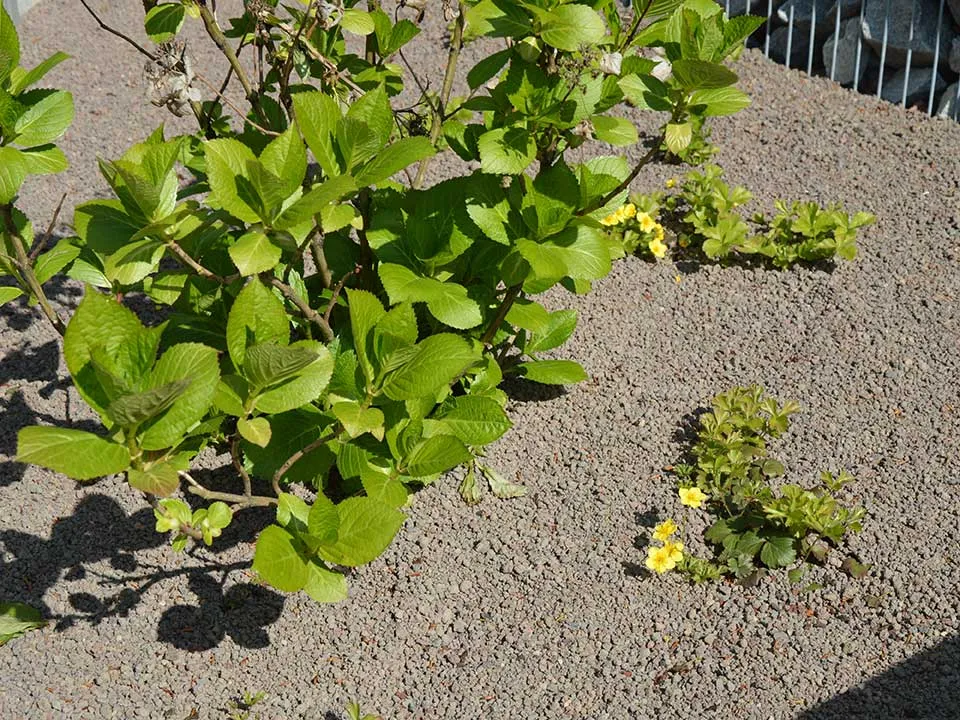
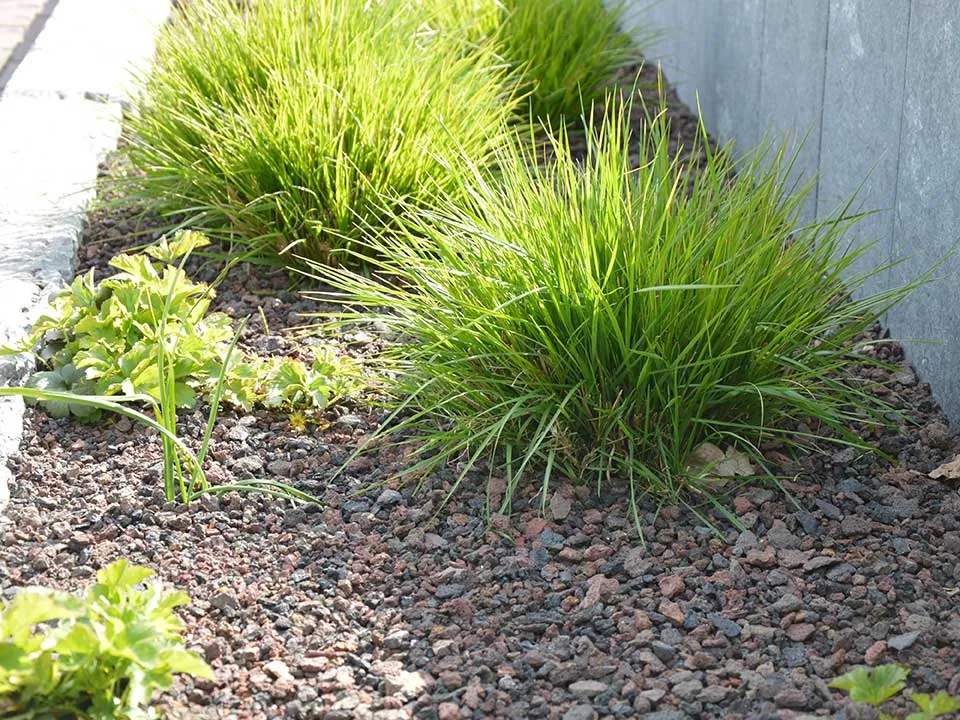
Lava chippings are a natural fit for the somewhat wilder prairie garden, but lava fines also make an interesting ground cover in traditional borders and planting beds. “A layer of 5 to 8 centimetres is enough to suppress weeds, and its colour also complements earthy tones. Unlike bark mulch, lava does not break down. Its excellent moisture-regulating properties offer plants better protection from drought, and slugs are certainly not keen on its coarse texture.”
In the ground
Finally, in groundworks, fine lava can also be used as a levelling, stabilising and drainage layer, for example beneath artificial grass, grass pavers or turf, or around drainage pipes. “A 2 to 3 centimetre layer of lava fines makes the ground more stable and load-bearing,” says Meynen. “The porous layer also helps excess water drain away, while its moisture-regulating properties provide extra protection for grass and plants during dry spells. In other words, lava fines have a positive effect on the soil’s water balance. It can therefore also be beneficial to mix lava fines into topsoil or turf soil.”
Question about this story? Ask your question
Companies in this story

Keep following this
Get an email when a new story is published. No account needed.
- ThemeHealthy soil beneath the pitch
- SubjectGeneral
- CompanyE.L.S. Garden







