









Three misconceptions about wildflower meadows
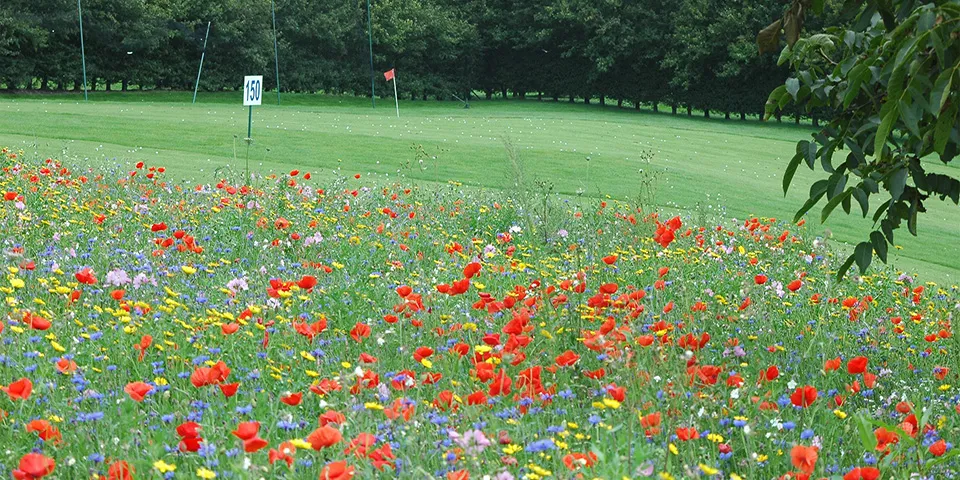
“A wildflower meadow is both difficult and easy,” says Bart Kersschot of Ecoflora. The ecological nursery has been championing wildflower meadows in private and public green spaces for 25 years, but still regularly comes across myths and misconceptions.
The more colourful, the better
Wildflower meadows bring life and colour to our streets. That much is certain. But they also serve an important ecological purpose, and the two do not always go hand in hand. Kersschot explains: “Some mixes contain species, often non-native cultivars, that flower for a long time and are very colourful, but actually produce little pollen or nectar. They offer no added value for biodiversity. That’s why we always choose native seeds, preferably of local provenance, whose interactions with the surrounding wildlife have already been proven. This allows us to create mixes tailored to specific conditions. By selecting species with successive flowering periods, these mixes also provide a long-lasting display.”
A wildflower meadow is short-lived
A wildflower meadow does not necessarily need to be sown again every year. “There are mixes containing annuals,” says Kersschot, “but most wildflower meadows are designed to last for years. All you need to do is mow once or twice a year.”
However, perennial mixes can be divided into those that contain grasses and those that do not. “Grasses will eventually start growing in any wildflower meadow. In a meadow containing only flowers, this will reduce species richness after a few years, particularly on fertile soil, and overseeding may be needed. Ironically, a mix containing grass seed can prevent this. By adding the desired grasses from the outset, you create a balance that can last for years.”

Sow now, see results now
People often expect to see immediate results from a wildflower meadow. “Perennial mixes, however, produce very little in the way of flowers in their first year,” Kersschot explains. “Fortunately, adding a few annual species quickly solves that problem, but there are other things to bear in mind. Good preparation is more than half the job when establishing a wildflower meadow. The soil must be completely free of grass and weeds. Otherwise, unwanted growth is guaranteed.” Fertilisers are no help either. “Wildflower meadows do best in poor soil. Fertilising will mainly give weeds a boost.” Flowers do need moisture, though. “In principle, wildflower meadows can be sown at any time of year, but prolonged drought is harmful to them too. It’s best to avoid sowing in summer.”
Good preparation, clear communication and providing the right information: according to Kersschot, these are essential to creating wildflower meadows that offer both aesthetic and ecological benefits. Ecoflora therefore regularly runs courses on establishing and maintaining wildflower meadows, and makes a range of publications on the subject available. The Ecoflora specialists will also be happy to offer tips and advice during the spring open weekend on 3, 4 and 5 April.
Question about this story? Ask your question
Keep following this
Get an email when a new story is published. No account needed.
- ThemeLower-impact green space management
- SubjectGeneral







