









The how and why of a lighting plan

Although it is often overlooked, a lighting plan is an essential part of garden planning. This applies not only to a blank canvas, but equally to existing gardens.
To achieve the best possible end result, it is best to take lighting into account from the first phase of a project and set everything out in a lighting plan. Paul Vermeulen of Suslight explains how to do this.

Why garden lighting?
“There are four key reasons to choose garden lighting,” says Vermeulen. “First, it is a matter of safety. A well-lit driveway and garden path help prevent you from slipping in the dark, walking into something or straying from the path. They also, importantly, deter thieves and intruders.”
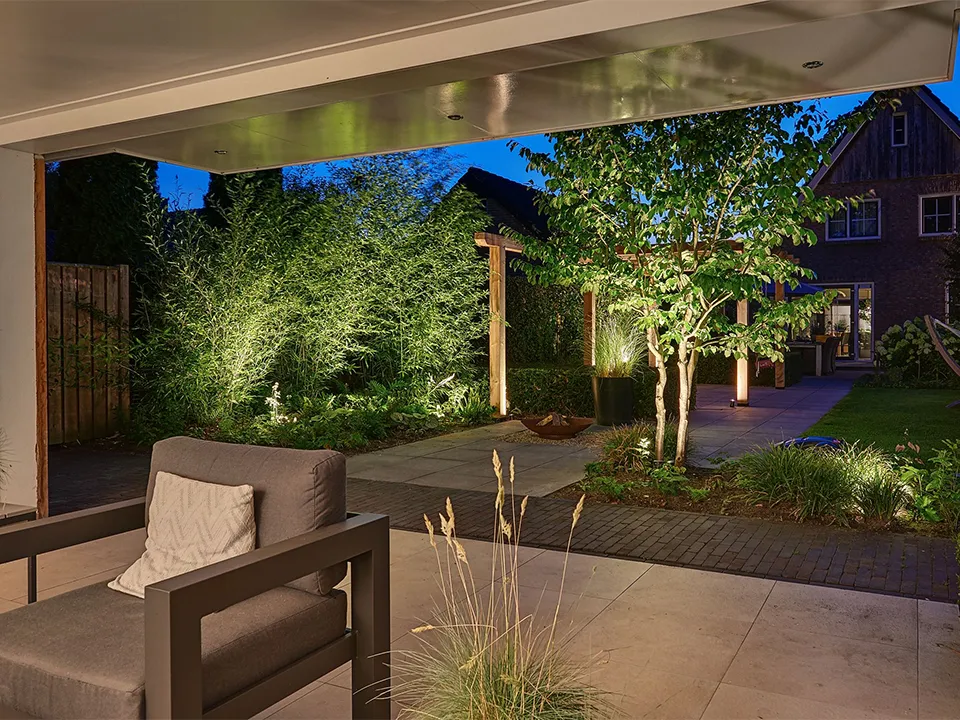
“Second, the right lighting creates a special atmosphere. The key is not to use too much, but just enough to highlight a few features. For example, illuminate a tree, multi-stemmed shrub or decorative object in the garden. This takes the garden project to a higher level.”
“A third benefit is how you can use the garden. With garden lighting installed, you can continue to enjoy warm evenings outdoors long after sunset.”
“Finally, sustainability also plays an important role in the choice of lighting. An energy-efficient lamp is just the beginning. Suslight deliberately takes a broad view of sustainability and makes choices that are sustainable and valuable across the supply chain. This means we do not simply ‘shift’ emissions or waste elsewhere, but achieve genuine reductions in our product chain.”
Why draw up a lighting plan?
By drawing up a lighting plan in advance, you know exactly which components you need and where the necessary provisions must be made. This allows you to coordinate the work efficiently and avoid any surprises later on.
“What is more, it shows the client that you care about every aspect of their garden project and experience. This builds trust and leaves a highly professional impression.”
How do you draw up a lighting plan?
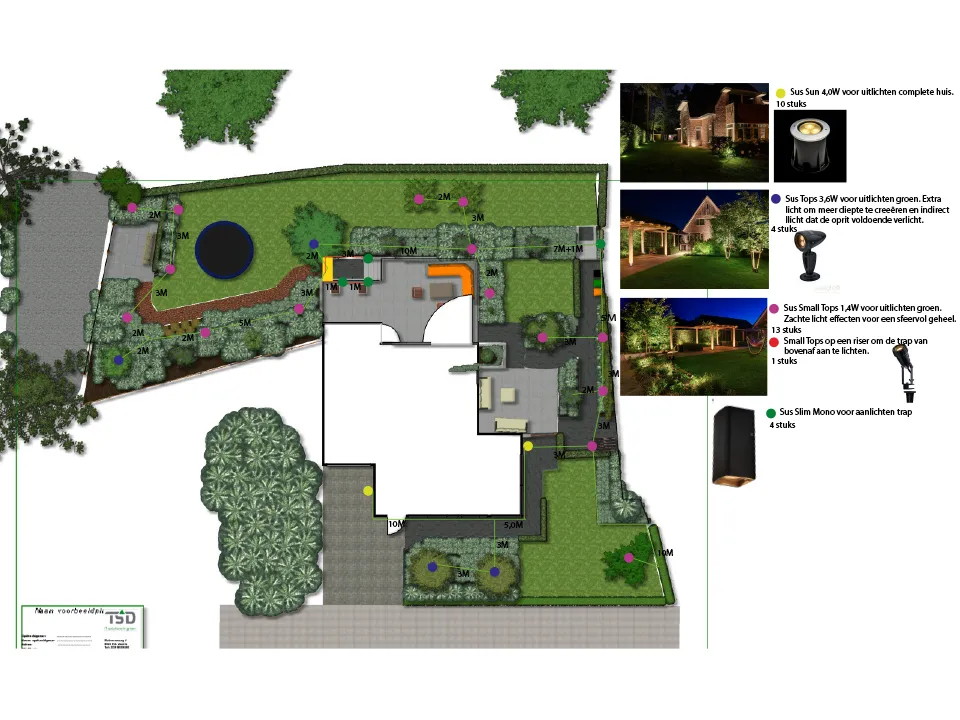
A lighting plan takes account of both visual and technical requirements and constraints. It determines which luminaires go where and at what light levels.
“From a visual perspective, you need to consider factors including sightlines, contrasts and safety. How will your client view their garden? Which sightlines take priority from indoors or from the terrace? Are there raised areas or other features in the garden that could become dangerous obstacles in the dark? It is important to light these areas sufficiently, as well as the main paths to the back door, bicycle shed and so on.”
However, you should also take care not to overdo it. “The contrast between light and dark is what makes a lighting plan interesting,” says Vermeulen. “So do not include too many light points, and pay attention to their position and direction. Naturally, you do not want anyone to be dazzled as they walk past the lights.”
You can then determine the technical aspects of the lighting plan. “The plan shows which luminaires and transformers you need to provide. Based on the distances between the different light points, calculate how much cable you need. Of course, also check whether there is already an outdoor connection, and allow for a few extra cables in case of unforeseen circumstances.”
If the garden has different functions, or the front and back gardens need to be controlled separately, you will also need to provide multiple circuits. Finally, a light sensor with a timer is a simple way to increase your client’s comfort.
Question about this story? Ask your question
Companies in this story

Keep following this
Get an email when a new story is published. No account needed.
- SubjectGeneral
- CompanySuslight







