









The European Championship on DLF turf
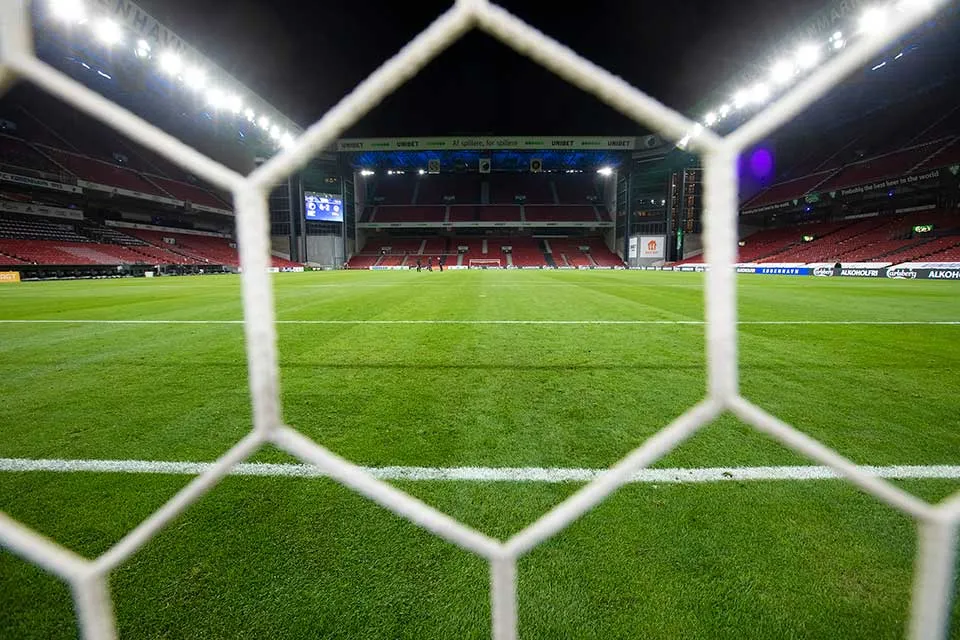
Once again, teams at this edition of the European Championship can count on a playing surface grown using DLF grass seed. DLF grasses are used in most of the 11 stadiums, particularly 4turf, tetraploid perennial ryegrass.
From 11 June to 11 July 2021, millions of football fans will enjoy a month of thrilling action as they cheer on their favourite teams at the European Championship. The 24 qualified national teams will play 51 matches in no fewer than 11 different countries.
As the TV cameras roll, fans roar and goals fly in, one hard-working player will be impossible to miss: the lush green championship turf. And when the winning team lifts the trophy in London, the Wembley pitch will still need to look fantastic.
DLF grass in six stadiums
Two of the stadiums, in Rome and Seville, use warm-season grasses. Of the other nine stadiums, no fewer than 6 have DLF grass. These are the stadiums in Amsterdam, St. Petersburg, Baku, London, Budapest and Copenhagen. In some stadiums, DLF grasses are part of the original playing surface, while in others they have been included when overseeding the pitch. Overseeding can help produce a beautiful and, above all, strong playing surface. Whether used for initial sowing or overseeding, all the grass seed mixtures have one thing in common. They contain diploid perennial ryegrass and 25% to 40% 4turf® varieties, specially developed by DLF. The 4turf varieties FABIAN, TETRAGAME, TETRASTAR and TETRAGREEN are found on most of the 11 pitches.
Geographically, there is a big difference between St. Petersburg on the Baltic Sea, London’s oceanic climate, Baku on the Caspian Sea and Budapest in Central and Eastern Europe. Each of these stadiums faces different challenges. Some have a mild, humid coastal climate; some have cooler temperatures in winter and late spring; and others have to contend with heat or drought. A specific grass solution needs to be developed for each of these challenges.
DLF 4turf in most stadiums
In just a few years, the popular 4turf varieties have become an important component of grass seed mixtures for turf producers and for overseeding. One of their most notable characteristics is the high stress tolerance they offer compared with standard varieties. This is reflected in significantly improved winter survival and colour, as well as a deep green colour in summer.
4turf has set new standards for turf, and the 4turf variety FABIAN was recently included in the European Seed list of the 20 most innovative plant varieties in Europe.
The best 4turf varieties have fine, dense leaves and a fantastic ability to withstand disease and drought. Drought tolerance is particularly important for grounds managers, as drought-tolerant varieties need less irrigation, which in turn helps reduce the risk of fungal disease in the lawn. Using less water is also the best way to limit the spread of Poa annua.
Question about this story? Ask your question
Companies in this story
Keep following this
Get an email when a new story is published. No account needed.
- ThemeKeeping turf strong and playable
- SubjectGeneral
- CompanyDLF BV







