









Strong with Corten steel
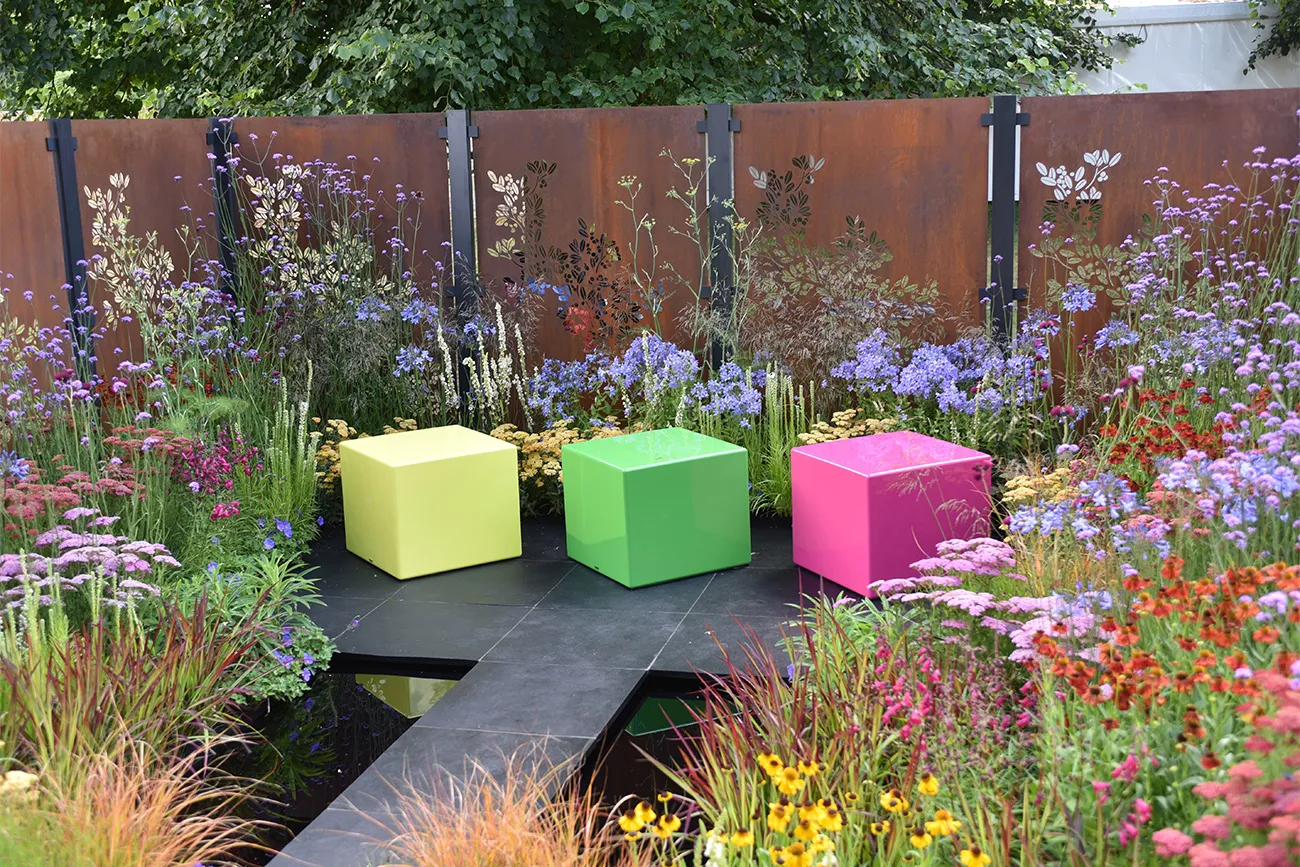
Corten steel is now virtually ubiquitous in new gardens. And for good reason. It is an exceptionally versatile material that allows you, as a garden designer or landscape contractor, to create a garden that will last almost forever.
Corten steel is anything but new. Its history dates back to 1932, when American Byramji D. Saklatwalla (1881-1944) patented an alloy of iron, copper, phosphorus, silicon, nickel and chromium. He named it Cor-Ten: ‘COR’ stands for corrosion resistance and ‘TEN’ for tensile strength, two of its key properties. However, it took considerable further development by United States Steel Corporation, followed by many more years of introduction, before this special steel was embraced by the garden industry. Today, though, there is no avoiding it, not even after price increases caused by higher energy costs and other wartime conditions. Your customers are clearly not deterred by the new price.
Rust never sleeps!
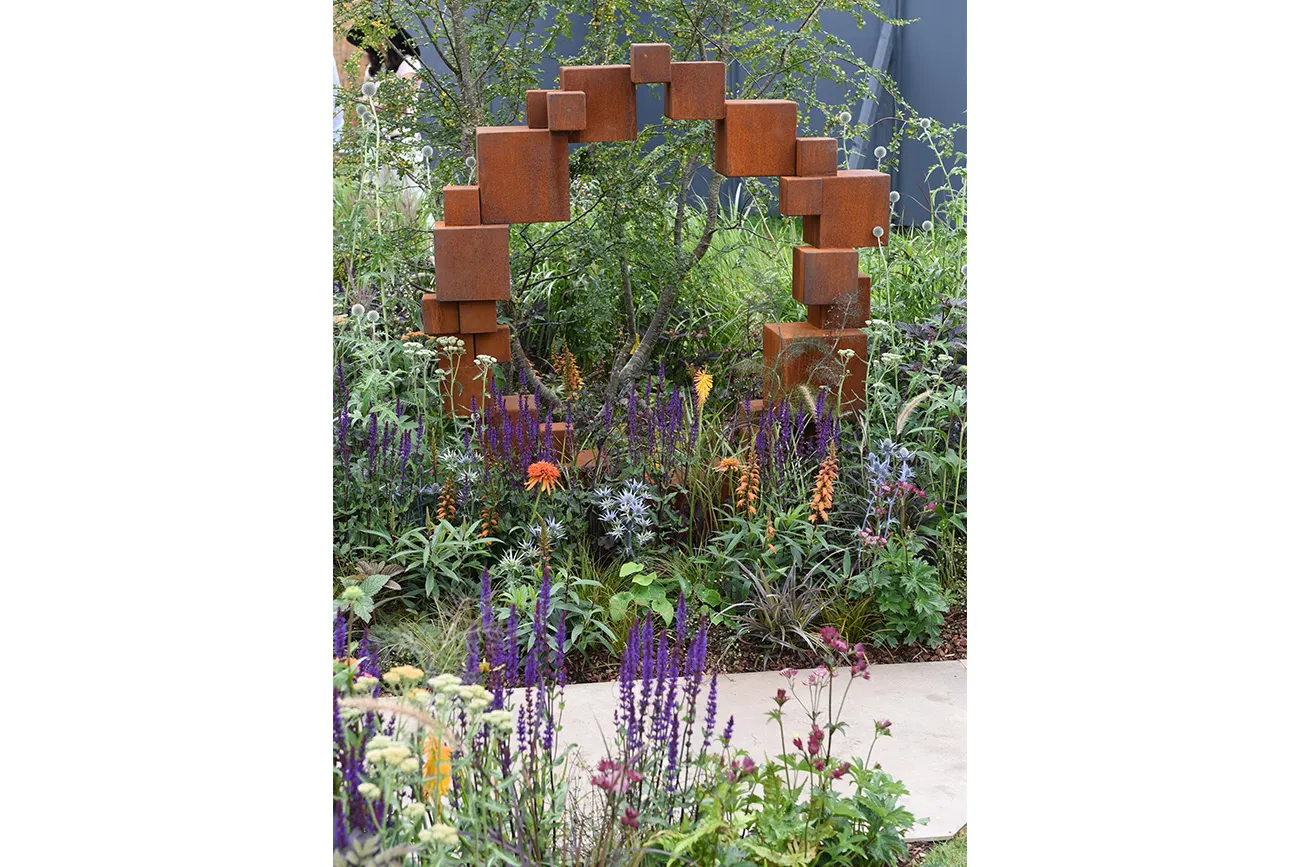
Corten steel is an absolutely stunning material, and above all a forgiving and durable one. Its rust-brown colour fits perfectly among both green and flowering plants, it requires no maintenance, and it lasts almost forever. Most customers accept that it arrives on site as bare steel. They know that iron rusts. They also know that, after a while, Corten steel stops rusting and the visible layer of rust stabilises, forming, to put it simply, a finish or even a protective coating. This surface rust does indeed protect the underlying steel against further corrosion, and therefore against any loss of strength or thickness.
As professionals, however, we need to qualify that claim. Corten steel does continue to rust beneath that protective layer, and therefore loses some thickness. Grade A Corten steel, intended mainly for architectural applications, loses 35 to 75 microns per decade. Grade B, used mainly for heavily loaded structures, loses 75 to 100 microns. There is no need to worry, though. The sheet thickness you use is 2 mm, sometimes even 3 mm. Multiply by 1,000 to express the thickness in microns. That tells you that Corten steel will outlast your current customers, their children, grandchildren and even great-grandchildren. There is one condition: the steel must not remain in constant contact with water or be exposed to the abrasive effects of sea winds, road salt or emissions from heavy industry. Otherwise, the oxidation process will not stop.
Give Corten steel time!
Be sure to warn your customer that, in the first few weeks after processing and/or installation, the rust layer still needs to develop under the influence of the weather, and that this early rust comes off easily. It can rub off on fingers that stroke, touch and test it, or, worse still, on clothing. The rust layer only becomes firmly established after one to two years. You will naturally take this into account when installing and working with the material. If used above patios and other paved areas, or incorporated into walls or structures, dripping rust water will leave stains that set into and on the stone. For vertical elements, therefore, be sure to fit a temporary gutter beneath the structure until this ‘adolescence’ has passed. There is no problem on lawns or in planting areas. Plants can cope with this extra iron.
Want to avoid problems by starting with Corten steel that has already corroded? Yes, it is available on the market. Alternatively, the manufacturer may have pre-rusted the structure at its premises, with or without the use of rust accelerators. No one is willing to tell us what they contain, or whether they are the same as, or better than, the rust accelerators you can buy online. Trade secrets, apparently. In any case, these professionals laugh at the household tips circulating online, such as spraying the steel with water mixed with salt or natural vinegar.
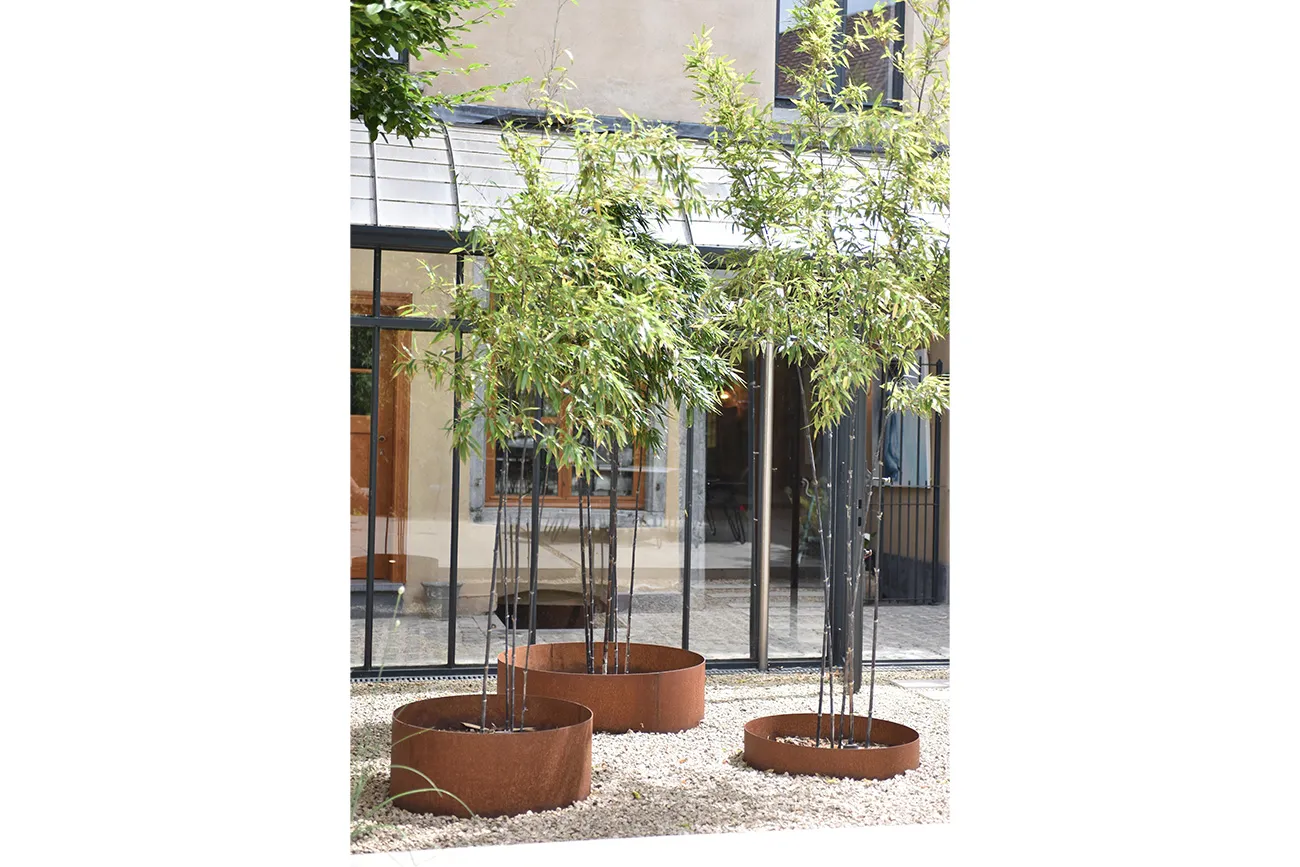
If you work with Corten steel yourself, never combine steel from different batches. Each batch may develop a different shade of rust. Never stick labels or tape on a surface that will later be visible, either, as they leave marks. The same goes for permanent marker, and splashes or smears of grease and oil. Welds also need careful attention. Using ordinary welding wire results in a different colour and reduced durability. Use a MIG welder and Corten steel welding wire instead. Fortunately, more and more companies offer a wide range of ready-made designs or can manufacture your design to perfection. It is then up to you to install the product perfectly, whether it is edging, stair elements, retaining walls or façade cladding.
Making the right choice
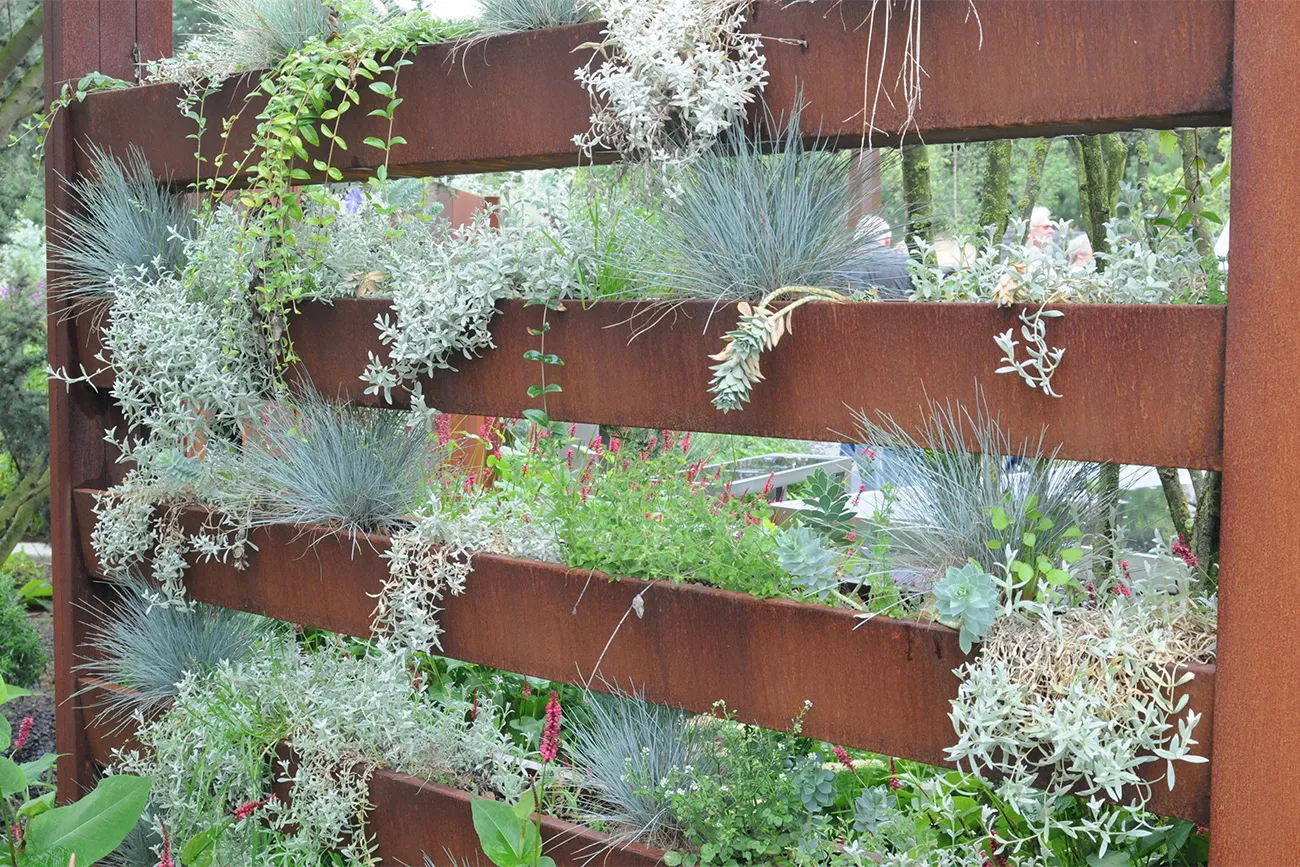
Not yet often seen here, but gaining ground, are Corten steel garden screens. Straight or curved? It makes no difference. Once firmly anchored to support posts on either side, these panels provide excellent privacy and block wind and even noise, reflecting it back towards the street or neighbours. If your customer would rather not have a fully closed wall, Corten steel can easily be laser-cut with attractive designs or messages of their choice. Slats arranged in overlapping rows can, in turn, be designed to screen off particular parts of the garden or draw attention to them. They can even be installed as a divider between neighbours, making diagonal views difficult or impossible while retaining a sense of visual and spatial openness. What works vertically can work horizontally too. Strips of this material, incorporated into a wall or screen and even linked to a pool house, garden shed or the house itself, add real value.
Water troughs and water tables are already well established and widely used. They can be delivered ready-made to your site. The same goes for decorative log stores, attractive and versatile barbecues, patio heaters, fire pits and bowls, and much more. You can find them from a wide range of manufacturers, wholesalers, garden centres and even online shops. Each offers bargain prices. Unfortunately, they do not all pay the same attention to material selection: they use lower-grade steel plates that are thinner than ideal, and sometimes neglect quality finishing. Cheap can therefore turn out expensive. Take patio heaters, for example. The difference is considerable: cheaper models are little more than a tube with a base, while better ones have a stainless-steel base plate, allowing residual ash, even when wet, to remain without eating into the Corten steel. You can certainly add to this information and explain to your customer why, in their best interests, you choose quality and durability.
Question about this story? Ask your question
Keep following this
Get an email when a new story is published. No account needed.
- SubjectGeneral







