









Small trees with a big impact
Bees have attracted considerable interest in recent years from many garden owners, businesses and local authorities. We depend on bees if we are to continue enjoying all the splendour of our gardens. When planning a garden that will attract bees, we often think first of creating large flower borders, but these can be labour-intensive and are not suitable for every project.
Trees can provide a large amount of pollen per square metre and are often chosen as a main food source by honeybees, bumblebees and solitary bees. A small tree that attracts bees can therefore be a valuable addition to a design, benefiting not only the client but also nature. Here are a few small species that are popular with these and other beneficial insects.
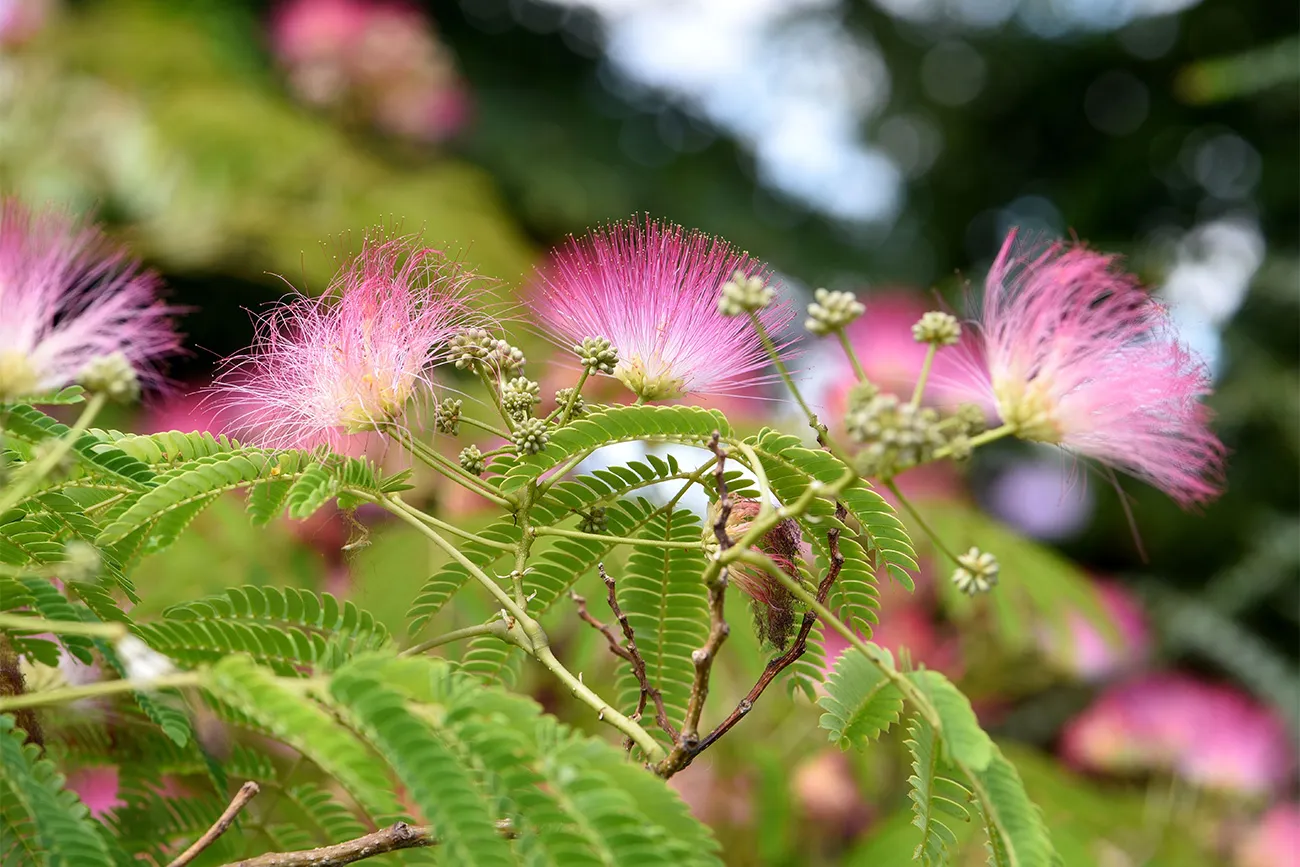
First up is Albizia julibrissin, or Persian silk tree. Once seen mainly in the Mediterranean, it has become increasingly common in our gardens in recent years. It can flower for as long as three months, and its bright pink, sweetly scented flowers are visible from a distance. Its bipinnate leaves fold up in the evening, which is the reason for its Dutch name. Albizia has a distinctive shape, with widely spreading branches that grow almost horizontally. Although it was once considered only moderately hardy, it does well in sheltered spots and needs no winter protection. Increasingly hardy cultivars are also available, such as Albizia jul. ‘Tropical dream’. This cultivar flowers profusely from a very young age and is hardy to around -20°C.
Unfairly overlooked
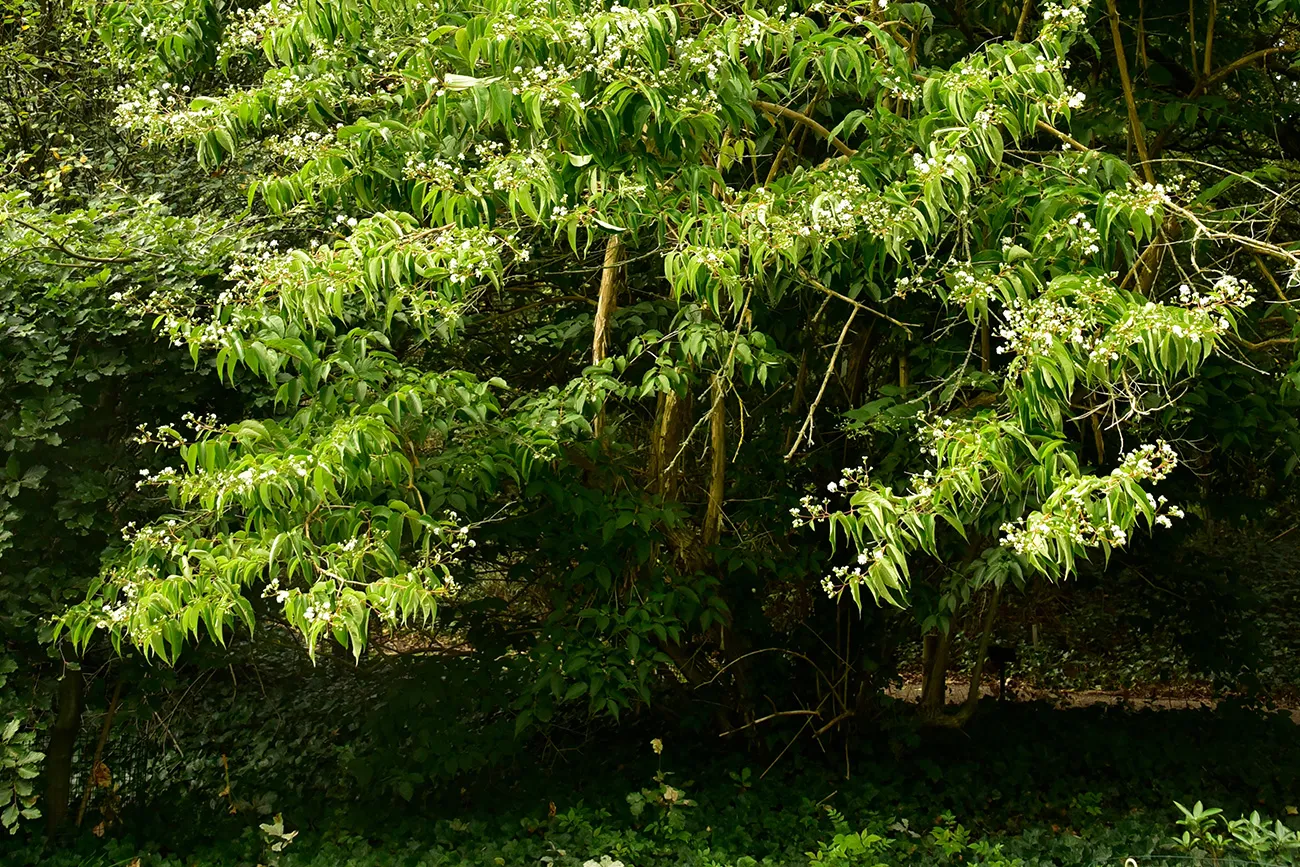
Heptacodium miconiodides, or seven-son flower, is a plant that deserves more attention. It is usually grown as a multi-stemmed shrub, but can also be planted as a tree. It has all the qualities of a top-class tree, yet is often overlooked. To begin with, its beautiful peeling bark provides year-round ornamental interest. It also bears bright white, sweetly scented flowers from late August to October. Once flowering is over, vivid red fruits appear and remain on the plant for a long time. In autumn, the leaves turn shades of purple. Native to China, it is very hardy and disease-resistant. Without doubt, a valuable addition to any garden.
Profuse flowering
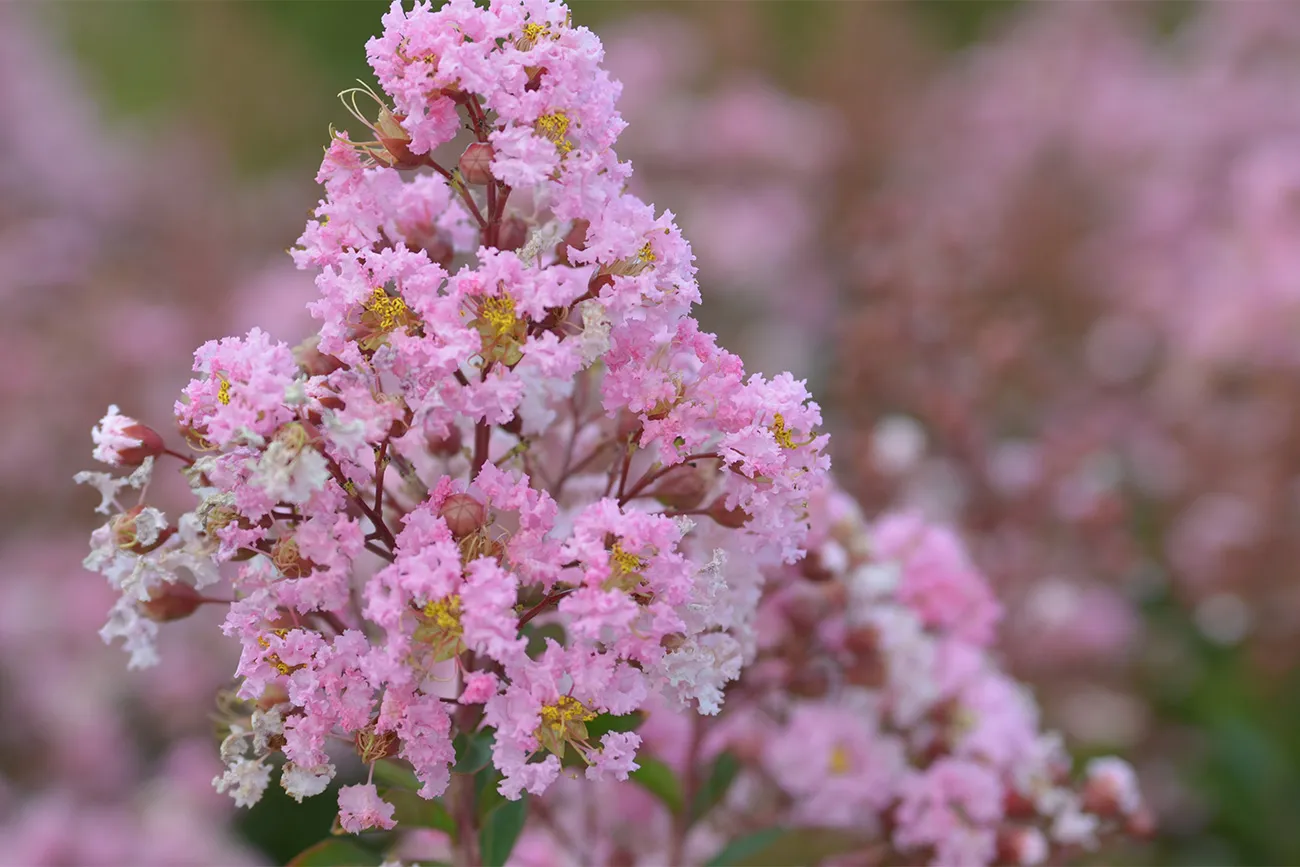
Lagerstroemia indica, also known as crape myrtle or Indian lilac, is a broad, vase-shaped tree or shrub. It is widely used in the Mediterranean region and is becoming increasingly popular here too. Its flowering is profuse, mainly in shades of pink and red, although white and yellow cultivars are also available. Originally a tropical tree, it is now available in cultivars hardy to -18°C thanks to a successful breeding programme, such as Lagerstroemia indica ‘Eveline’.
This plant was selected by Belgian growers Geert Devriese and Ingrid Luyssen, and has all the qualities of a small tree or multi-stemmed shrub. It produces a beautiful profusion of pink flowers from July to September and, on older specimens, has attractive peeling bark. It thrives in full sun and in moist but well-drained soil.
Their favourite
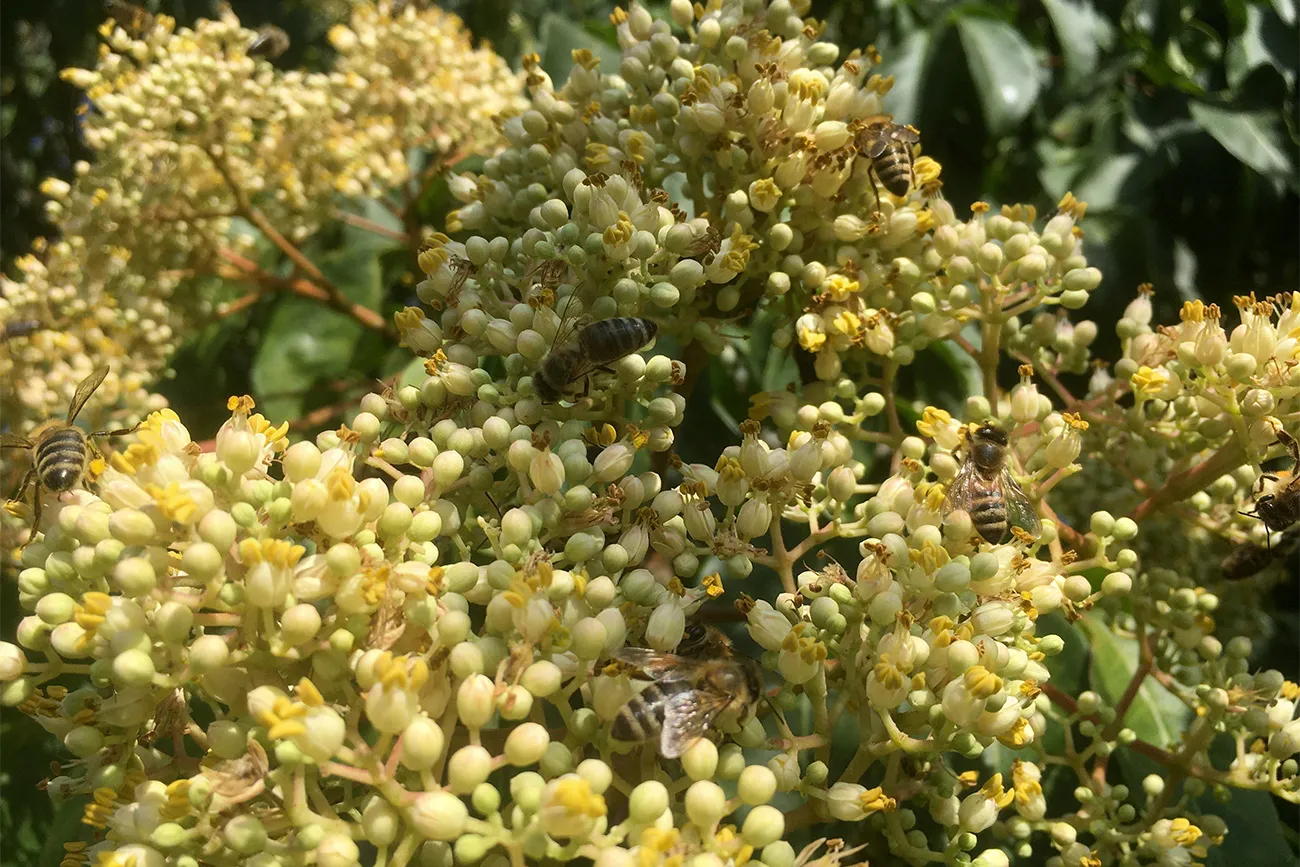
We finish with THE bee tree, Tetradium danielii. Reaching a mature height of 5 to 7 metres, it starts flowering in August, producing loose clusters of white flowers. These provide abundant pollen and nectar, making the tree especially popular with bees. The flowers are followed by striking red capsule fruits. Its compound leaves have a glossy upper surface and a grey-green underside. The bark is also grey and smooth. In autumn, the leaves turn a beautiful yellow. It thrives in a sunny position and fertile soil.
Tetradium daniellii var. hupehensis is larger than the species and can reach 10 to 15 metres in height.
Hay fever
As the trees above rely mainly on insects for pollination, they are also less troublesome for people with hay fever. Their pollen is not as fine and small as that of birches and hazels, which rely on the wind for pollination.
Would you like to know more about bees in the garden? Take a look at Zakboek voor de Bijentuin by Marc Verachtert, Bruno Remaut and Bart Vandepoele. Bart is the driving force behind ‘week van de bij’. They organise the ‘Bijenvriendelijkste gemeente’ competition and provide information boards for local authorities wishing to inform residents about bee-friendly initiatives in their town or village.
Question about this story? Ask your question
Keep following this
Get an email when a new story is published. No account needed.
- SubjectGeneral







