









Pond care with natural products
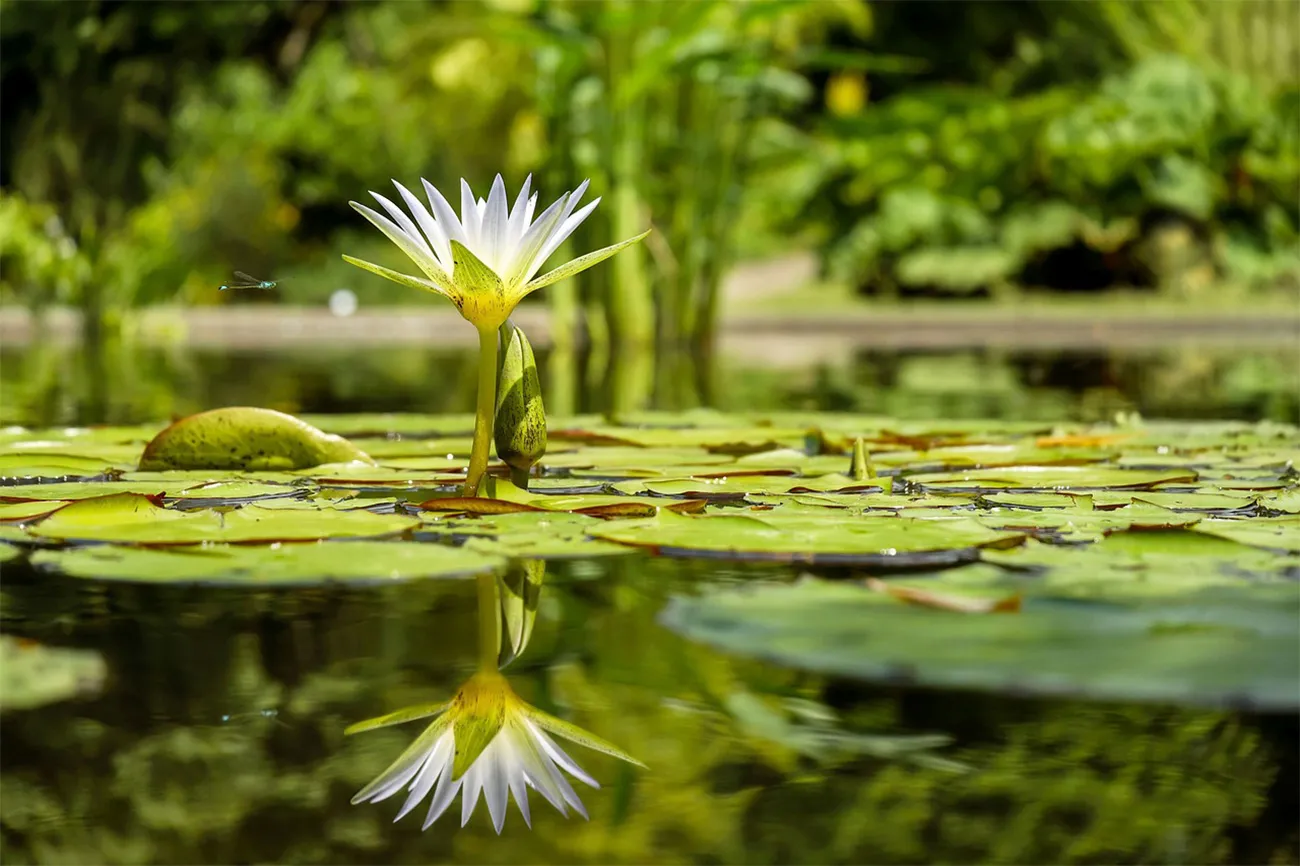
A lovingly created pond can make any garden truly special. However, garden owners should always bear in mind that a pond also involves a lot of work. Pond maintenance in particular can be a challenge. If neglected, algae and cloudy water are never far away. To prevent this, there are natural pond care products. They keep the water clean without putting the pond’s inhabitants or the environment under strain.
Garden ponds are prone to pollution
A garden pond is a small, enclosed ecosystem. It can easily become unbalanced, particularly when it is home to fish. Food residues, waste from the pond’s inhabitants and decaying parts of aquatic plants all cause pollution.
This encourages the growth of harmful micro-organisms such as bacteria. Algae can also spread more widely in the pond as a result. This not only looks unsightly, but sooner or later can also lead to the spread of fish diseases.
Why a pond needs a filter
To keep the pond ecosystem in balance, it is essential to maintain good water parameters. A garden pond therefore usually needs to be fitted with a suitable filter. The pond water is pumped through the filter, which removes dirt particles, excess nutrients and bacteria.
Pond filters usually consist of mechanical and biological filter components. Mechanical filtration traps dirt particles in the water. Biological filtration is used to remove bacteria and excess nutrients.
When choosing a pond filter, it is important to take the size of the pond and the number of fish into account. As a general rule, the larger the pond and the more fish it contains, the more powerful the filter needs to be.
Frequent water changes can harm a garden pond
For many pond owners, regular water changes are the go-to solution for improving water quality. In practice, however, this approach to pond maintenance does more harm than good. This is mainly because pond water contains both harmful and beneficial bacteria.
If the water is changed continually, these bacterial cultures are also disrupted. This leads to increased algae growth and a significant deterioration in water parameters. By changing the water frequently, pond owners achieve the exact opposite of what they are aiming for.
Where do pond algae come from?
To a certain extent, algae are simply part of the pond. Under certain conditions, however, they can take over. Excessive algae growth not only detracts from the pond’s appearance. It can also harm the pond’s inhabitants and, for example, cause a lack of oxygen in the water.
Algae growth can be encouraged by having too many fish in the pond and by direct sunlight in summer. Other contributing factors can include a high phosphate content in the tap water used to fill the pond, as well as decaying fish food or plant material.
What helps to prevent algae growth?
There are several ways to combat algae growth. Some types of algae can be controlled quite effectively with water fleas. In some cases, however, it may also be necessary to remove algae with a net or brush.
Another way to combat algae in a garden pond is to use an algae remover. Ideally, it should contain natural active ingredients. This is better for the environment and for the health of the fish in the pond.
Effective pond care without chemicals
Suitable pond care products make a crucial contribution to improving water quality, keeping the garden pond ecosystem in balance and safeguarding the health of the fish. Pond care is most effective when natural products are used, such as those from Aquaris.
The brand’s range includes algae remover, pond sludge remover and filter starter, among other products. As no chemical ingredients are used, the products are highly environmentally friendly. These natural products are highly effective for pond care, allowing garden owners to enjoy a carefully designed pond all year round.
Question about this story? Ask your question
Keep following this
Get an email when a new story is published. No account needed.
- SubjectGeneral







