









PODCAST: Stronger grass, fewer chemicals: the silicon revolution has begun
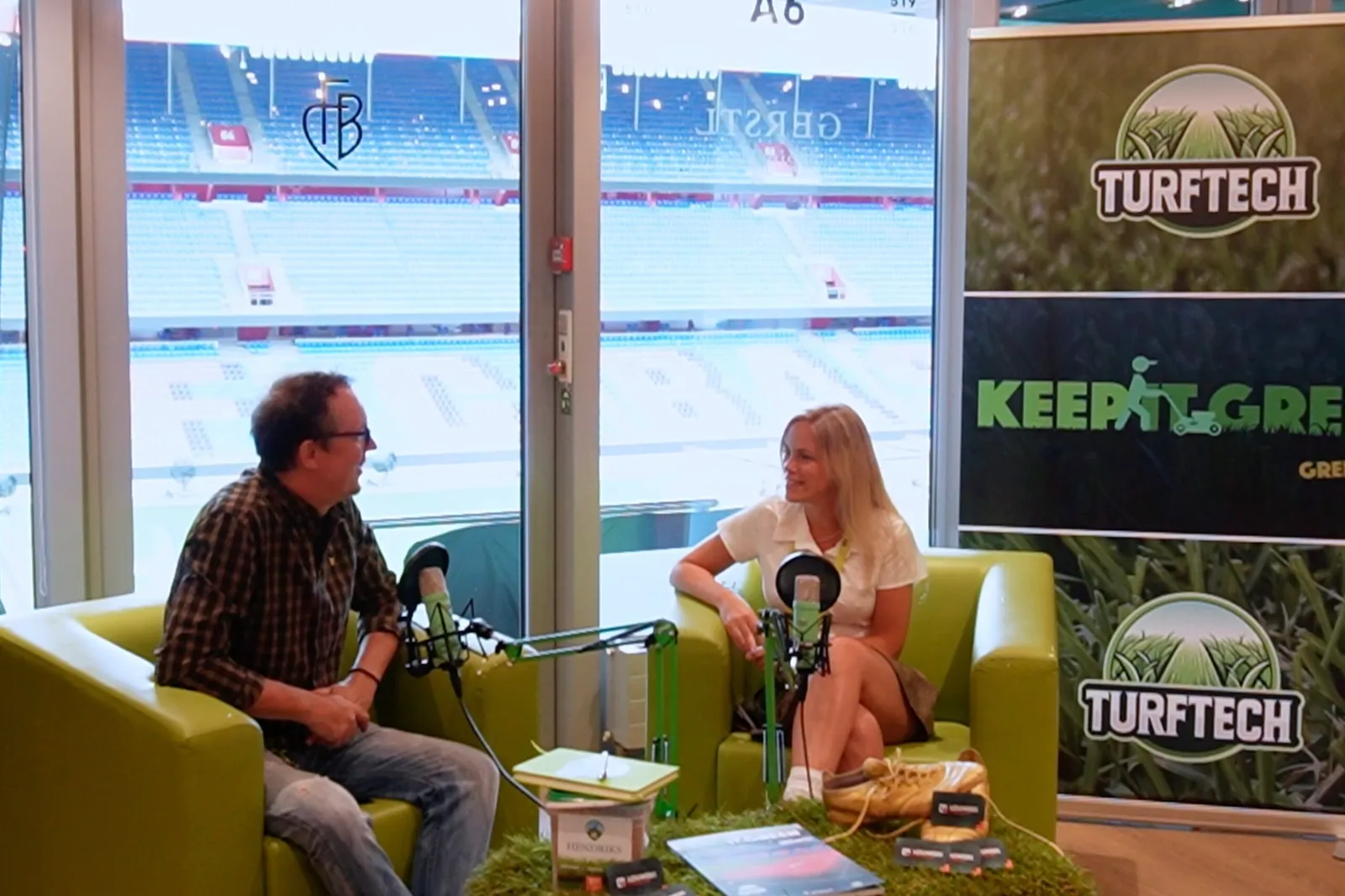
At TurfTech 2025 in Basel, we spoke to Kate Finlayson of Orion Future Technology Ltd to explore one of the most promising developments in modern sports turf management: the role of silicon in plant health and sustainability.
Guest: Kate Finlayson, Orion Future Technology Ltd
Podcast: Keep It Green, TurfTech 2025
With a background in plant biology, agriculture and sustainability, Finlayson explains how strengthening plants at a structural level can reduce the need for fertilisers, pesticides and other inputs. Silicon, she explains, strengthens plant structure and helps grass cope better with stress, disease and intensive use.
Finlayson explains how field managers can integrate silicon into their programmes, why results can vary depending on the growing season, and why one of the sector’s biggest misconceptions persists: the idea that all silicon products are the same.
For field managers looking to improve sustainability, playing quality and plant health, this episode offers a clear introduction to a technology that could become increasingly important in the future of sports turf.
Question about this story? Ask your question
Full transcript
All chapters (15)
- Podcast introduction
- Who is Kate Finlayson in the world of turf?
- From agriculture to sports turf
- What is a “silicon sister”?
- How silicon strengthens plants
- Research into silicon and its benefits
- Projects and football clubs
- Working with top clubs
- Different results from season to season
- The first step to applying silicon
- Sustainability and environmental benefits
- A persistent myth about silicon
- Not all silicon products are the same
- Wrapping up the conversation
- End of recording
Podcast introduction
Kris Vandekerckhove So, hello Kate. Hello. Welcome. You’re a guest on the Keep It Green podcast. We like to think of ourselves as one of the leading magazines for groundsmen, groundswomen and greenkeepers. And I’d like to ask you a few questions.
Kate Finlayson Of course.
Who is Kate Finlayson in the world of turf?
Kris Vandekerckhove Kate, who are you and what do you do in this world?
Kate Finlayson In the world of turf.
Kris Vandekerckhove In the world of turf. Are you a turf wizard? Oh, I’m the turf fairy. The turf fairy. Yes, apparently that’s what they call me. It’s actually my nickname. Oh my gosh.
From agriculture to sports turf
Kate Finlayson Yes. My career actually began in agriculture, in plant science and sustainability. So I advised growers on using fewer pesticides, environmental issues and sustainability. Then I worked in several different sectors: agriculture, horticulture, flowers, and it was only a few years ago that I moved into the turf sector.
Now I advise on sports turf in various countries, with essentially the same focus: looking at how we can make the management of professional sports pitches more sustainable and environmentally friendly. I think there’s a huge amount of technology we can take from other sectors and bring into turf. It’s fascinating to see the bigger picture across different technology fields and cross-pollinate ideas between sectors.
What is a “silicon sister”?
Kris Vandekerckhove OK, I read that you’re some kind of silicon sister. For the non-turf nerds, what’s your “explain it as if I had to explain it to my dad” version of what silicon actually does?
How silicon strengthens plants
Kate Finlayson Of course. As I said, I have a background in plant biology. What we always try to do to reduce the use of fertilisers and pesticides is make the plant as healthy and strong as possible from the outset. If you have a strong plant, it needs much less maintenance and far fewer inputs during the growing season, and the same applies to turf.
One interesting element you can use for this is silicon. It’s not immediately something you’d think could benefit a living plant, but actually every plant needs silicon to strengthen its structure. It’s a bit like the concrete in a building. It simply makes the plant stronger.
Read the full transcriptCollapse transcriptnog 10 hoofdstukken
Research into silicon and its benefits
Kate Finlayson I started researching silicon in my current role about four years ago, and it’s really fascinating to see the benefits you can achieve with it. It isn’t readily available in the soil, so when you add it to turf, it really does strengthen the plant structure.
It reduces disease pressure, and it reduces the amount of nutrients you need to add because it helps the grass take up more nutrients. It also strengthens the structure, helping with playability and recovery after matches. It’s really interesting to see how many benefits we can achieve with this element.
Projects and football clubs
Kris Vandekerckhove Can you tell us about a project you’re particularly proud of? A pitch we’d all know?
Kate Finlayson Naming names is a bit dangerous, isn’t it?
Working with top clubs
Kate Finlayson I’ve been fortunate that many groundskeepers at some top clubs in the UK have welcomed me and given me access to what they do and the challenges they face. They’ve carried out trial programmes for me and have been very supportive.
In particular, I have to say that John Ledwidge at Manchester City has been fantastic for me. He’s helped me with all my questions, carried out on-site trials, and I’m really grateful to him for that.
Different results from season to season
Kate Finlayson These days, a lot of clubs are using it, and it’s really interesting to visit them and ask: what are you seeing, what results are you getting? I always get a slightly different answer. This year, it was that the grass stays greener when it’s dry. They use it on training pitches to help retain water more effectively.
That wasn’t a challenge in previous seasons, so it didn’t come up in the feedback either. But this year, it was the main result. The benefits you see vary from year to year, depending on the growing season.
The first step to applying silicon
Kris Vandekerckhove What do you think would be the first step groundsmen and groundswomen could take to integrate your system?
Kate Finlayson In my view, it’s actually very simple. Because it works like a fertiliser, you can essentially use it as an intermediate step between certain applications. For example, you could reduce your nitrogen a little and add silicon to your programme. That slows growth slightly and strengthens the root structure and the grass.
You could add it once a month or every two weeks, for example, and see what changes. You can also feel the difference, because you can really notice it in the texture of the grass and its stability. Once you see those differences, you can adjust your programme to achieve what you’re looking for.
Sustainability and environmental benefits
Kris Vandekerckhove How does that translate, because these days everything is about sustainability and ecology. How does it fit into that?
Kate Finlayson I’d say it’s one of the most crucial materials for making cultivation more sustainable and environmentally friendly. When you use silicon as a foliar application, it helps the roots take up more nutrients from the growing medium, whether that’s grass, hybrid systems or soil. It mobilises more of those nutrients, both liquid and granular.
We all know that when you apply granular fertilisers, a large proportion leaches out, particularly on heavily used pitches. Silicon helps slow that process down. That matters because it remains a challenge: we don’t want to keep adding more nitrogen fertiliser when it isn’t needed.
A persistent myth about silicon
Kris Vandekerckhove One more question. What’s a myth in your sector that you’d like to see disappear?
Kate Finlayson The question I get most often is: isn’t it just sand? Isn’t it already everywhere?
Not all silicon products are the same
Kate Finlayson It’s a logical question, because silicon occurs in many different forms, from sand to gel to microchips. But it’s actually a very diverse group of products, and they all work in different ways. Many customers, for example, use products such as potassium silicate or diatomaceous earth and think they’re all the same. But they aren’t. It’s about choosing the right product so it’s effectively available to the plant and delivers the benefits you’re looking for.
Wrapping up the conversation
Kris Vandekerckhove Not all silicons are the same. Let that be the title of this podcast.
Kate Finlayson Perfect.
End of recording
Kris Vandekerckhove What are your plans for the next few days here at TurfTech? Thanks for joining me on this first podcast trip.
Kate Finlayson Yes, thank you very much.
Kris Vandekerckhove We’ll see plenty more of each other over the next few days. I just hope I don’t drink too much Nerf drink.
Kate Finlayson No problem.
Kris Vandekerckhove That’s it.
Keep following this
Get an email when a new story is published. No account needed.
- SubjectGeneral







