









Playful paths and patios with flagstones
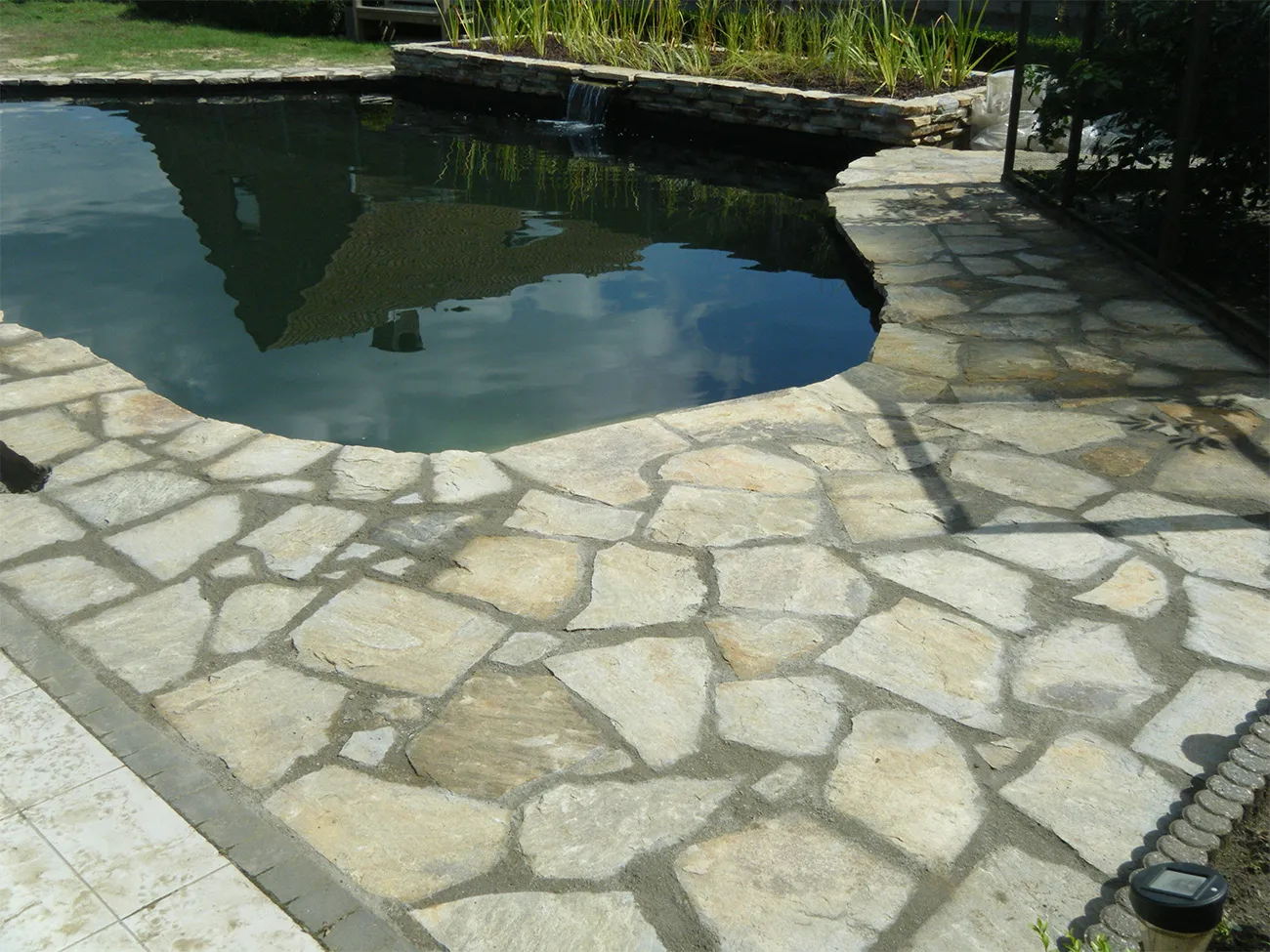
Not everything has to be neat and perfect. More and more people are opting for an organic, perhaps even slightly wild garden.
Think of the many wildflower meadows, prairie gardens and small Japanese-inspired oases. The ideal material for bringing patios and paths into line with this kind of natural concept? Naturally split flagstones with irregular shapes.
Flagstones are naturally split stones. They are often layered stones such as slate, but flagstones are also made from hard stones such as Kavalas and Belgian blue limestone. Unlike traditional paving slabs, flagstones have no fixed shape or dimensions. Every stone is different. It is precisely this unique, irregular character that appeals, particularly in wild areas, prairie gardens and wellness settings, but just as much in a country garden, for example. For the installer, however, the huge variety of flagstones can sometimes present an extra challenge.
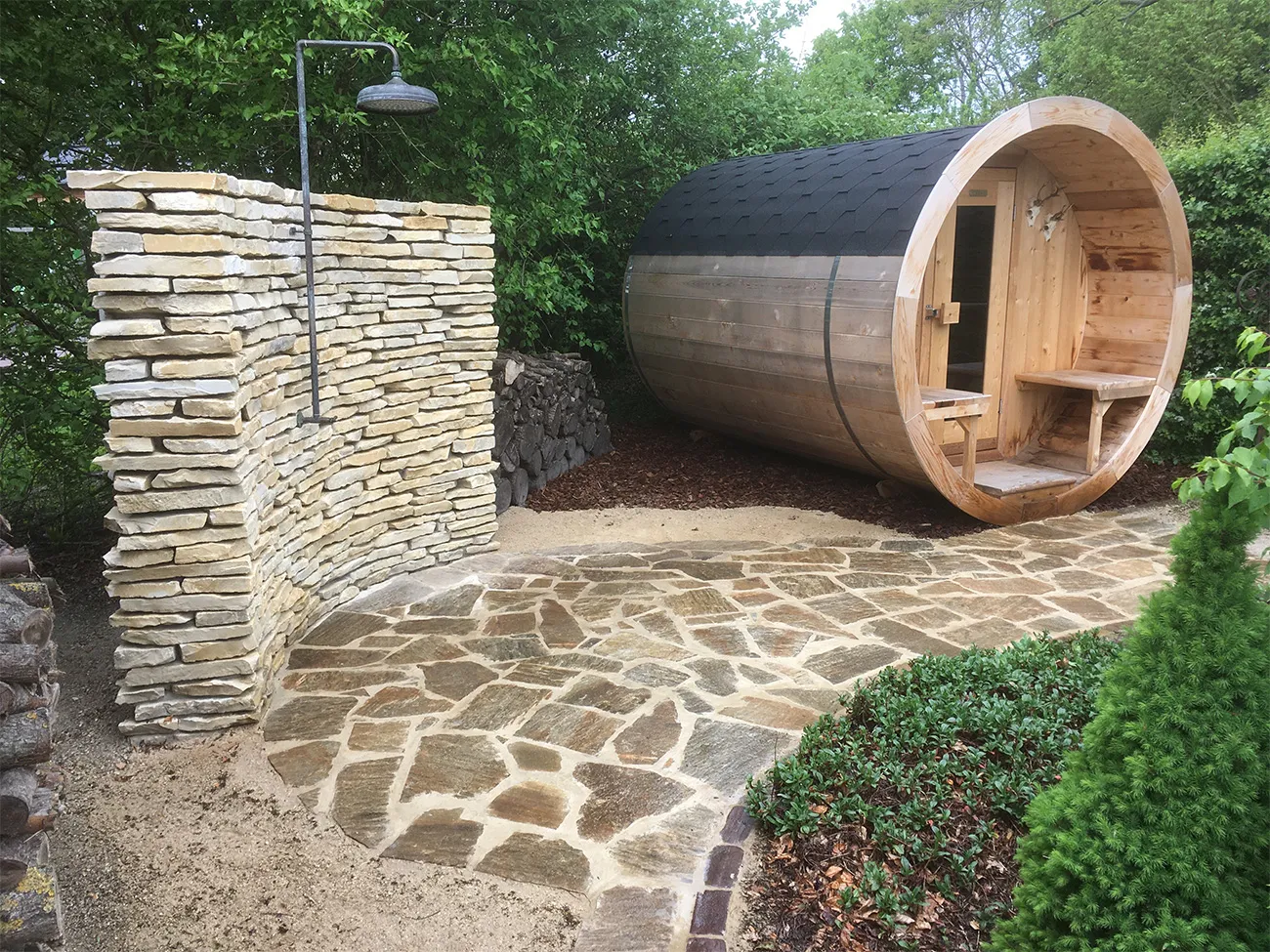
Know what you are buying
“The challenge often starts with the purchase,” says Els Meynen of garden materials supplier E.L.S. Garden. “Flagstones are not simply sold by area, but rather by weight. And when we refer to certain sizes, we are not talking about the average dimensions of the stones, but their average thickness. A Kavalas flagstone 30/50 will therefore be between 30 and 50 millimetres thick, but there can still be huge variations in the size and area of the stones.”
To make it easier to buy flagstones in quantities that match the area required, E.L.S. Garden offers them on pallets, layer by layer. “The stones are fitted together as well as possible on a pallet covering roughly one square metre. This makes it easy to work out how many layers you need for a particular garden project, depending on the joint width you want to use.”
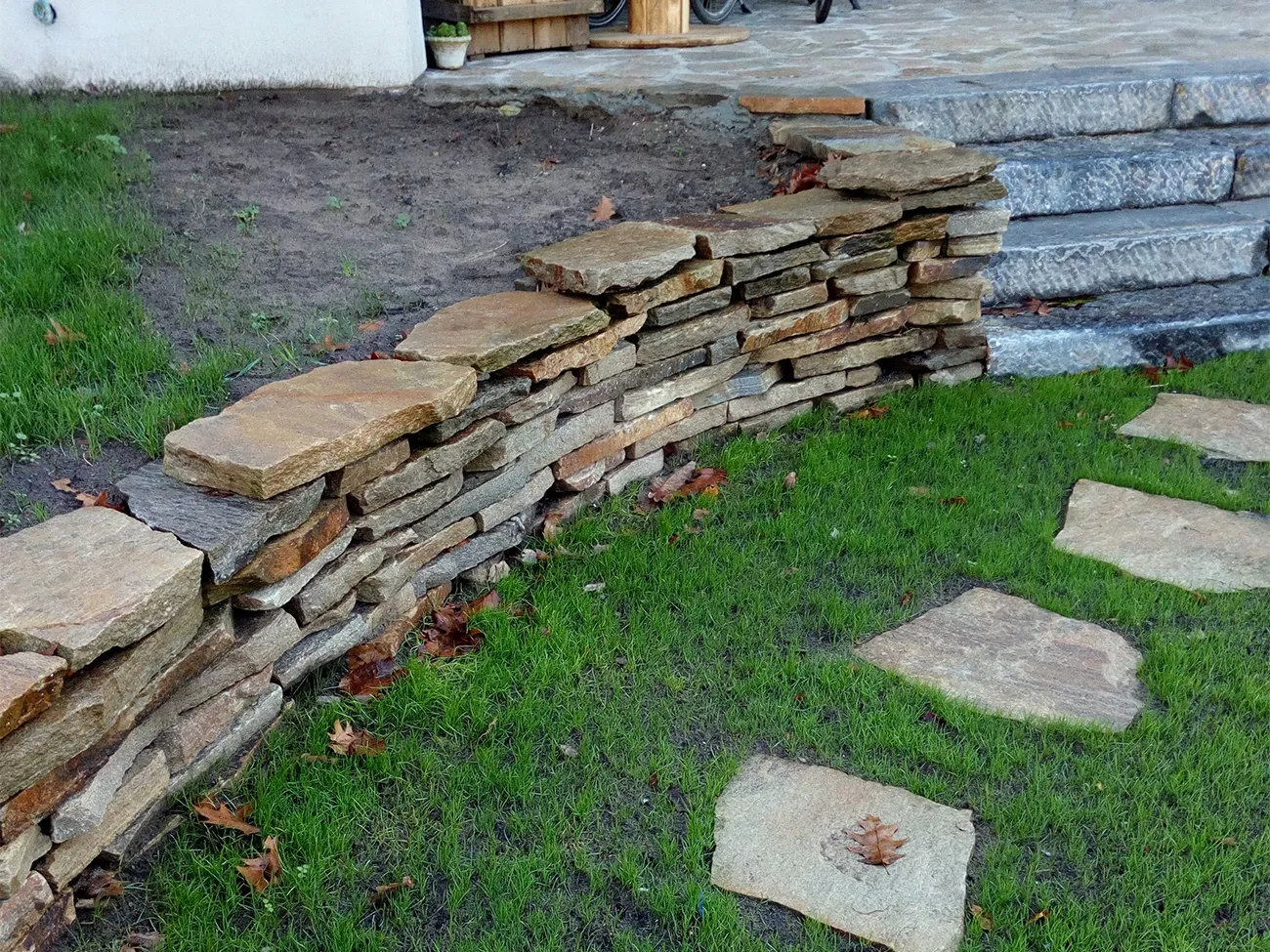
It is harder to estimate how much jointing material you will need. “Joint widths can vary enormously, depending on how well the different stones fit together. In one place, for example, a 1-centimetre joint may be enough; elsewhere, you may need 8 centimetres of jointing material. These things often only become clear during installation, making them virtually impossible to calculate in advance.”
Work to the string line
Flagstones can be used either as individual stepping stones or to cover an entire patio. “Stepping stones are often laid in gravel, with a thin layer of cement slurry underneath for stability if necessary. The gaps around them can then be filled with gravel, lava gravel or even plants. For larger patios or continuous paths, a mortar bed is generally the preferred option, although not every type of flagstone is suitable. Yonne flagstone, for example, is soft and moderately susceptible to frost. In other words, the stone absorbs moisture from the cement, which can cause it to crack in freezing conditions. This type is therefore best laid on a bed of gravel.”
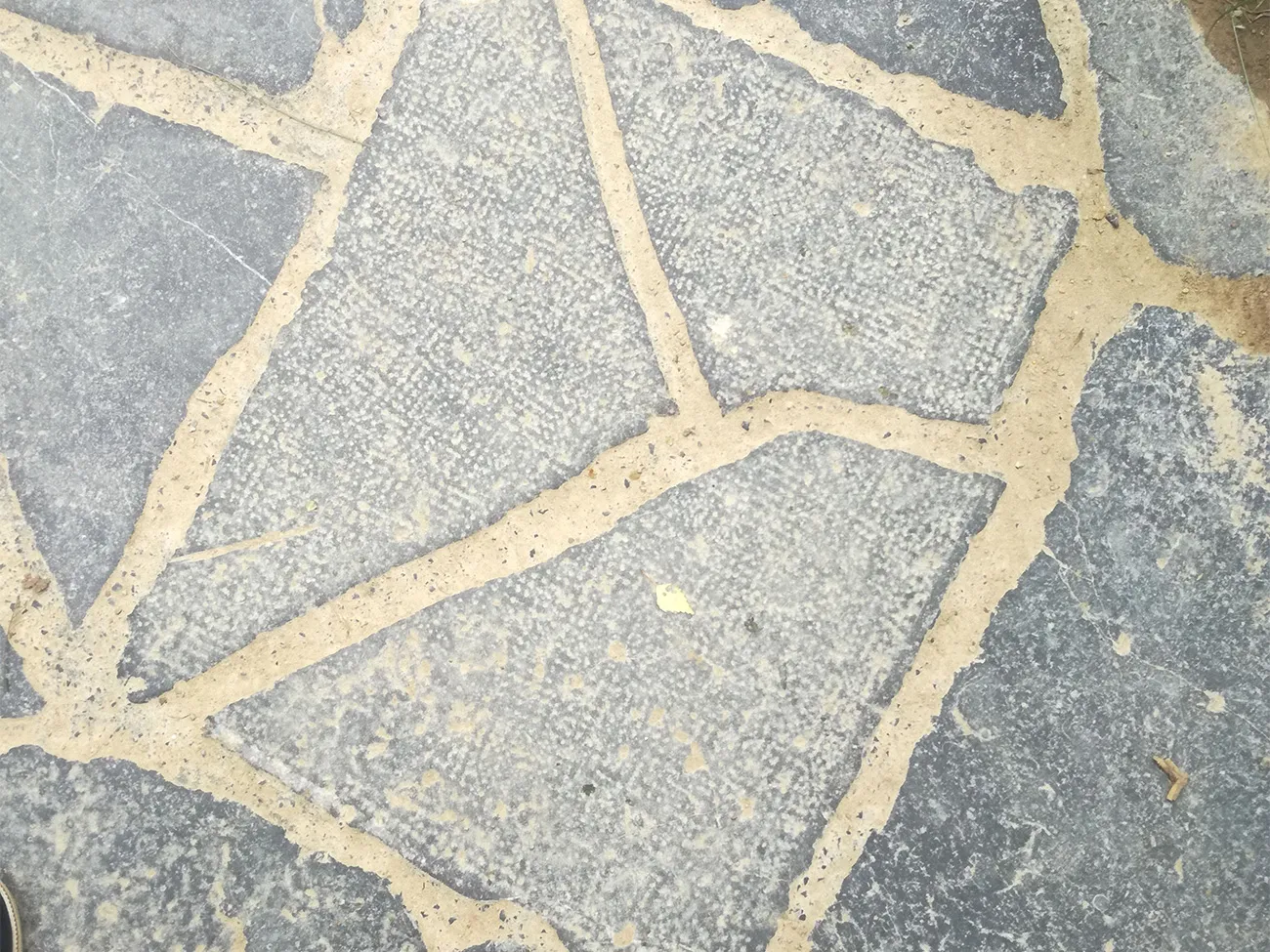
To create a neat, continuous surface, such as a patio, the stones are fitted together as closely as possible. “If there are still large gaps between some of the stones, you can break off small pieces of stone and fit them in at the end.”
However, according to Els Meynen, fitting the flagstones together is not the biggest challenge. “It is the variations in thickness that require extra care. You will not get a level surface with an even mortar bed. As with cobbles, you have to work to a string line or straightedge. That is the only way to achieve a level surface.”
Question about this story? Ask your question
Companies in this story

Keep following this
Get an email when a new story is published. No account needed.
- SubjectGeneral
- CompanyE.L.S. Garden







