









Ornamental grasses for a natural winter display
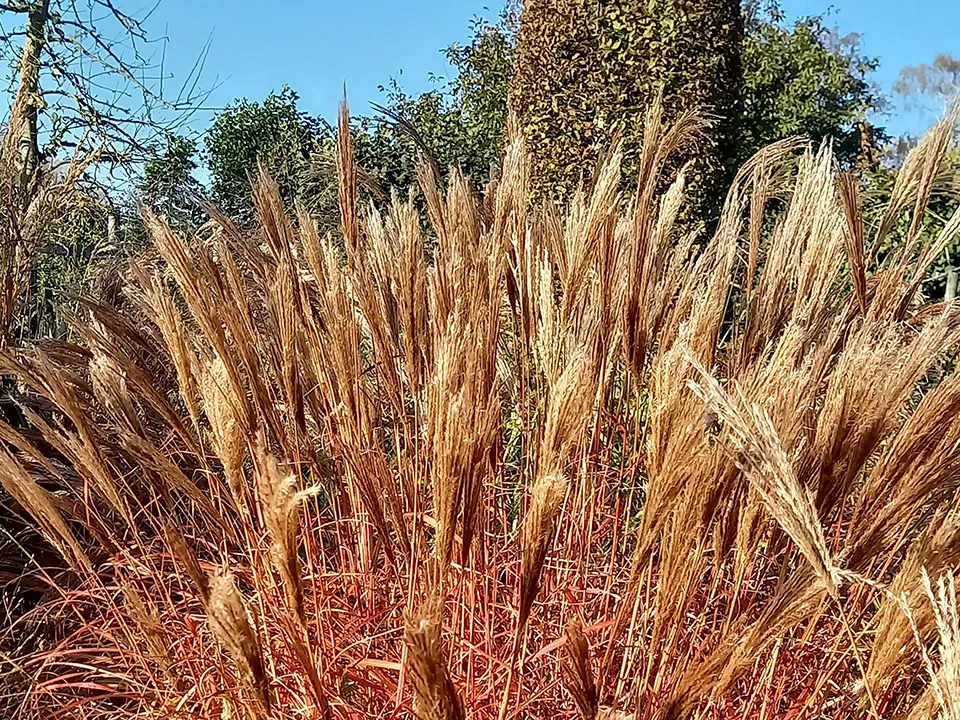
The range of ornamental grasses suited to our gardens grows year on year. With hundreds of different grasses in cultivation, there is no shortage of species and cultivars to choose from. Unfortunately, the same cultivars are often used time and again. Think of Pennisetum alop. ‘Hameln’ or Imperata cylindrica ‘Red baron’. You have probably also used Miscanthus sinensis ‘Gracillimus’ or Sesleria autumnalis. Do these names sound a little too familiar? It is time to change that. The greater the diversity of plants used in our gardens, the better the chances of reducing certain diseases and pests in the future. So here are five new or lesser-known grasses that can add value to a planting design.
We start in November with a burst of colour. Miscanthus sinensis ‘Red chief’ certainly delivers. It not only flowers from August, with intensely red plumes, but also blazes red in October and November as its leaves change colour. For the strongest colour effect, plant it in full sun, although it will still show autumn colour in partial shade. It is relatively short for a Miscanthus and, at 1.20 metres in flower, is one of the more compact cultivars. It is suitable for smaller gardens and containers, as a specimen plant or in larger drifts. Miscanthus have few soil requirements and thrive in both sandy and clay soils. They remain upright and attractive in winter, bringing structure to the border.
The pampas grass trend
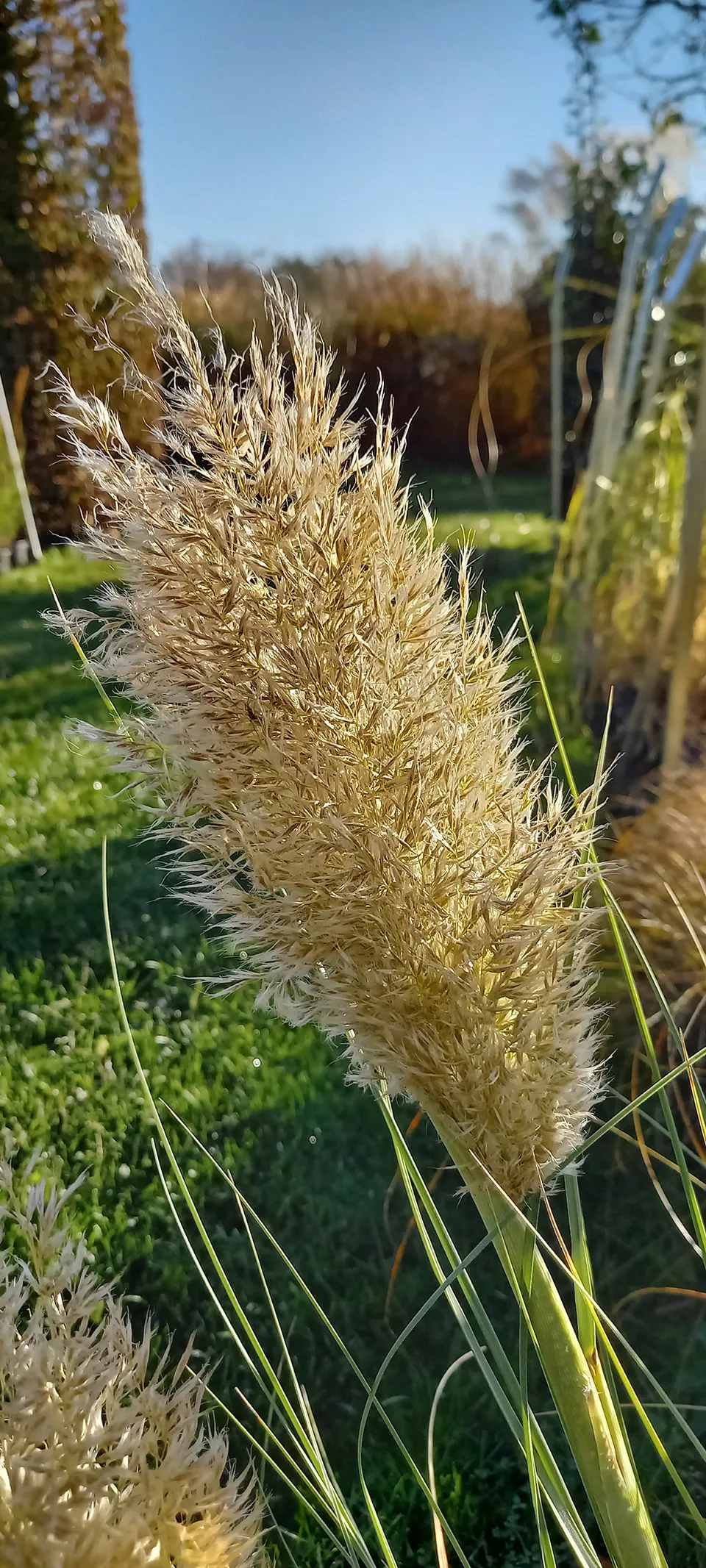
Gardens, like many other things, are subject to trends. One of the latest began in interior design: the trend for Cortaderia plumes. The high prices charged for dried pampas plumes by florists have also revived demand for using the grasses in gardens. However, Cortaderia take up a lot of space, quickly occupying 2 to 4 square metres per plant. There is now a solution: the new Cortaderia ‘Tiny pampa’. While we are not particularly keen on pampas grass, with its razor-sharp leaves, this dwarf variety is certainly worth considering. Its leaves reach about 60 centimetres, topped by compact plumes that rise to a maximum of 80 centimetres, making it the smallest of its kind and suitable for containers too. It is also very floriferous, flowering a little earlier than other cultivars, from August onwards. A welcome addition to the range of low-growing, semi-evergreen grasses for a dry, sunny spot.
Dutch dreams
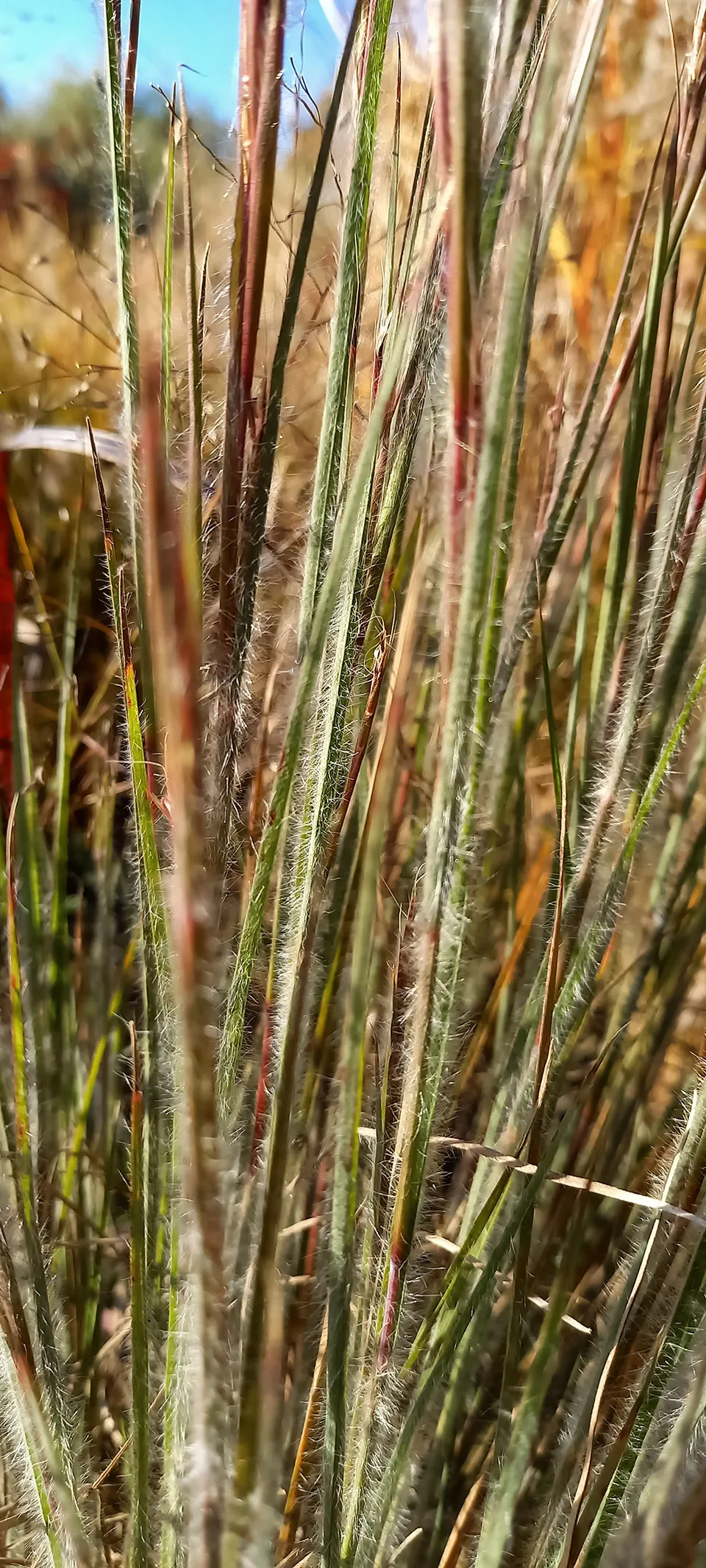
Those following the ‘Dutch dreams’ movement will already know that plants championed by Dutch garden designer Piet Oudolf are often adopted and embraced by many others soon afterwards. Sesleria autumnalis, which he was among the first to use in his designs, is a case in point. Through his projects around the world, he has a knack for selecting plants that are distinctive, climate-resilient and create a strong winter display. One of these newer grasses is Schizachyrium scoparium ‘Ha Ha Tonka’. This small prairie grass is characterised by the fine hairs on its blue-grey leaves. These hairs create a unique garden display by catching and holding tiny water droplets. The grasses literally sparkle in the early morning light, and frost completes the picture. It is a deciduous grass that prefers a sunny, dry spot and grows to 90 centimetres tall. It looks beautiful in a mixed border with perennials such as Echinacea or Salvia.
Sesleria autumnalis 2.0?
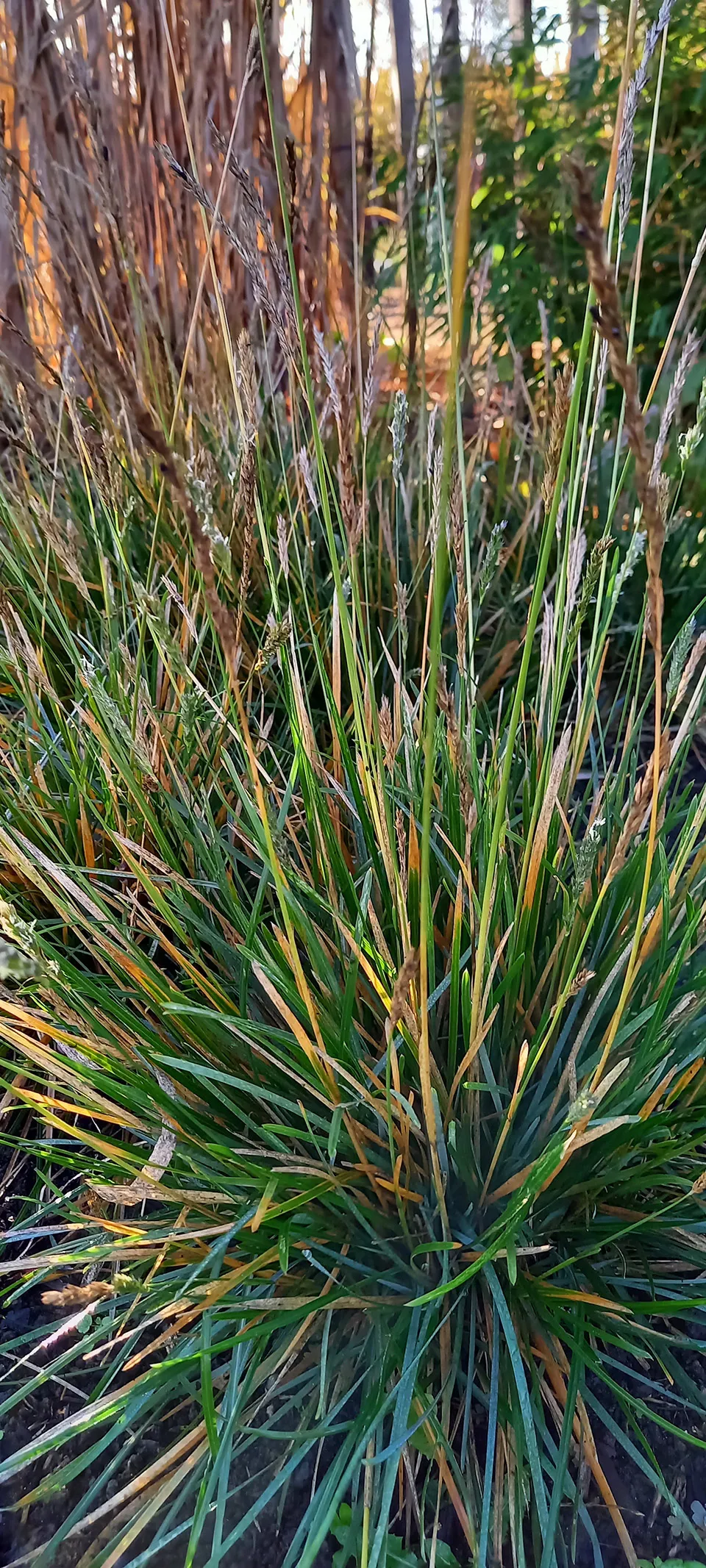
In recent years, Sesleria autumnalis has become one of the most popular grasses planted by landscape contractors, after Pennisetum ‘Hameln’. Sesleria is a beautiful semi-evergreen grass that is both drought-tolerant and hardy, and requires little attention. Its only drawback is that it can sometimes look untidy. In a wet summer such as the one we have had this year, it can grow a little taller and then flop over. Customers who want a good result year after year do not always appreciate this. Fortunately, there is now the new Sesleria ‘Greenlee hybrid’. This Sesleria is a cross between the smaller, more compact Sesleria caerulea and Sesleria autumnalis. The result is a beautiful new grass that is drought-tolerant and semi-evergreen, flowering from June to October with attractive silvery spikes. It also stays compact, reaching a height of 30 centimetres.
A top sedge for dry shade
Finally, we would like to highlight Carex sp. ‘Kyoto’ once again. Although garden designer Chris Ghyselen brought it back from Japan years ago, this sedge remains underrated. It is one of the best evergreen sedges for dry shade, but also thrives in the sun as long as it is not too dry. At 60 centimetres tall, with an attractive rounded shape, it resembles a more elegant bottlebrush, but without the flowers. Its neutral appearance makes it endlessly versatile. A natural beauty that can bring colour and structure to the garden in winter. Because it originates in Japan, it is also much better suited to colder, wetter winters than the more widely used Carex testacea or Carex howardii ‘Phoenix green’, both of which come from New Zealand. A sedge that will certainly add value to the climate-resilient gardens of the future.
Question about this story? Ask your question
Keep following this
Get an email when a new story is published. No account needed.
- SubjectGeneral







