









Making the most of green waste
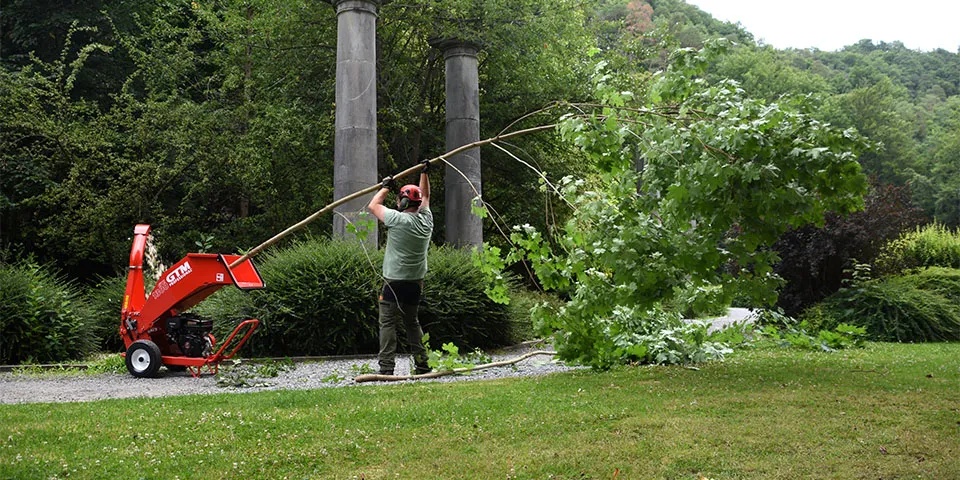
There is no such thing as waste. Today, as we strive for a sustainable, circular society, the mantra is repeated at every opportunity, but nowhere is it more relevant than in green-space management. With two new wood chippers and an informative website, Dutch company De Wild is helping green-space professionals get the most out of their green waste.
Words Elise Noyez | Images Belgarde
The de Wild family has been distributing tools and machinery for four generations. What began shortly after the Second World War as a Dutch company operating nationally crossed the Belgian border in the late 1970s with the establishment of subsidiary Belgarde. Today, it is a global player, with a distribution network spanning from Latin America to the Far East.
In-house development
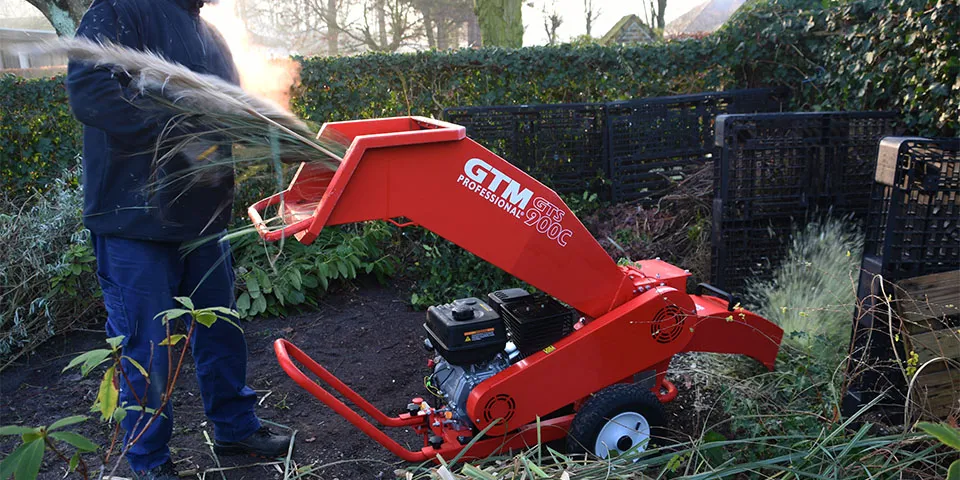
Since 1995, the family business has also been a manufacturer, in addition to being a distributor. More specifically, its R&D department in Roosendaal, the Netherlands, develops, updates and tests a wide range of wood chippers. Perhaps the choice of product comes as no surprise when you consider that the de Wild family’s business history dates back to a nineteenth-century timber and carpentry business in Kleve, Germany. Above all, however, it was a considered decision to specialise and ensure quality. The construction of its own modern production facility in China in 2009, where Dutch engineers oversee the process, is also part of its commitment to making the very best product.
De Wild’s range of wood chippers, marketed under the GTM Professional brand, now comprises twelve models, suitable for branches up to 5, 8, 10 or 12 centimetres in diameter. The manufacturer recently added two
new combo models to the range.
Familiar strengths, new options
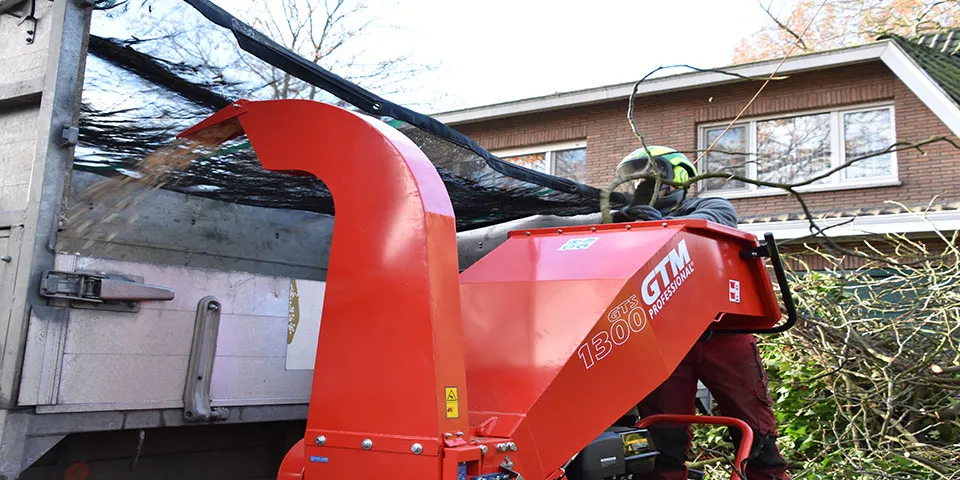
The GTS900C and GTS1300C are new versions of the existing GTS900 and GTS1300 wood chippers, suitable for branches up to 8 and 10 centimetres in diameter, respectively. Like the base models on which they are based, the new machines feature a highly efficient rotor chipping system and an extra-wide infeed for high working speeds. Their compact size, excellent balance and two-wheel design make them easy for one person to manoeuvre to the desired location, while even narrow passageways pose no obstacle.
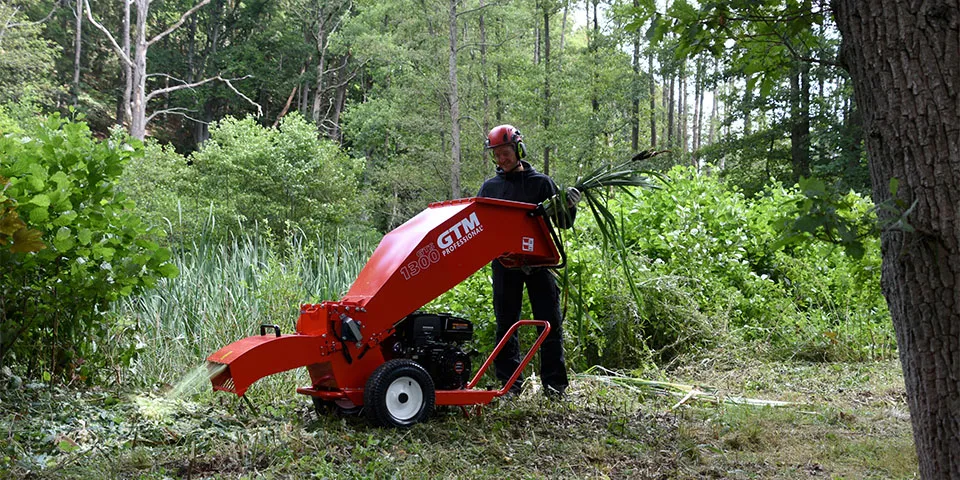
The distinguishing feature of the C, or combo, models is the additional outlet at the bottom of the machine. This makes the latest additions to the GTM Professional family multifunctional machines, suitable for both chipping branches and processing large quantities of soft organic material. Green waste no longer needs to be taken away: it can be chipped on site to speed up the composting process. Switching between the two discharge options is also remarkably simple.
Plenty of ways to reuse
Shredded organic material is not only ideal feedstock for the compost heap, and wood chips are not only suitable for use as mulch in borders and beds. There are many more ways to reuse shredded green waste locally and make good use of it. For example, wood chips can be mixed into the soil as a soil improver. The right chip size improves air and water management, as well as soil health.
On its new website, gtmchippers.be, De Wild provides information about these and other uses for wood chips. By sharing this knowledge and manufacturing high-quality chippers, the company aims to encourage the useful reuse of material that was previously considered waste.
Question about this story? Ask your question
Companies in this story

Keep following this
Get an email when a new story is published. No account needed.
- SubjectGeneral
- CompanyBelgarde BV







