









Key considerations when installing swimming pool copings
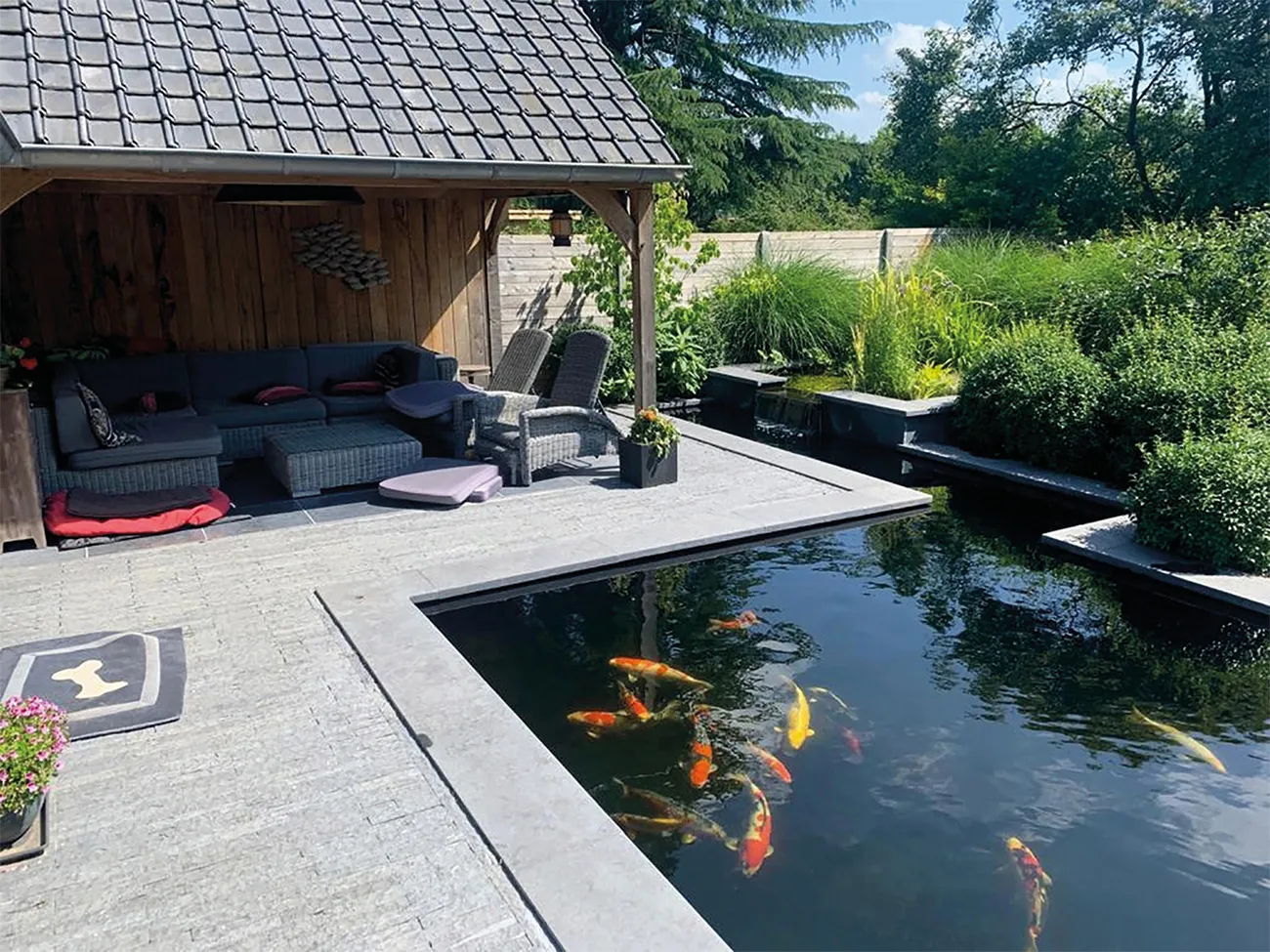
Materials used in and around swimming pools often need to meet specific requirements, some more obvious than others. We all understand that pool copings and steps need to be sufficiently slip-resistant, for example, but not everyone is aware of the impact that electrolysis-based water treatment systems can have on materials such as limestone.
“There are quite a few other hidden or at least underreported considerations,” says Els Meynen of garden materials supplier E.L.S. Garden. “We or our customers have had to discover some of them through trial and error, but in most cases, a good understanding of products and materials will help you work things out. So when we supply products for use in or around swimming pools, we’re always very happy to share that knowledge.”
Measuring and fitting
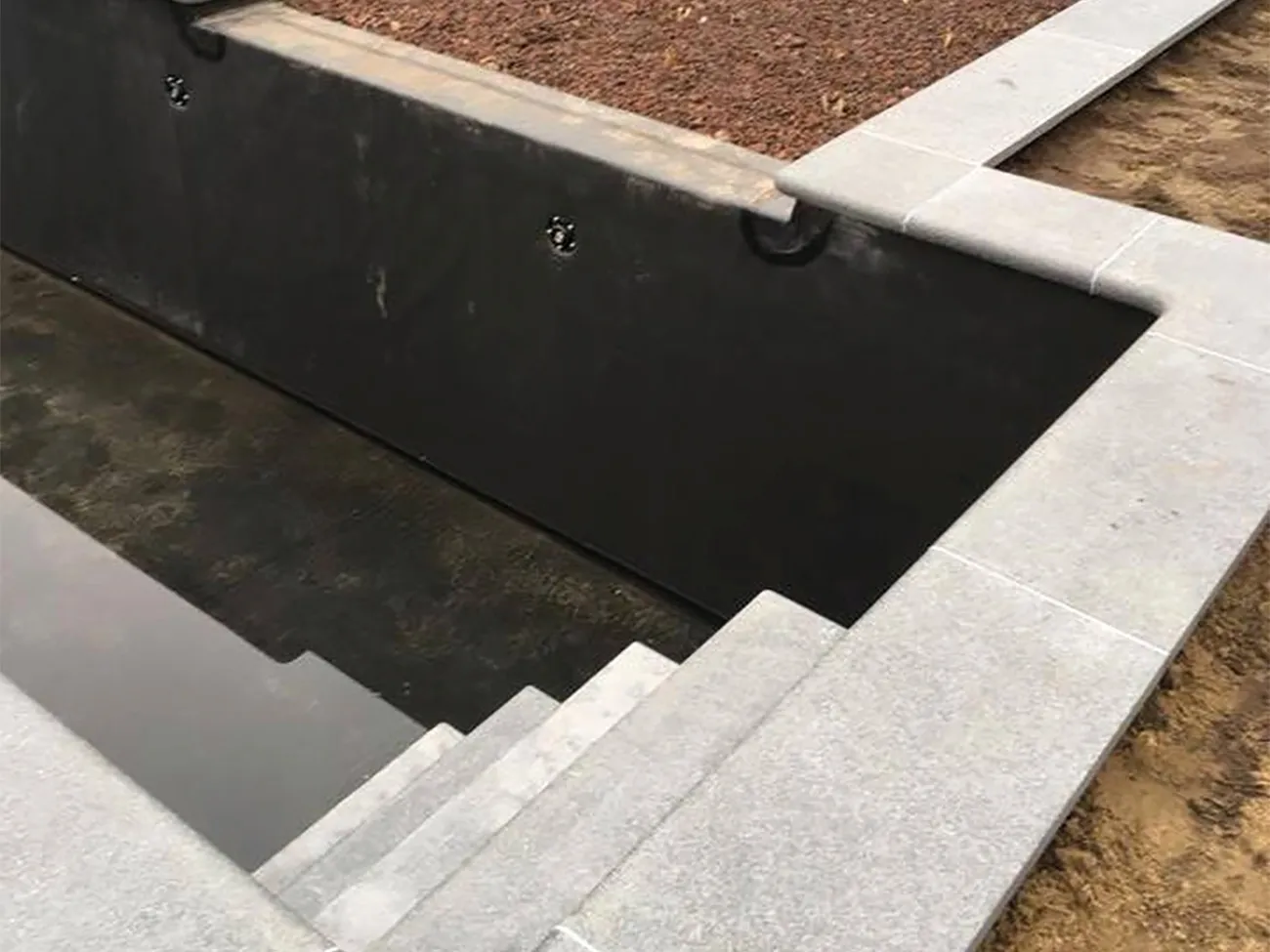
There is certainly no shortage of material options for swimming pool copings. Granite, limestone or ceramic: all are suitable for finishing the pool edge attractively and safely, with a square or rounded edge. “With pool copings, the material itself isn’t the main consideration; it’s the geometry. A pool isn’t designed around the available sizes of the coping stones. The stones have to be adapted to the pool’s dimensions. That can involve quite a bit of planning, fitting and, if necessary, cutting.”
“To achieve an attractive, uniform finish, for example, you want to avoid having to fit a small 20-centimetre piece among a run of 100-centimetre coping stones. To make this easier, as well as standard sizes we offer a wide range of corner pieces and infill pieces in all materials. This makes it easier to tailor the selection to the pool’s specific dimensions. You may still need to trim some pieces here and there, but a 112-centimetre piece among 100-centimetre copings will blend in much better than an extra 12-centimetre piece.”
Under water
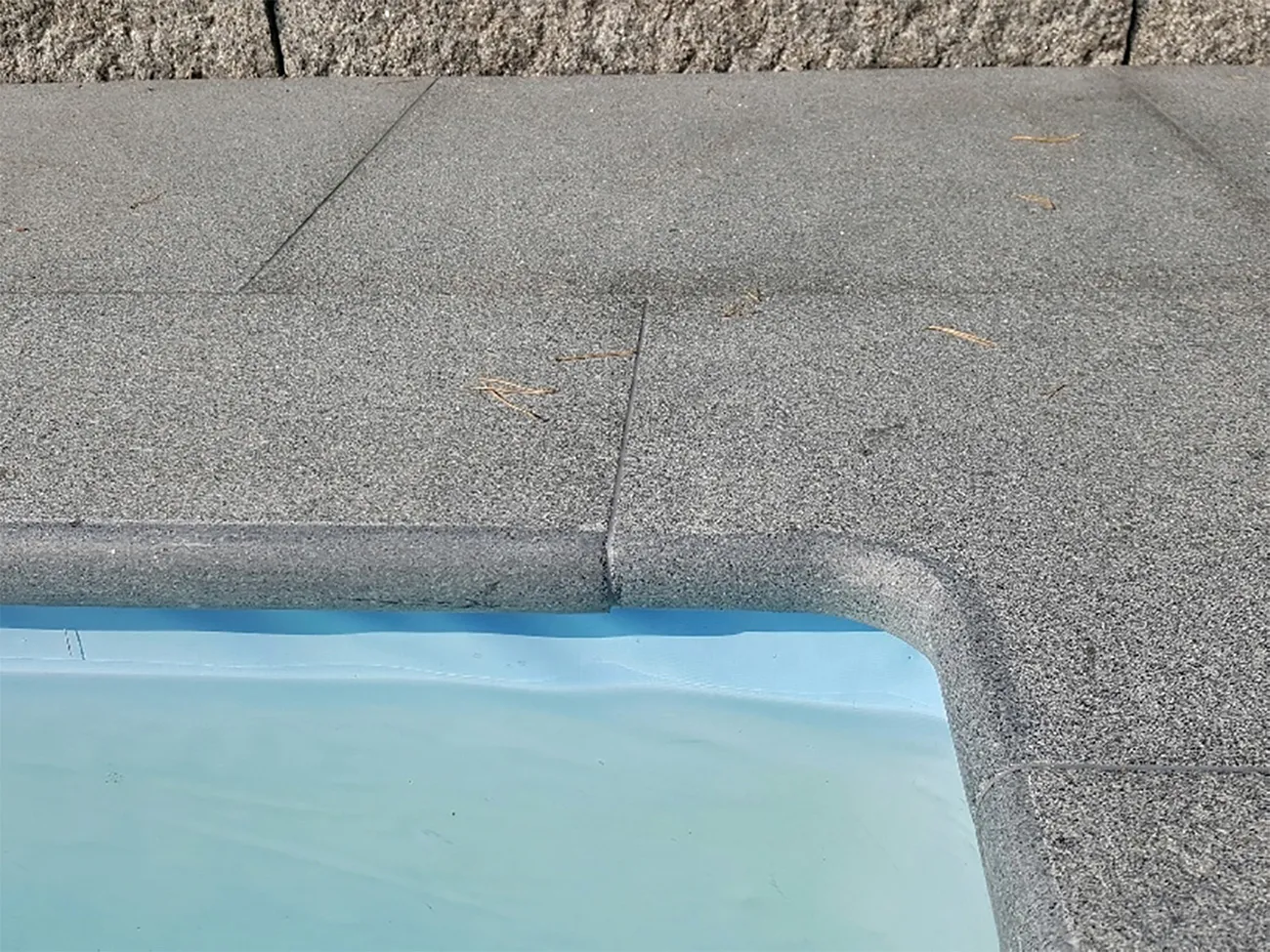
As well as pool copings, E.L.S. Garden also supplies the necessary cladding for swimming pool steps and lounging areas. In the former case, the standard elements are available with a rounded or square edge; in the latter, bespoke work is generally required. In both cases, the elements are made from flamed or brushed G54 granite.
“There’s a very specific reason for this,” explains Els Meynen. “These elements are constantly submerged in water, which is treated in a particular way in swimming pools. In the past, this was done with conventional chlorine dosing, but electrolysis is now increasingly common. However, these systems also affect the water’s acidity, which can have a particularly harmful effect on limestone. In such conditions, it will deteriorate more quickly. Granite is less susceptible, making it a more reliable choice for underwater applications.”
Jointing and bonding
The granite treads are made to fit standard polyester swimming pool steps. They are installed using adhesive. “Cement simply won’t bond to polyester steps because the surface doesn’t absorb moisture. So the treads have to be bonded. The same applies when you need to install coping or other stones on a pool liner.”
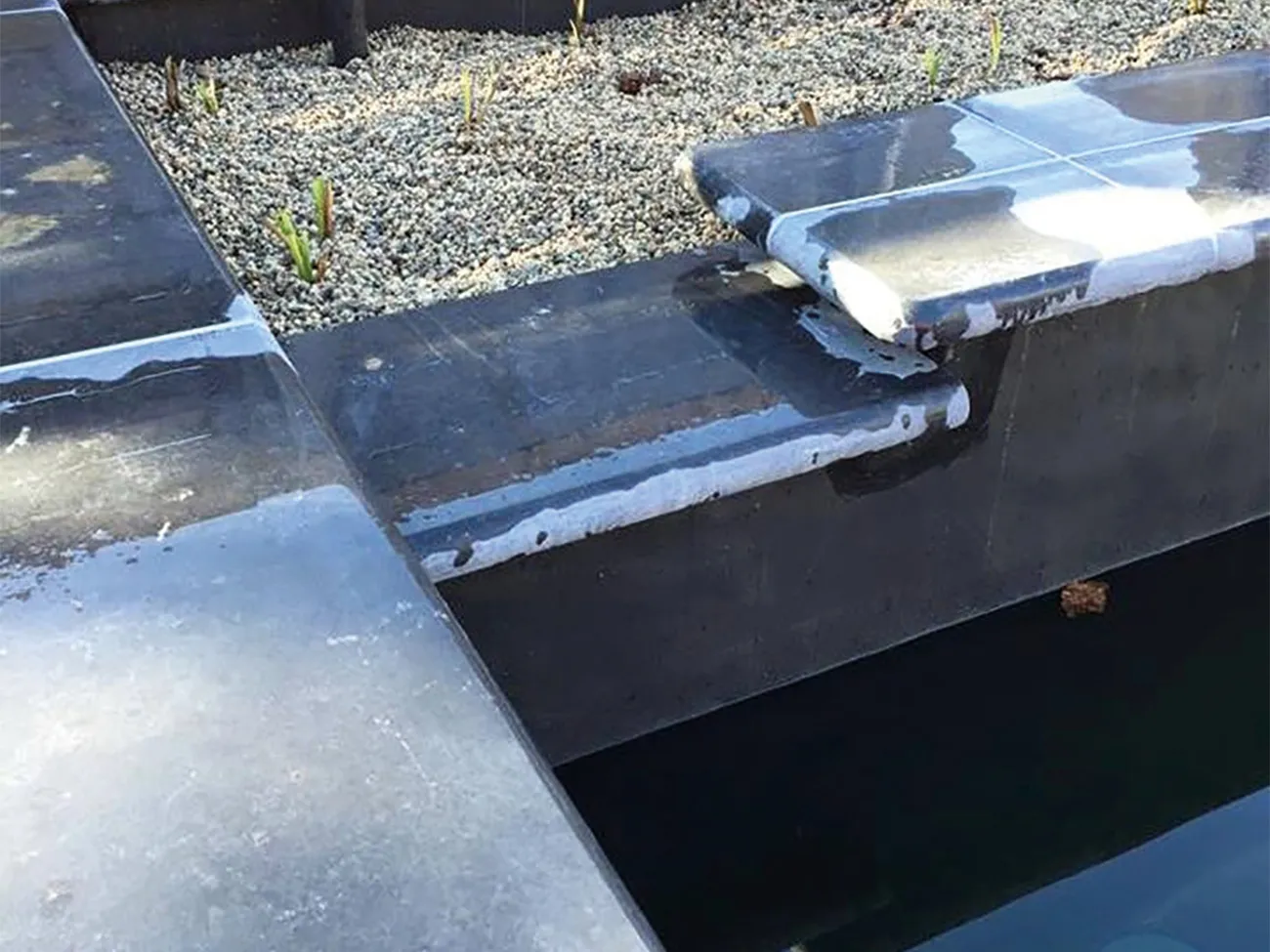
A classic consideration when jointing pool copings, Els Meynen points out, is the edge. “Granite and natural stone are traditionally jointed with cement, but repeated exposure to water will eventually cause the joint to crumble at the edge. Ceramic copings are even more challenging, because their edges are generally untreated, meaning cement will not bond to them. Using jointing sand instead is no solution for an open detail such as the edge.”
Regardless of the material, E.L.S. Garden therefore recommends a siloxane-based jointing compound for finishing swimming pool copings. “It bonds well to different materials, does not shrink but has plenty of flexibility, and holds up well even when exposed to water. This keeps the pool coping looking good for the long term, right down to the details.”
Question about this story? Ask your question
Companies in this story

Keep following this
Get an email when a new story is published. No account needed.
- SubjectGeneral
- CompanyE.L.S. Garden







