









How to keep water quality under control
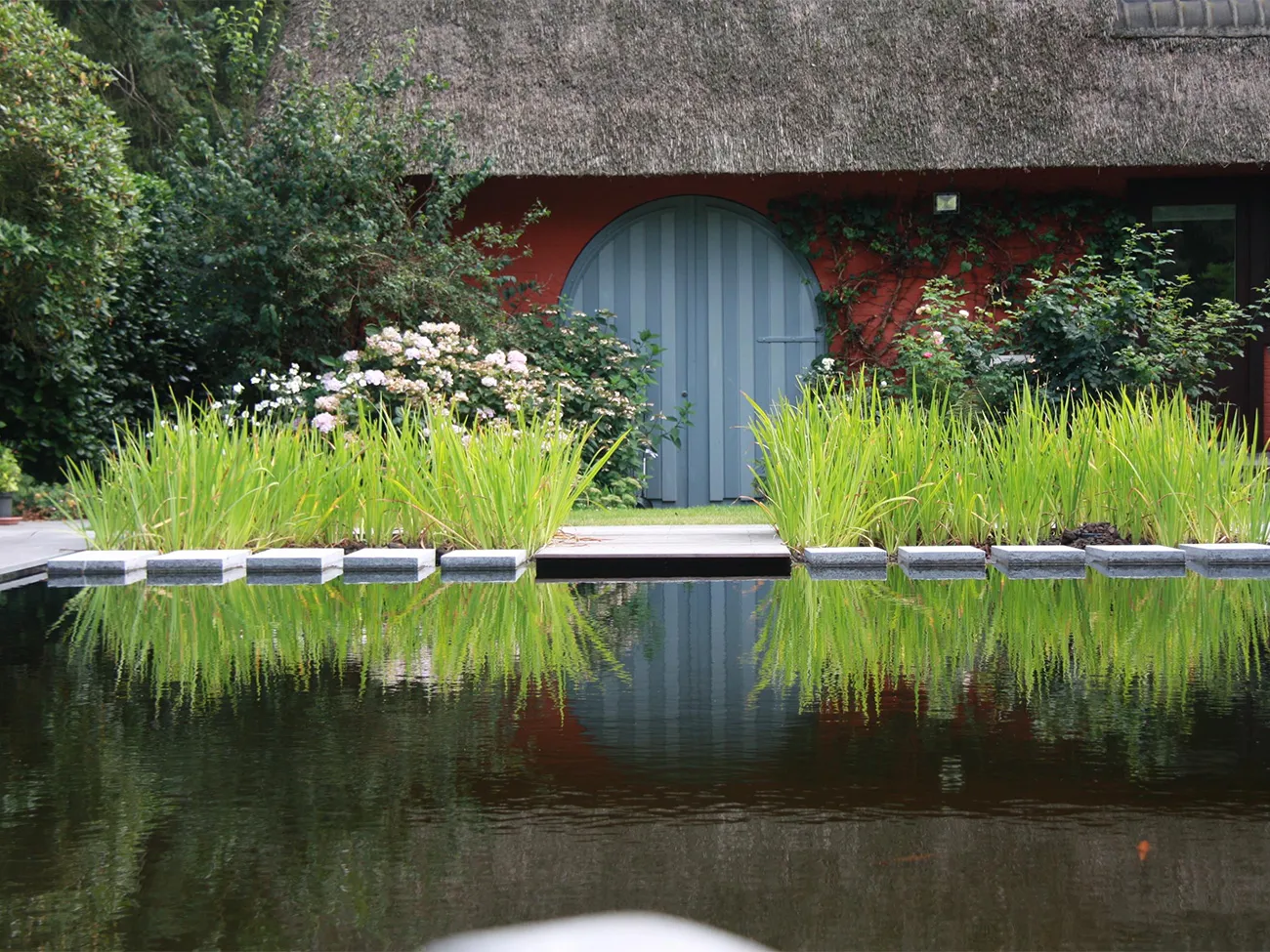
Whether in a swimming pool or a swimming pond, people taking the plunge expect crystal-clear water. Dirt and algae are unwelcome, of course, but chemicals such as chlorine and algaecides are also increasingly being avoided. How do you maintain water quality in this situation?
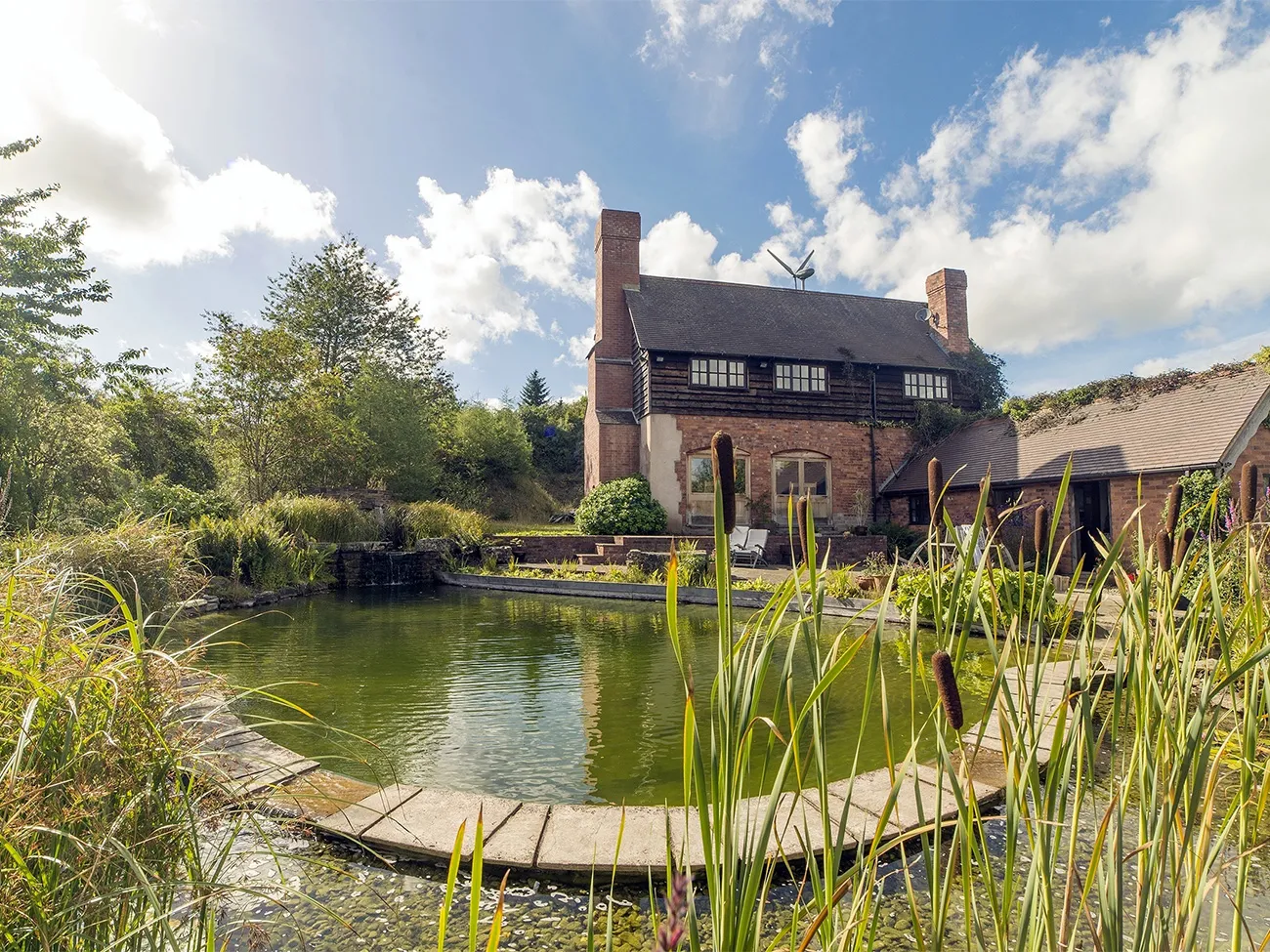
One of the main attractions of a swimming pond is the natural purification and filtration of the water. No harsh chemicals are involved. Instead, plants and bacteria work together to clean the water. It is a natural process.
“But anyone who thinks that means a swimming pond requires no maintenance is very much mistaken,” stresses René Verspuij of Waterplantenkwekerij R. Moerings. “Just as you need to fertilise and lime a lawn, a swimming pond also needs a helping hand. That is why, as a water plant nursery, we also offer a select range of natural water treatment products.”
Cause or symptom?
For most people, a well-functioning swimming pond means a crystal-clear body of water, free of algae and slippery surfaces. “For many, maintenance therefore simply means adding algaecides. This does produce results, but they are only temporary and the products are also harmful to both water plants and the environment. What is more, this approach treats only the symptoms, not the cause.”
According to Verspuij, the cause lies in the water quality. “Algae are like weeds. While water plants need specific growing conditions, algae will thrive even in poor-quality water. In such conditions, plants are less able to absorb nutrients. These remain in the water, where the algae can take advantage of them. So, if you want to tackle the cause, you need to manage water quality in such a way that water plants can thrive and no nutrients are left over for opportunistic algae.”
Calcium and magnesium
The comparison with a lawn is no coincidence. “The only difference is that a swimming pond is continually ‘fertilised’ even without human intervention, for example by leaves, pollen and other organic matter blown into the water. But as with lawns, lime, or calcium and magnesium, is also a key factor in the success of swimming ponds.”
In practical terms, the total hardness of the water (GH) should be around 12 throughout the year, while carbonate hardness (KH) should be around 8, particularly during the growing season. These are the optimum conditions for water plants.
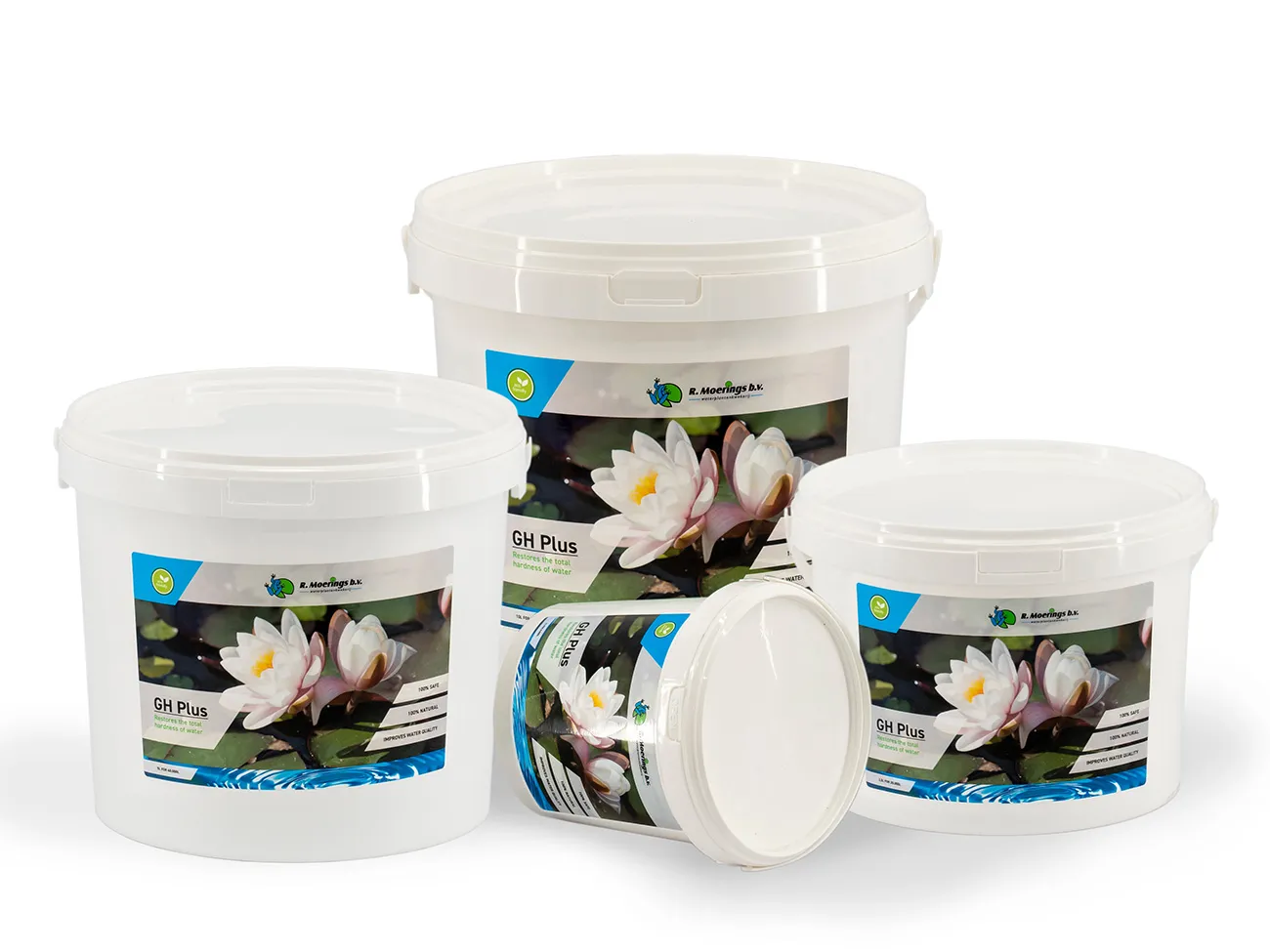
“You can check GH and KH levels very easily with a titration test,” says Verspuij. “If you do not treat the water, there is a good chance both values will be too low. Rainfall, among other things, gradually reduces water hardness. That is why it is important to check water quality regularly and adjust it as needed. This can be done naturally by periodically adding our GH Plus and KH Plus products, respectively. They dissolve immediately, making them available to plants as soon as they are added.”
Bacteria
As well as the GH and KH levels of the water, Verspuij emphasises the importance of probiotics. “No bacteria, no swimming pond. They are essential for purifying the water, provided they are the right ones. Without intervention, however, harmful bacteria can quickly gain the upper hand. Just as we eat yoghurt to support our gut flora, adding our Pond Pro probiotics can restore the balance. The product consists of 80% beneficial bacteria, which immediately consume all the nutrients that would otherwise be available to pathogens. It also effectively tackles slippery biofilm on walls and steps, as well as in pipes and pumps.”
Question about this story? Ask your question
Keep following this
Get an email when a new story is published. No account needed.
- SubjectGeneral







