









From saline water to healthy pitches
Text Kris VandekerckhoveImage Green Deal Sportdomeinen / Kris Vandekerckhove
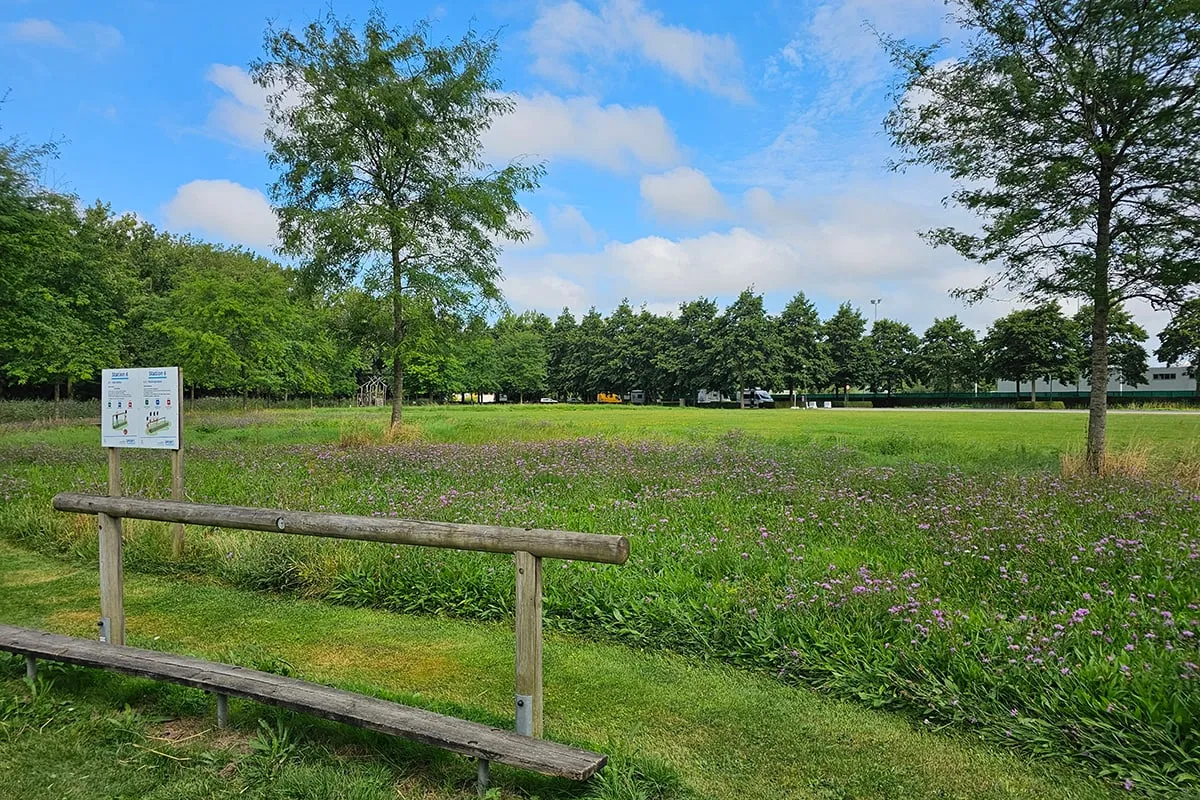
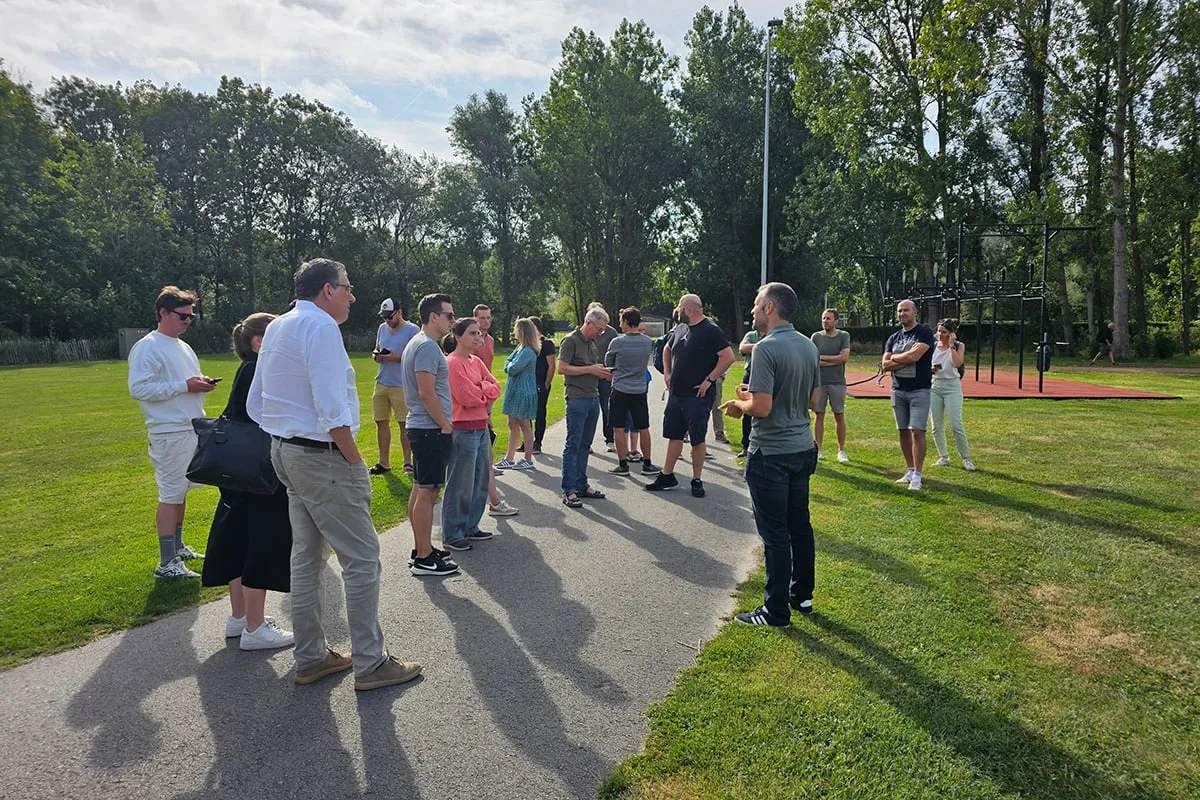
On 29 August 2024, the Green Deal Sportdomeinen organised an inspiring site visit to Sportpark De Schorre in Ostend. This sports park is a leader in the sustainable management of sports facilities and was the focus of a session on water management, green-space maintenance and pesticide reduction. The meeting was part of the Green Deal Sportdomeinen and brought stakeholders together to learn and discuss sustainability and climate resilience at sports facilities. The event highlighted innovative solutions for water management, soil restoration and biodiversity, with various experts sharing their knowledge.
The Green Deal Sportdomeinen aims not only to make sports facilities more sustainable, but also to enhance the quality of life and wellbeing of both athletes and the surrounding natural environment. The initiative is supported by a broad coalition of partners, including public bodies such as Sport Vlaanderen and the Vlaamse Milieumaatschappij (VMM), sector organisations such as the Vlaamse Sportfederatie (VSF) and Netwerk Lokaal Sportbeleid, as well as various private-sector organisations. Through this collaboration, a joint strategy is being developed to pool knowledge, expertise and resources, delivering better results for everyone involved. This collective commitment is essential to achieving sustainability goals and making sports facilities fit for the future.
The fight against salinisation
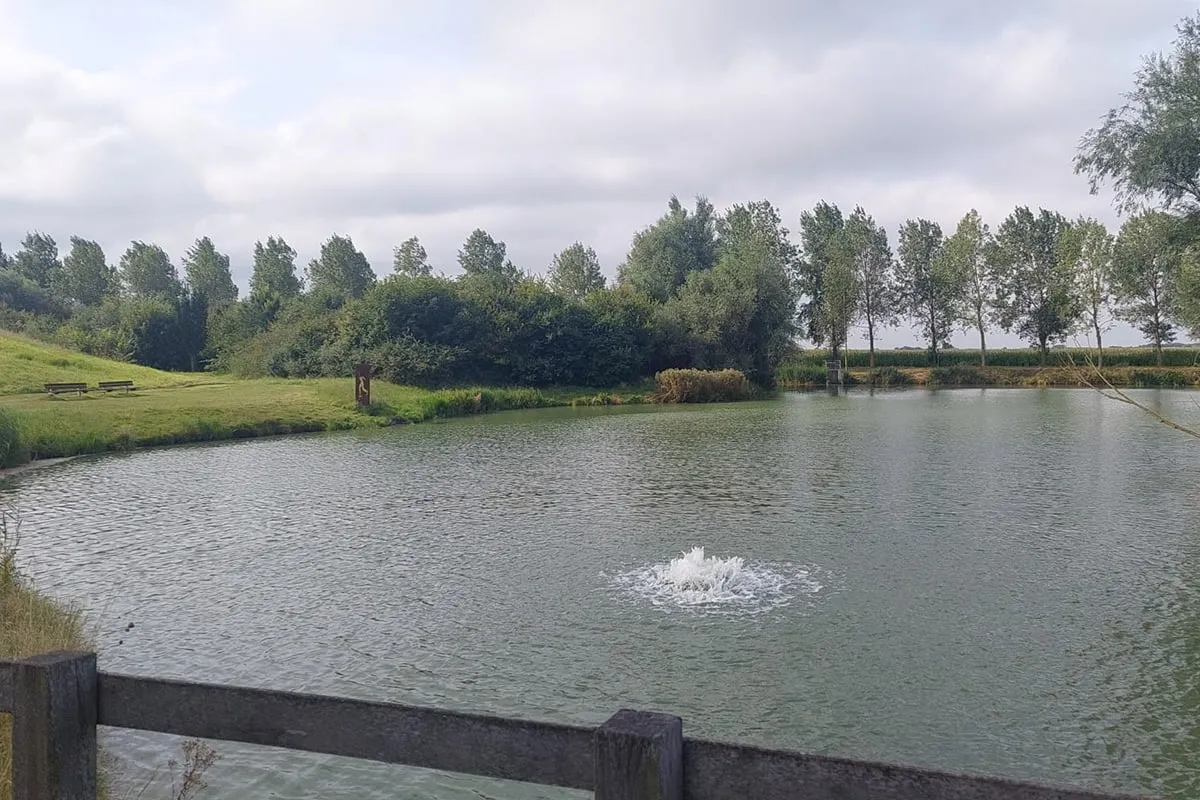
In Ostend, Sportpark De Schorre faces the challenge of minimising water use without compromising the quality of its pitches. The park has a water reserve of 8,500 m³ and uses an average of 280 m³ per day, mainly during the irrigation period, which lasts around 30 days a year. One of the biggest challenges in water management is the salinisation of the groundwater. A soil survey found that shallow groundwater at the De Schorre site has an electrical conductivity of 8,768 +- 712 µS/cm, which corresponds to brackish water and is therefore unsuitable for irrigating grass pitches. This means the park must use alternative water sources and technologies to keep the grass healthy while optimising water use.
Pesticide-free sport is possible
A key highlight of the visit was the focus on pesticide reduction. Sportpark De Schorre has been managed entirely without pesticides since 2009. This is made possible by a combination of frequent mowing, organic fertilisation and regular pitch renovation. The pitches are mown three times a week, with the grass kept at a minimum height of three centimetres and the clippings removed immediately. This leaves no opportunity for weeds to take hold. The pitches are also fertilised four times a year with a biodegradable polymer-coated fertiliser, and renovated annually to overseed bare patches and topdress the soil with sand.
Every three to four years, the pitches are rotary-tilled to improve soil structure. Soil compaction is checked regularly with a penetrometer, so the ground can be aerated at the right time. This produces a healthy, sustainable sward without the use of pesticides.
Smart water management and green-space maintenance
The site visit to Sportpark De Schorre showed how important it is to manage sports facilities in a sustainable and future-focused way. The integration of smart water-management solutions, green-space maintenance and pesticide reduction makes the park a model for other outdoor sports facilities in Flanders. Thanks to the Green Deal Sportdomeinen, this knowledge is being shared and applied to prepare sports facilities across Flanders for the future.
Question about this story? Ask your question
Keep following this
Get an email when a new story is published. No account needed.
- SubjectGeneral







