









Flower bulbs and flower meadows are the perfect match: a fruitful combination
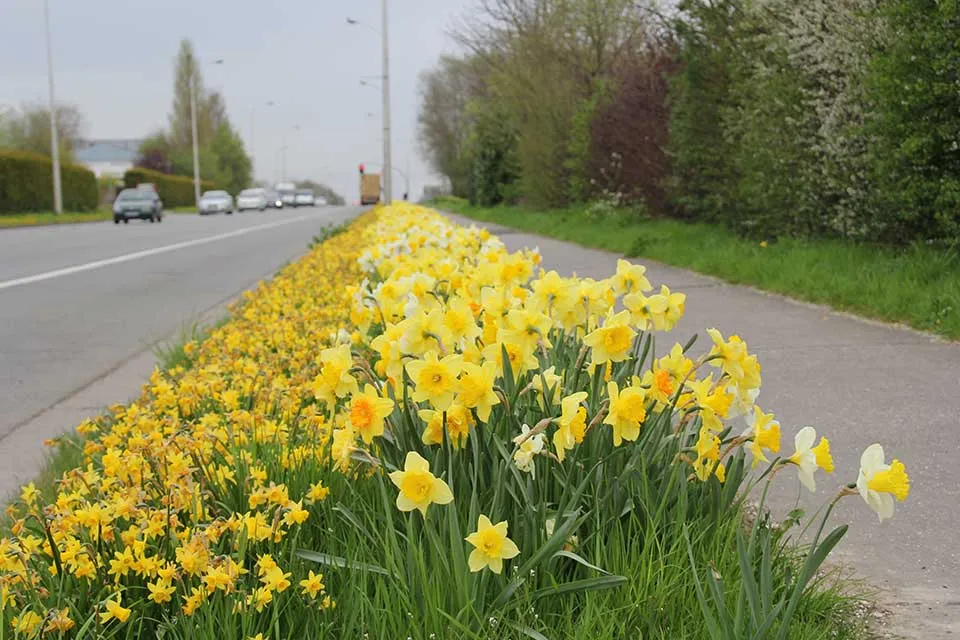
In an effort to revive biodiversity in our increasingly urbanised surroundings, flower meadows have been planted on a large scale in recent years, on both private and public land.
This is a good thing, as bees and butterflies find a food-rich habitat there from early summer onwards. But what about the months before then?
Bloembollen Vanacker has been a Belgian industry benchmark since the 1970s. The wholesaler specialises in, unsurprisingly, every type of flower bulb, but is also actively working behind the scenes to support biodiversity. In recent years, the company has added a full range of flower-meadow seed mixes to its product offering and developed solutions to protect and support beneficial insects from early spring onwards.
Extending the flowering season
“The growing interest in wildflower meadows is a major boost for biodiversity,” says managing director Geert Vanacker. “But seed mixes have their limitations. Even if they are sown early, the first flowers will not appear until late spring or early summer. This means that bees and butterflies may have gone without food for several months.”
Flower bulbs can be a valuable addition to seed mixes, Vanacker believes. “Early-flowering plants such as crocuses and daffodils provide much-needed food as early as February and March. Combining flower bulbs with a flower meadow therefore considerably extends its flowering season. What is more, the plants return year after year and contain relatively high levels of nectar and pollen. The bulbs in our early-flowering bee mix were specially selected for their high nutritional value for bees and butterflies.”
Planting and sowing in a single pass
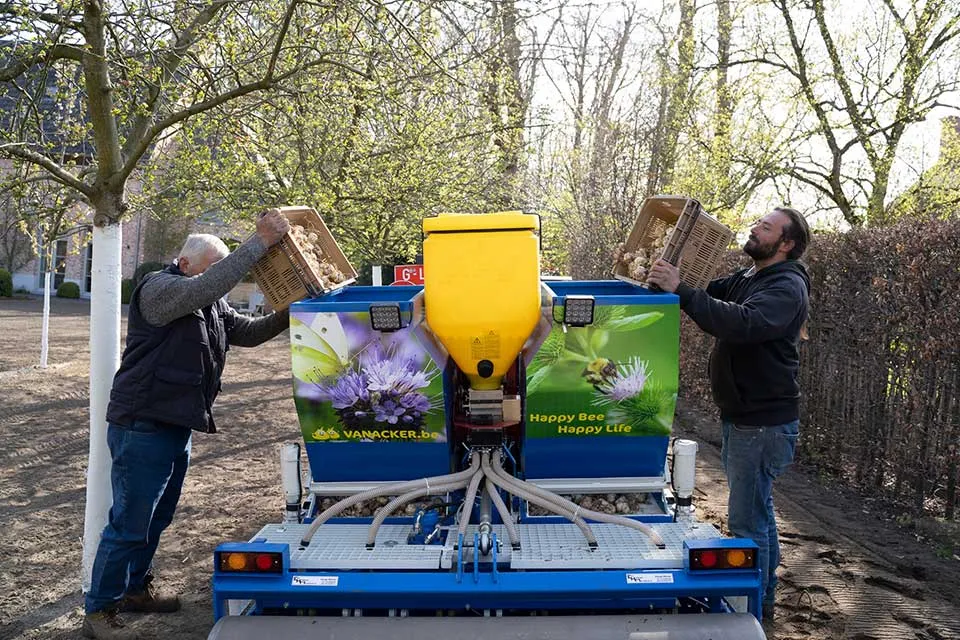
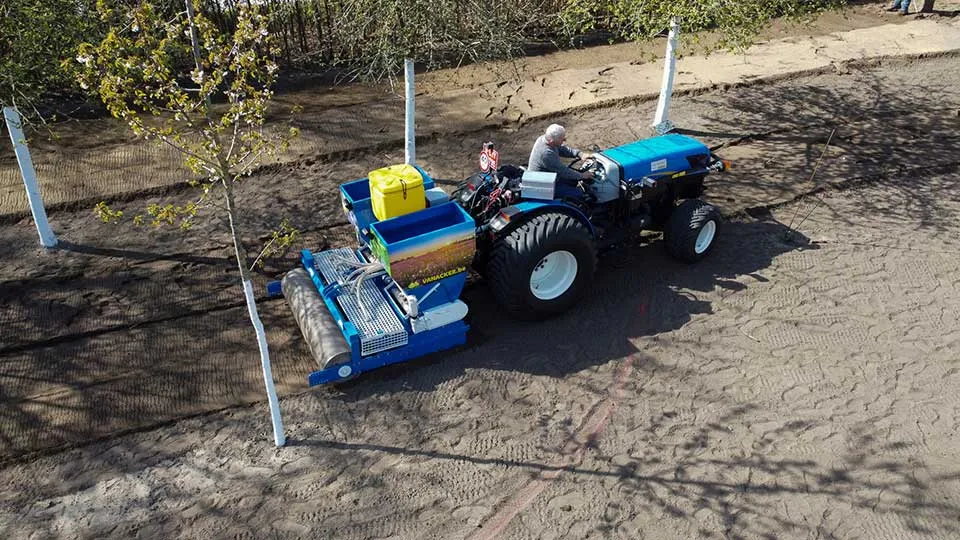
To make it easier to establish flower meadows with a long flowering season, Bloembollen Vanacker has developed a unique planting and sowing machine in recent years. In a single pass, it plants the bulbs and sows the seed mix. “It carries out all the necessary operations in sequence: the soil is rotavated, the flower bulbs are planted, the soil is broken up, the flower seed is sown and, finally, the surface is rolled. All this is done in a single pass, with full control over both planting and sowing density.”
A focus on the finish
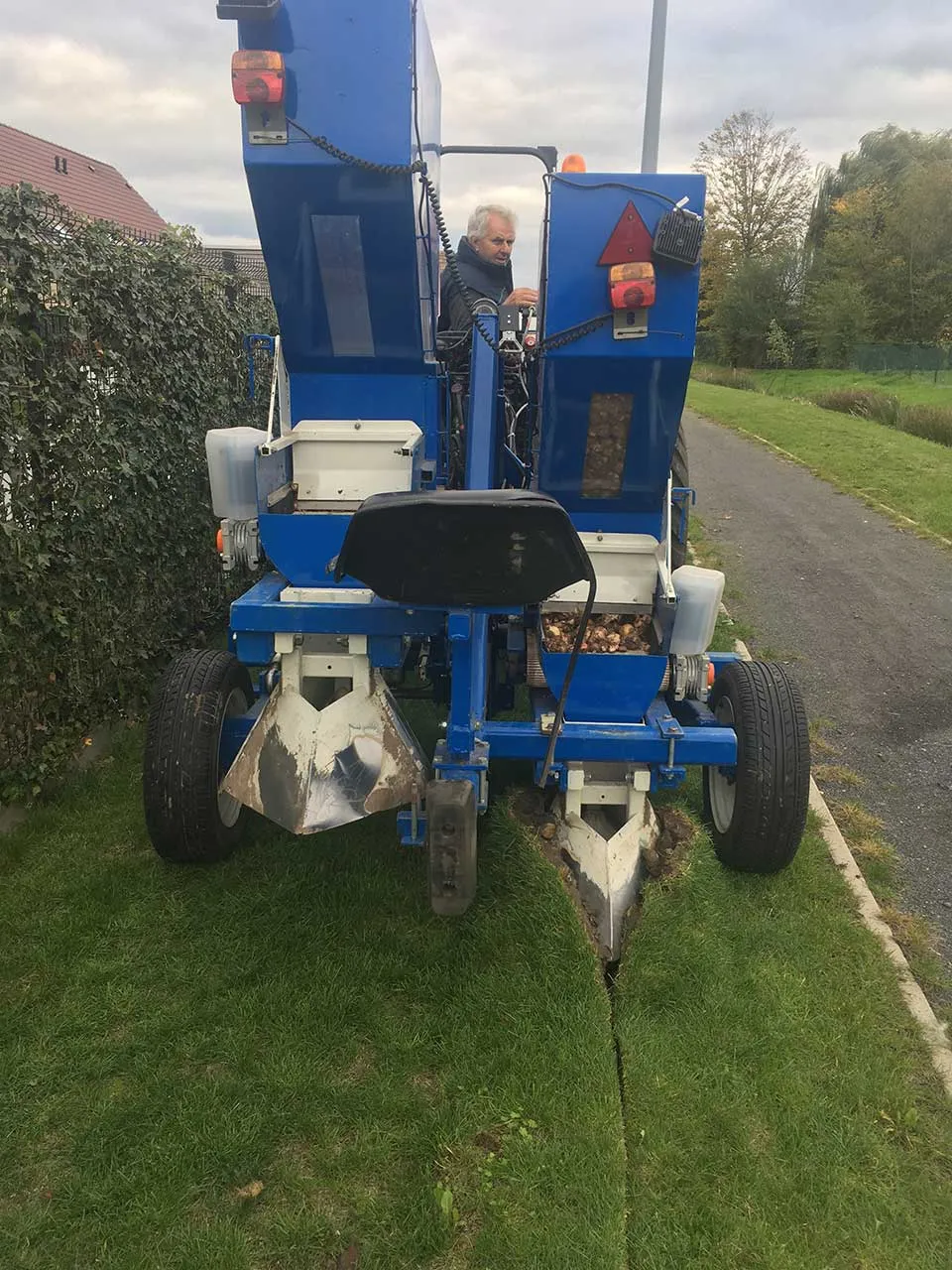
Flower bulbs are not just a valuable addition to flower meadows. Bulbs and corms can also boost the biodiversity of existing lawns without having to break up the entire surface. “An undersoil planter cuts open the turf, plants the bulbs and then neatly closes it up again. At least, that is the aim. We therefore keep optimising our machines to ensure a neat finish in all conditions. For example, our current model has computer control for optimum planting density, two independently adjustable hoppers, each 50 centimetres wide, and a turning system that allows it to negotiate bends smoothly without disturbing the soil structure. It also has a roller to press the turf back into place afterwards. We always send two experienced operators along with our machines, both to operate the machine and to check the finished result. The same applies to the planting and sowing machine.”
Question about this story? Ask your question
Keep following this
Get an email when a new story is published. No account needed.
- ThemeLower-impact green space management
- SubjectGeneral







