









Even an evergreen has to move with the times
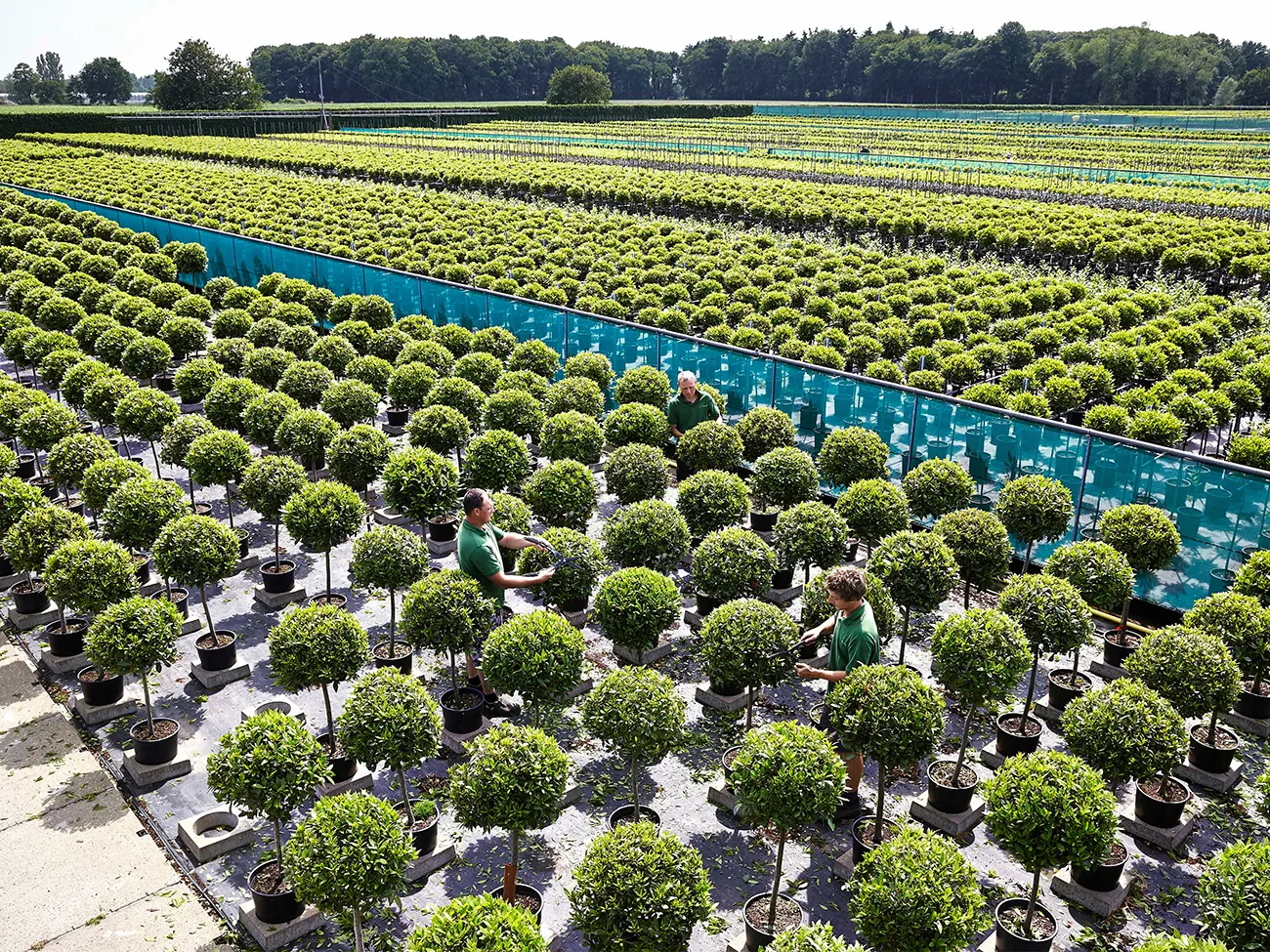
The bay laurel is an evergreen. Literally, because it keeps its leaves in winter, but also figuratively: a perennial favourite in many gardens and parks. Yet even this age-old plant is unmistakably subject to trends and developments. No one knows this better than Laurica-Plants of Jabbeke, which has been growing laurus nobilis for fifty years this year. Marian Maenhoudt outlines the key developments.
Laurica-Plants is celebrating its 50th anniversary in 2022. Over that period, the family business has seen sustained, and growing, demand for topiary bay laurel, while cultivation methods, applications and priorities have also evolved. Today, Brexit is among the factors having a major impact on the nursery’s operations. Before that, automation, a changing climate and growing interest in unique specimens had already left their mark on the bay laurel market.
Automation
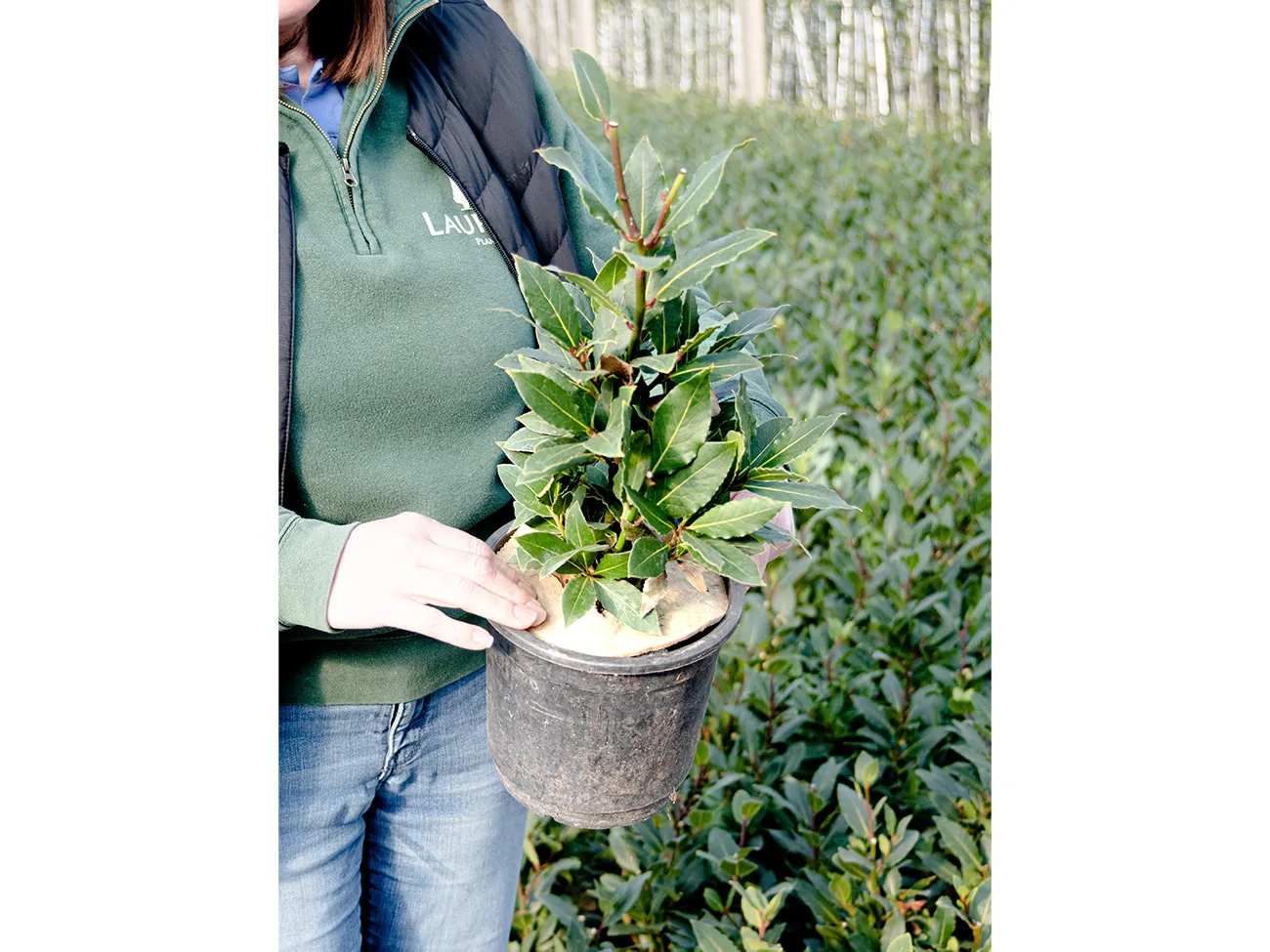
Over recent decades, as in industry, the race to automate has also gathered pace in plant production. Many nurseries have invested in machinery to organise work more efficiently.
“In our case, this includes using plant forks and adding buffer and conveyor belts so our staff can work at height,” says Marian Maenhoudt. “In other words, these measures are about ergonomics.”
“The use of machinery in growing and pruning bay laurel is fairly limited. The plant’s value lies in the ornamental appeal of its leaves. If you prune mechanically, you cut those leaves in half, losing an important aesthetic quality. For this reason, we use machinery to prune our plants only to a very limited extent, and all topiary shaping in recent years has been done by hand.”
Environment and climate
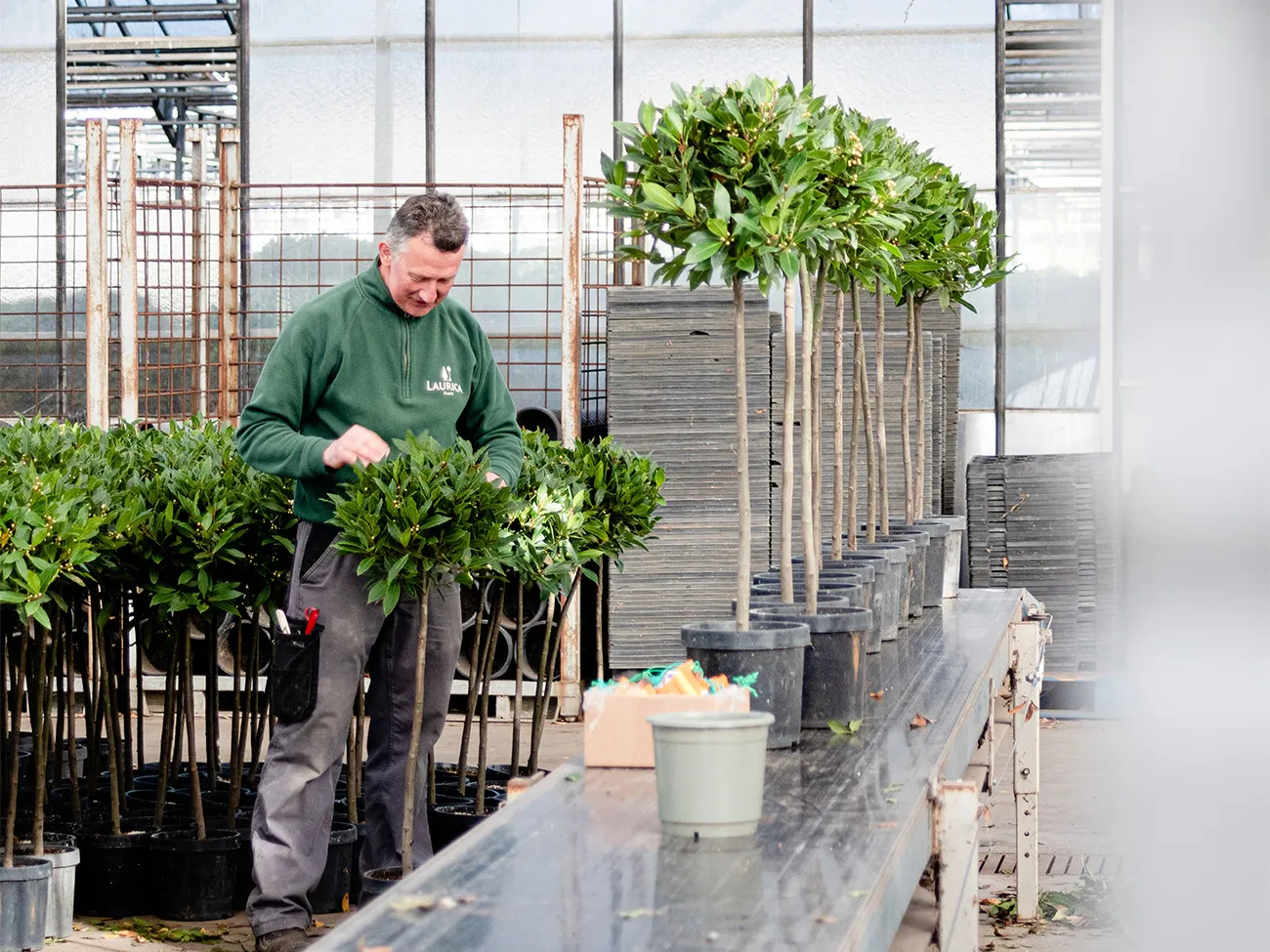
As in other sectors, nurseries today also have to give much greater consideration to their impact on the climate and the climate’s impact on them. Marian Maenhoudt says: “For several years now, we have been putting mats on the potting soil of young plants. This limits weed growth and, consequently, the use of sprays, although it also calls for a different approach to matters such as fertilisation.”
“We also have to use water more and more sparingly. That is why we continue to invest in new container fields, make sure water is applied to the plants as precisely as possible, and collect all surplus water in a 4 million litre reservoir. The water is filtered and then reused.”
Increasingly extreme weather conditions are also affecting the plants themselves.
“The climate is tough on us,” says Marian Maenhoudt. “Among other things, we have to protect our plants from drying winds. We have set up various systems to prevent plants from being blown over, depending on their shape. The sudden transition from cold winter storage to warm, dry and sunny spring days can also be hard on young plants. That is why, after overwintering, we now let them acclimatise in an additional greenhouse before putting them back outside. Fortunately, the contrast is never as great for most private gardeners, so plants can simply go back outside straight after winter.”
Eye-catchers
And what about trends? According to Marian Maenhoudt, they still come and go. “Some forms are always popular, of course. Take the standard lollipop, as they call it in the UK. These are still often used in pairs, by the front door or to mark the edge of an avenue or path. Nowadays, though, many other plants are pruned into this shape too. Some are even flowering plants. In that respect, bay laurel is no longer unique.”
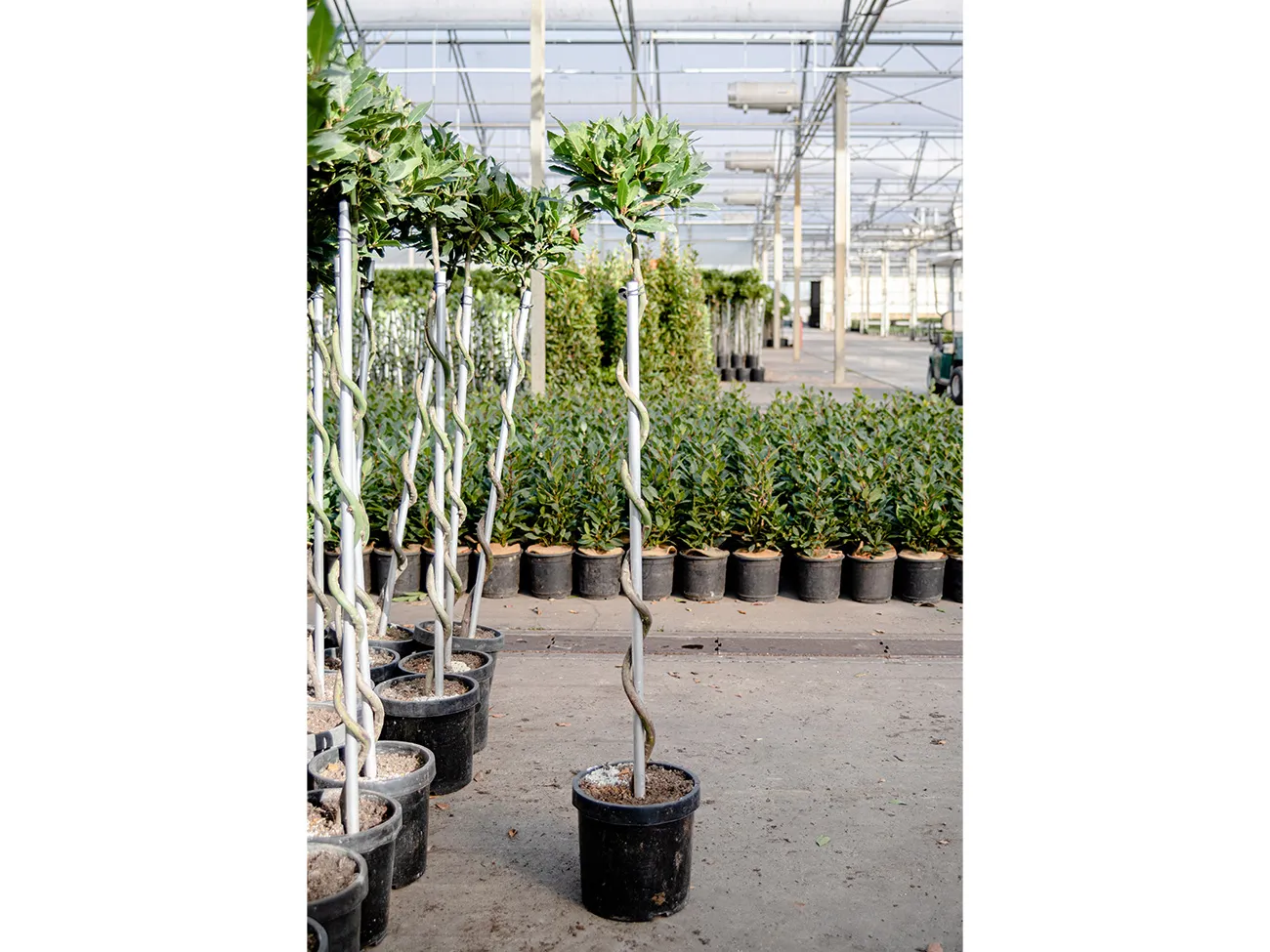
Today, then, it is the more unusual forms that set bay laurel apart. “We are seeing huge interest in plants with twisted or braided stems. In these cases, customers choose one large or medium-sized plant to take centre stage as an eye-catcher.”
More seasonal are the red-potted pyramids that Laurica-Plants offers in autumn. “They are bought as an alternative to a Christmas tree or to bring a little extra festive cheer into the home, but afterwards they usually find a permanent place on the patio.”
Question about this story? Ask your question
Companies in this story

Keep following this
Get an email when a new story is published. No account needed.
- SubjectGeneral
- CompanyLaurica Plants







