









Aesthetic and ecological value
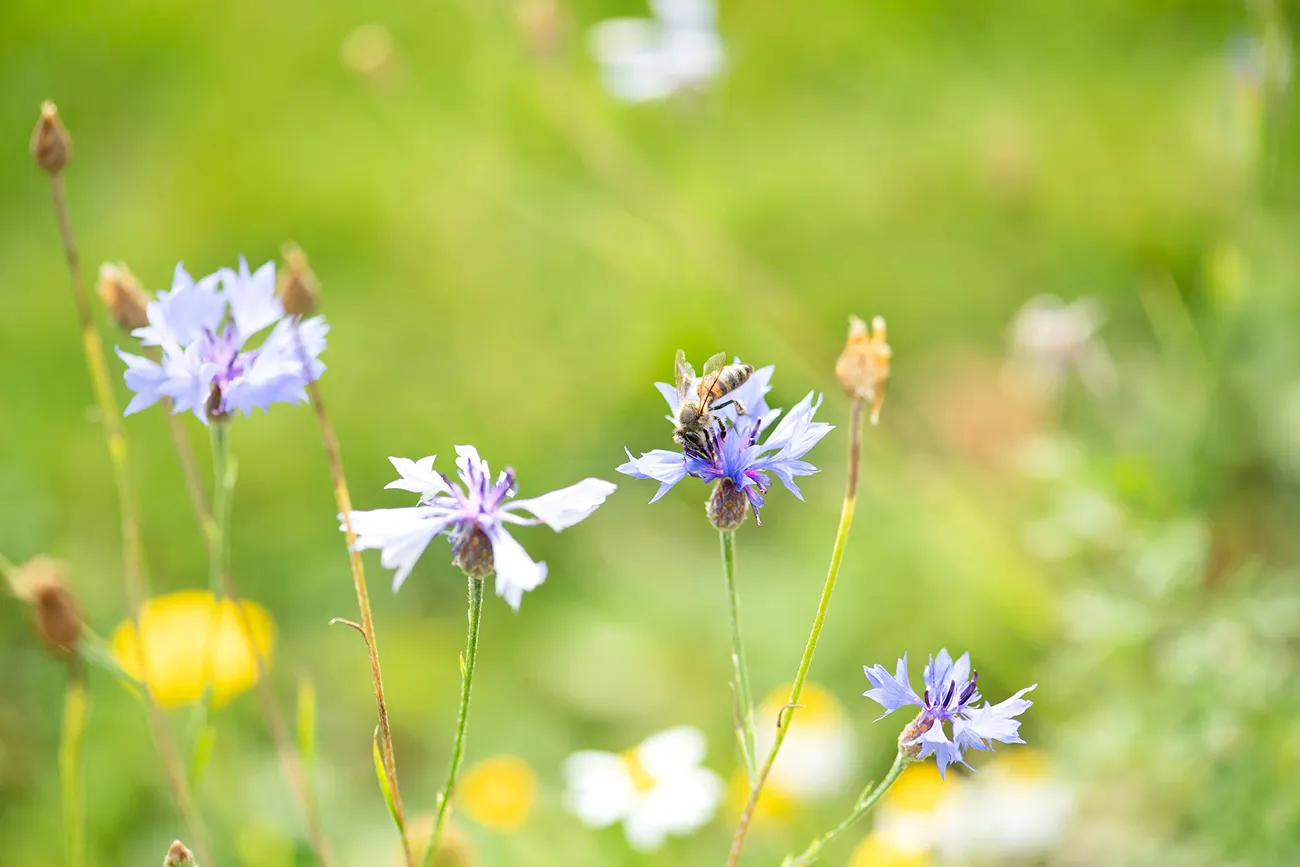
Borders along lawns cut by robotic lawn mowers are a feast for the eyes and enhance biodiversity
The lawn is a central feature in many gardens, and is increasingly maintained by a robotic lawn mower. However, for technical reasons, the edges of the lawn are often left uncut. A study by the University of Hohenheim, conducted with support from STIHL, has now shown that sowing flower mixes in these strips is not only attractive, but also provides a better food source for pollinating insects and enhances biodiversity in the garden. The experts say that mixes of native seeds are the best choice.
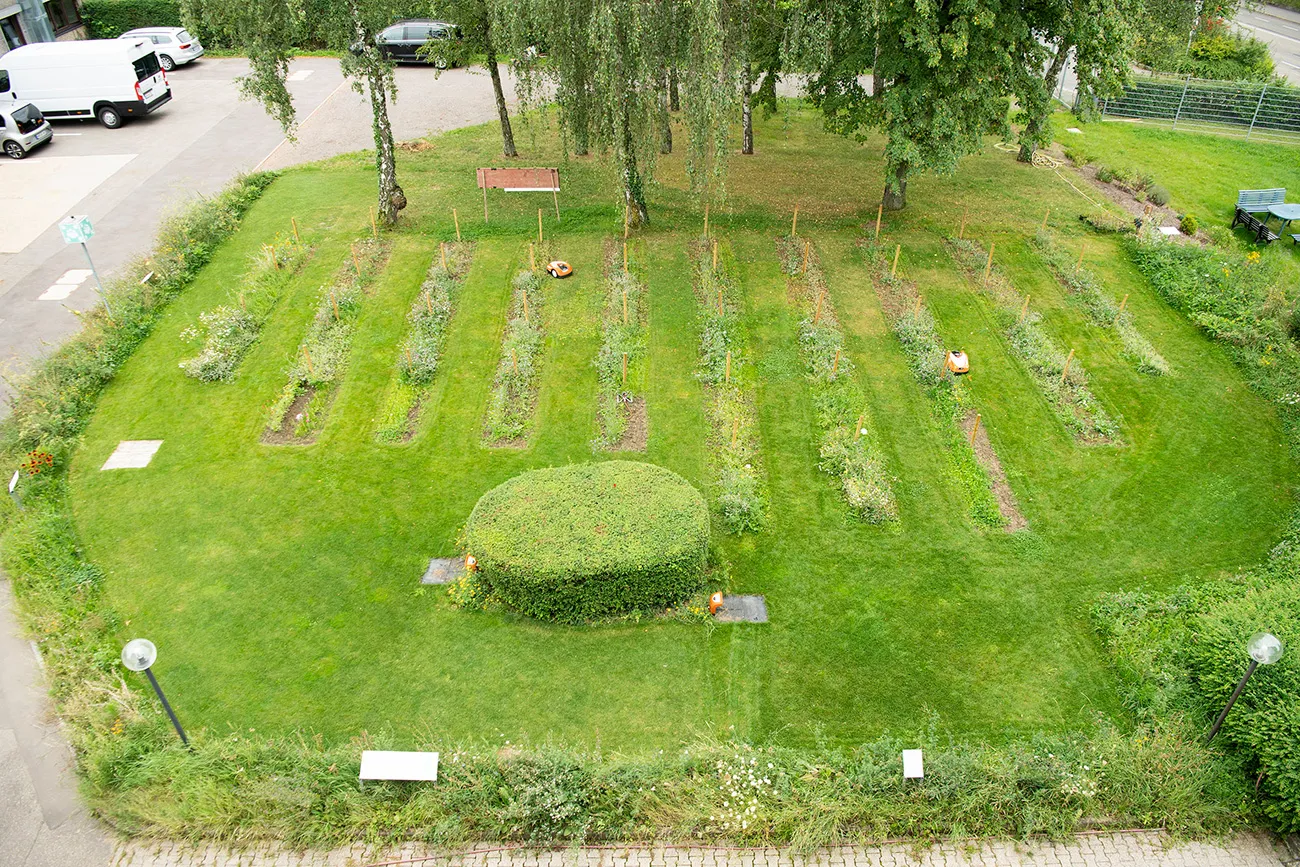
In the study “Anlage von Blühflächen zur Optimierung des Erscheinungsbildes von robotergemähten Rasenflächen” (Creating flower-rich areas to improve the appearance of lawns cut by robotic lawn mowers), the trial area provided by STIHL was divided into strips of flower-rich areas. A total of 79 plots were established, with different flower mixes sown in them.
Gardens offer plenty of opportunities to enhance biodiversity. This also applies, for example, to lawns maintained by robotic lawn mowers. A strip measuring 10 to 15 centimetres along the edge is often left uncut because the mower’s housing limits its reach. These edges are usually trimmed with a manual lawn edger to keep the lawn looking perfectly neat. A master’s thesis carried out at the University of Hohenheim with support from garden machinery manufacturer STIHL investigated the extent to which deliberately sowing flower mixes in these strips can improve the appearance of lawns enough to eliminate the need for regular edge trimming, while also contributing to biodiversity. The study builds on an earlier master’s thesis from 2020, which analysed the impact of mowing technology on lawn biodiversity. That study concluded that robotic lawn mowers, which keep lawns consistently short, allow for greater diversity than manual lawn edgers, which are used only once a week. It also found that borders along lawns cut by robotic lawn mowers significantly increase biodiversity.
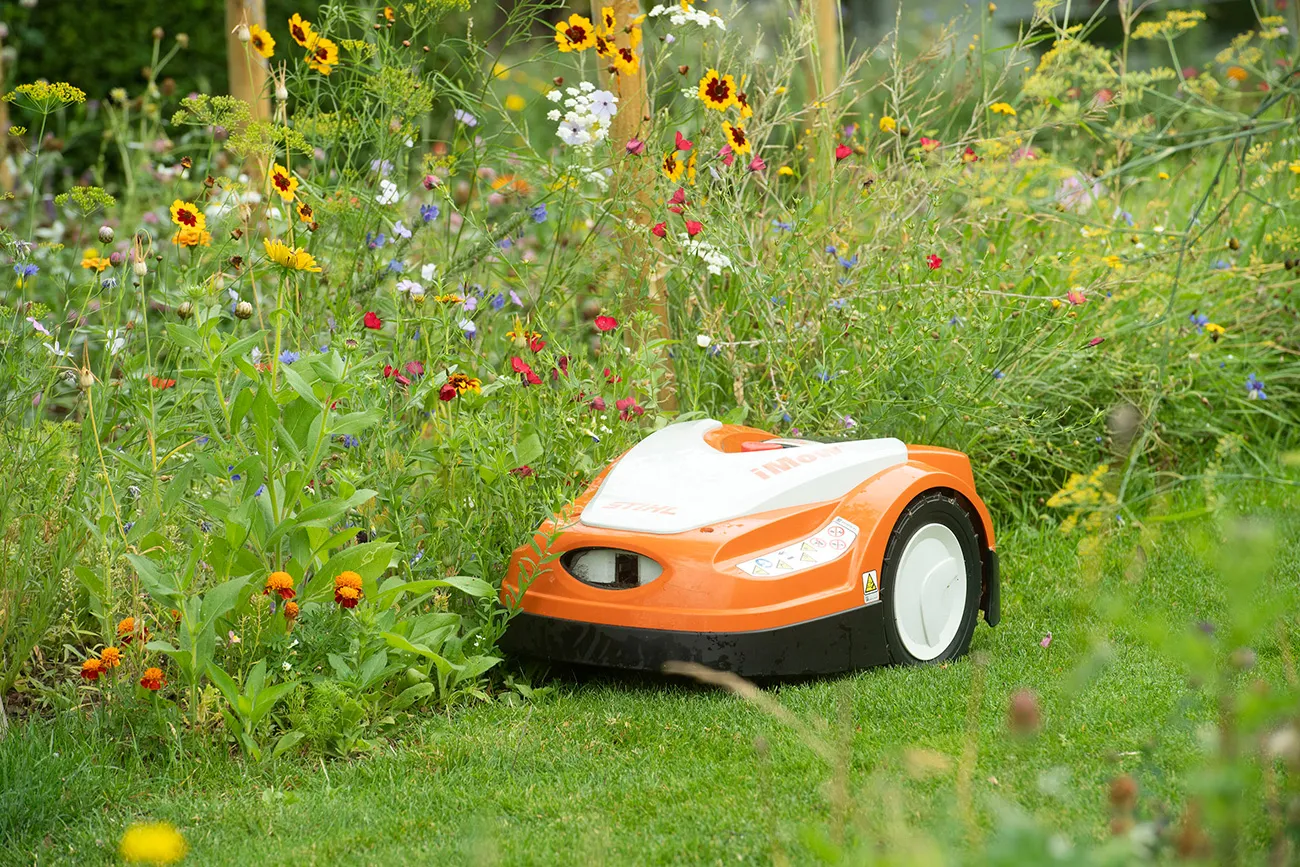
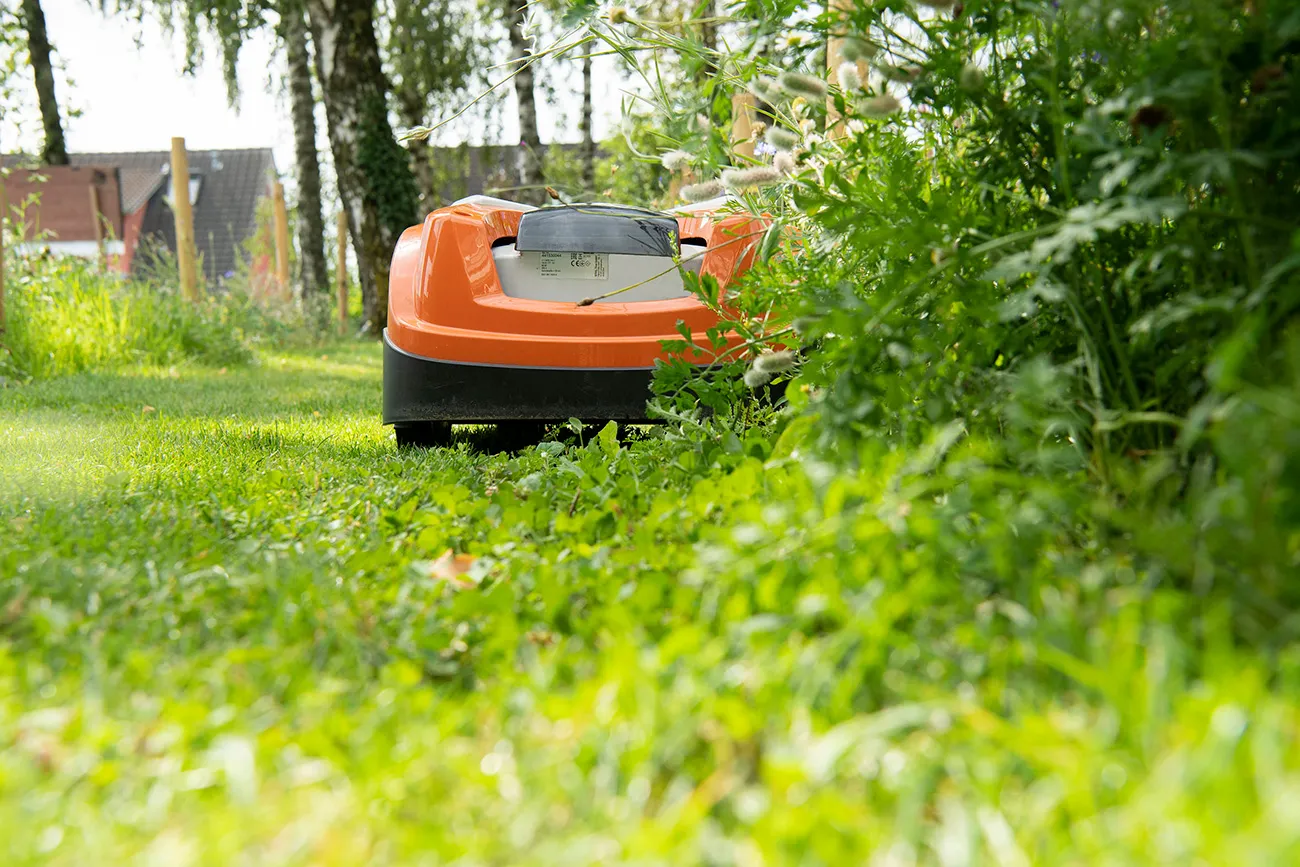
During the study, two STIHL RMI 422 robotic lawn mowers cut the lawn and the transition strips containing the flower mixes.
Field trial with different flower mixes
In her current research, master’s student Alicia Läpple investigated which seed mixes are robust enough to be cut or driven over by a robotic lawn mower, making them ideal for creating borders that are highly valuable for biodiversity. To do this, she created flower-rich strips in a lawn and sowed different flower mixes in them. The study included a total of 79 plots. Alicia Läpple used commercially available native seed mixes, as well as special native seed mixes that she had put together herself using native seeds from low-growing and medium-height annual, biennial and perennial plants. A wire was then laid to mark the boundaries of the trial area. From July 2021, two STIHL iMOW RMI 422 robotic lawn mowers cut the lawn strips between the flower plots at cutting heights of 3.5 and 6 centimetres.
From early July to late August 2021, the student regularly monitored the borders. Based on vegetation density and appearance, she identified the flower mixes that were best able to withstand the daily passage of a robotic lawn mower. The results showed that plant height and growth habit determine whether different plants are suitable for creating a flower strip cut by robotic lawn mowers. Cutting height also proved to be very important: a higher cutting height (6 cm) is better for growth than a lower one (3.5 cm). The master’s student therefore recommends adjusting the mower’s cutting height when creating borders. Since herbs and grasses are more tolerant of low cutting heights than wildflowers, especially in mixes consisting entirely of flowers, the student also investigated a two-stage sowing method, with a first row of low-growing flower mixes “at the front” and a second row of tall-growing flowers “at the back”. The results showed that the second row, further away from the lawn, can also be sown with visually attractive flower mixes that are not tolerant of mowing or being driven over.
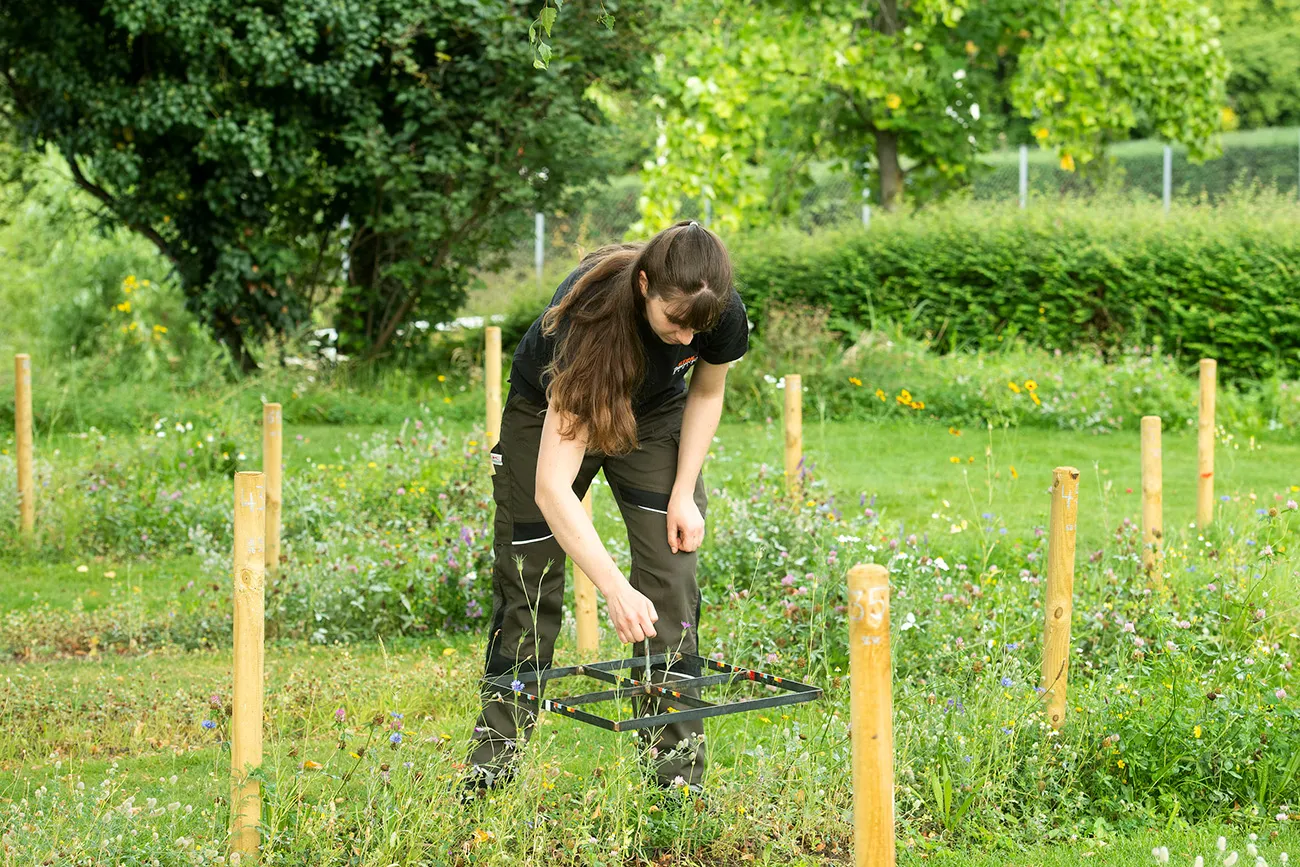
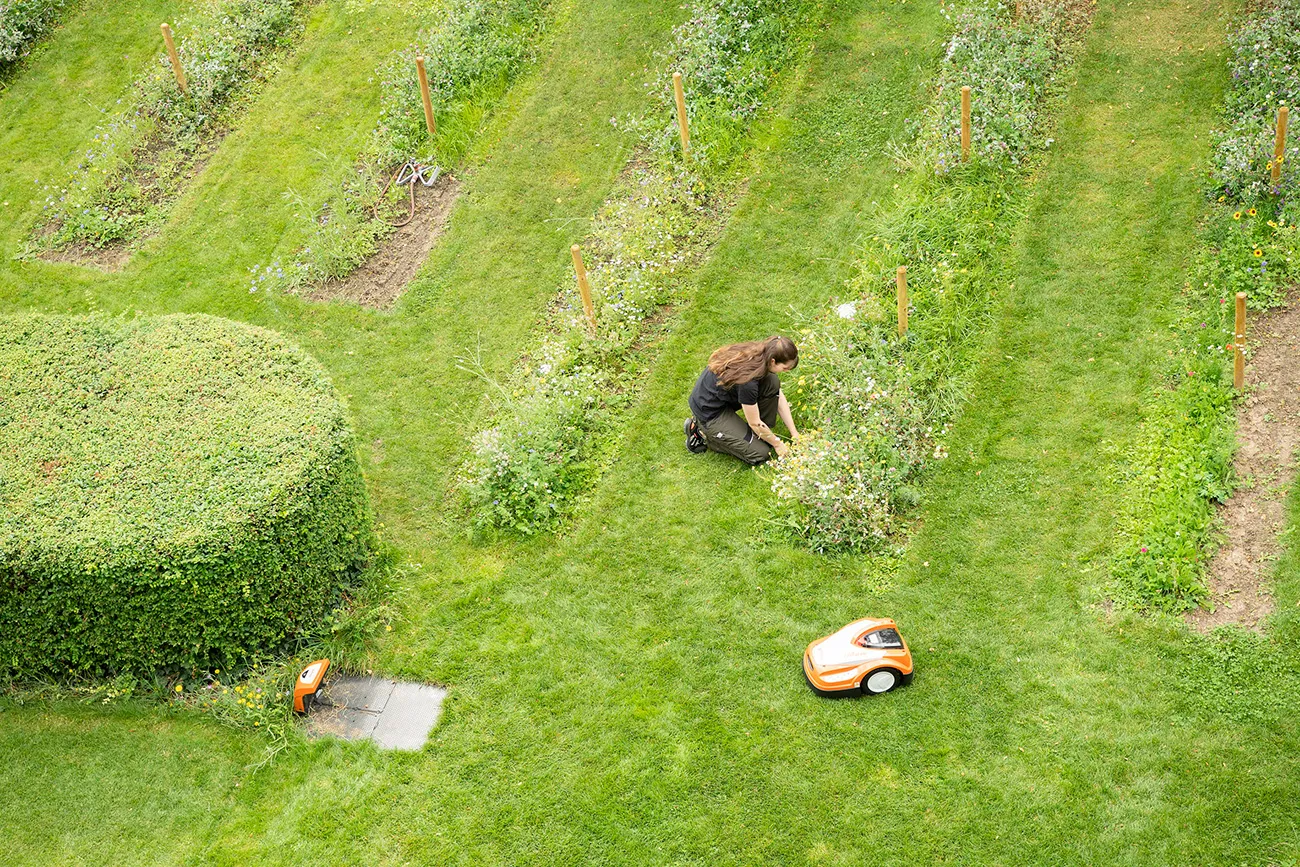
As part of the field study, the master’s student regularly assessed vegetation density and the appearance of the borders to determine what flower mixes need in order to withstand being cut or driven over by a robotic lawn mower.
Native seeds enhance biodiversity
The master’s student also investigated the extent to which creating borders enhances biodiversity. To do this, she observed and recorded the hymenopterans visiting the strips. Her observations led her to conclude that borders sown with native seed mixes provided insects with an important food source throughout the study period. The future agricultural engineer also found that the increase in flowering plant species was accompanied by an increase in the insect species observed. Alicia Läpple recorded wild bees, honeybees, bumblebees, wasps, hoverflies, flies, Spanish flies, ladybirds, plant bugs and cabbage white butterflies. The study therefore clearly demonstrated that creating borders not only improves the appearance of the area, but also enhances biodiversity. This is particularly true when native flower mixes are planted: the study found that flower-visiting insects prefer these mixes to exotic plants. Those who want both to beautify their garden and enhance biodiversity should therefore use native seed mixes when creating borders. Different native flowering plants can also be combined, for example by pairing a low- or medium-height mix in the front section, where the robotic lawn mower passes over it in part, with a tall-growing mix in the back section. This technique particularly improves the quality of biodiversity.
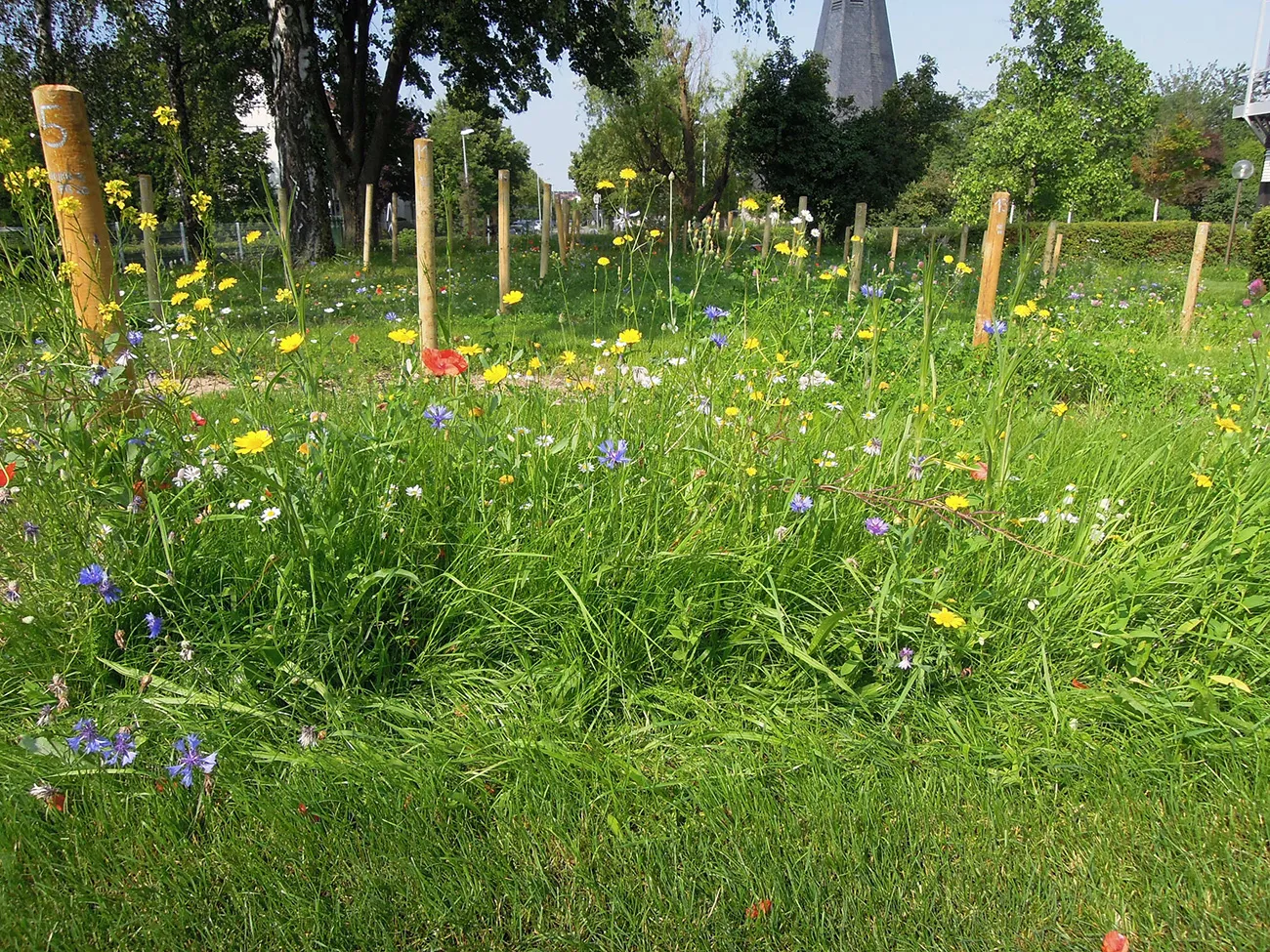
Borders along the edges of lawns are not only aesthetically appealing, but also make an important contribution to enhancing biodiversity in the garden.
A look at the results
As part of her master’s thesis, entitled “Anlage von Blühflächen zur Optimierung des Erscheinungsbildes von robotergemähten Rasenflächen” (Creating flower-rich areas to improve the appearance of lawns cut by robotic lawn mowers), Alicia Läpple, a student at the University of Hohenheim in Baden-Württemberg, analysed in summer 2021 which native flower mixes could best withstand the daily use of a robotic lawn mower. The aim was to determine which flowering plants are suitable for lawn edges maintained by robotic lawn mowers. She sowed commercially available flower mixes, including mixes for flower and herb meadows (perennials), wildflower mixes (annuals) and mixes for colourful border flowers (perennials), as well as special mixes that she had put together herself using native seeds of low- and medium-growing plants, each comprising annuals, biennials and perennials. In the field trial, the colourful border flower mixes and the mixes for flower and herb meadows proved suitable for grass edges cut by robotic lawn mowers. These flower mixes achieved the highest overall scores and performed equally well in terms of vegetation density and resistance to mowing. The mix for colourful borders came out on top for the criteria “Aesthetics” and “Biodiversity quality”.
Question about this story? Ask your question
Keep following this
Get an email when a new story is published. No account needed.
- ThemeAutonomous operations in green spaces
- SubjectGeneral







