









A remarkable swimming pond blends into the planting. All round
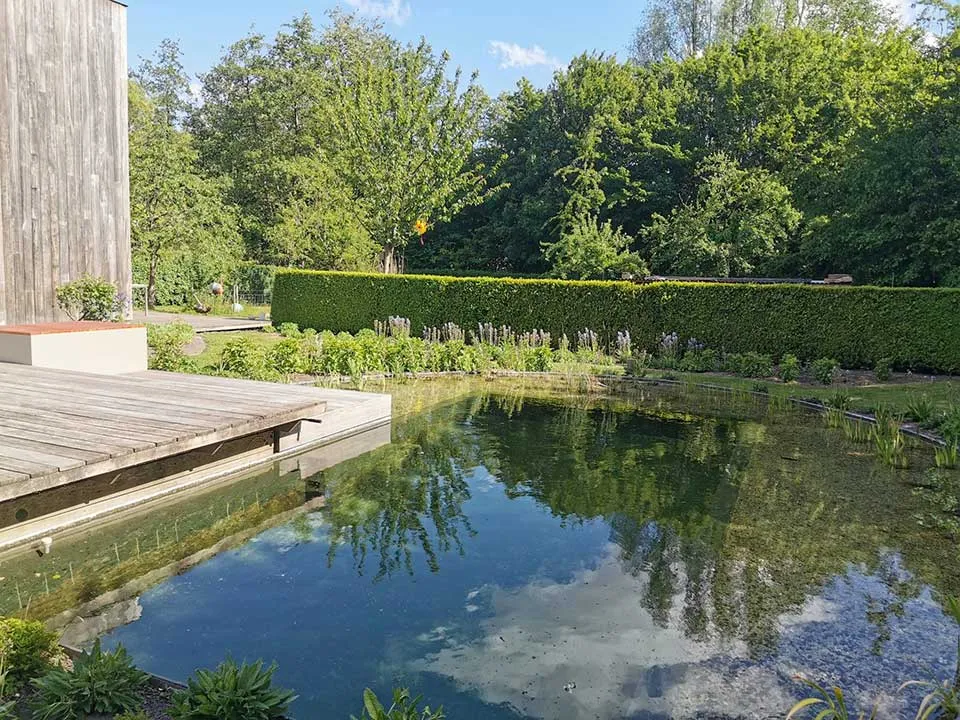
The brief was to create a functional yet attractive water feature that would blend seamlessly with the existing garden design. It was given to garden contractor Tuinen Desoete from Sint-Andries, near Bruges.
The result is a compact swimming pond with a striking circular wetland zone. A fine example of craftsmanship by both the company’s garden designers and its construction team.
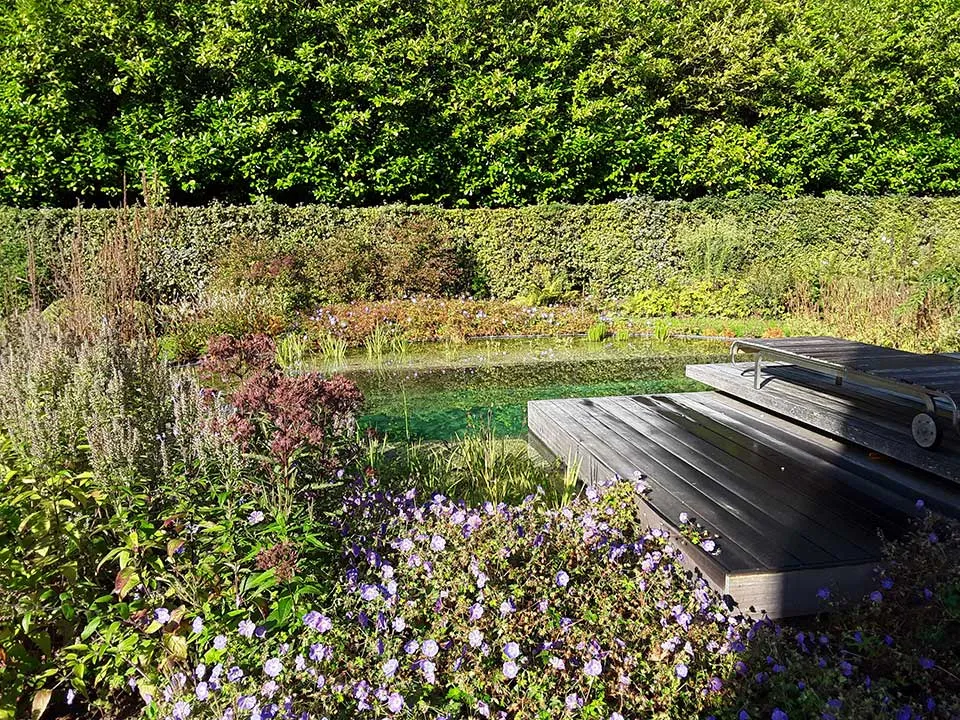
Tuinen Desoete had visited the client several times to maintain the garden when the idea of adding a functional water feature in a prominent corner came up. “Although the area in question was right next to the house and terrace, it had been looking rather neglected for some time,” recalls garden designer Steven Dejong. “The owners wanted somewhere to cool off on hot days, without having to redesign the entire garden.”
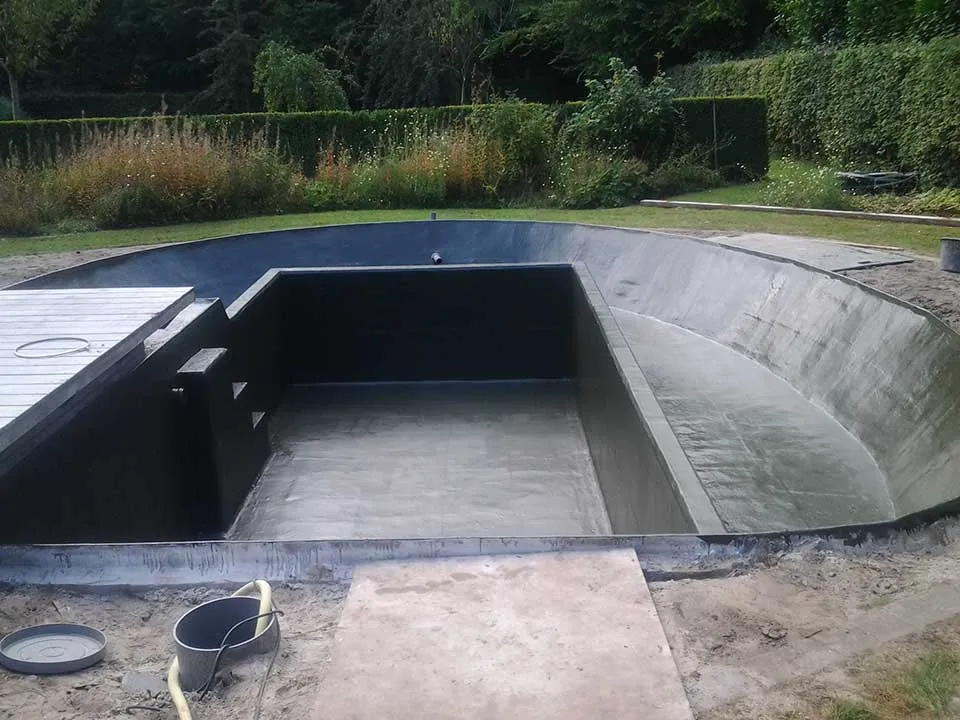
Circular
The existing garden design was characterised mainly by organically shaped grass paths and rounded flower beds. “A conventional rectangular swimming pond would have disrupted this dynamic,” says Dejong. “So we decided to surround the rectangular swimming area on three sides with an extensive wetland zone, whose edges follow the original rounded shape beautifully.”
“The walls of the swimming area are lower than the water level on all three sides, and we deliberately left out the stepping stones often placed between the swimming and wetland zones. This allows the water to flow freely across both zones, making the rectangular shape of the swimming area fade completely into the background.”
Geraniums, anemones and other flowering plants fill the rest of the original circular area around the egg-shaped swimming pond.
Seamless
The swimming area was built from concrete blocks; the surrounding wetland zone was excavated and lined with stabilised sand. “To make the boundary between the swimming pond and the surrounding flower beds as subtle as possible, we finished the fourth side of the swimming area, the side that does not border the wetland zone, with Wirtz edging stones, and made sure the wetland zone also had a very fine edge.”
Precise levelling was essential to achieve the almost invisible edges. “If any part of the edge were slightly higher, it would immediately protrude above the water. Another challenge was that the ground itself was not level, so we had to deal with those small differences in height another way. We did this with the surrounding flower beds. Everything now seems to merge together organically. We also added an extra wooden platform to bridge the difference in level between the terrace and the swimming pond.”
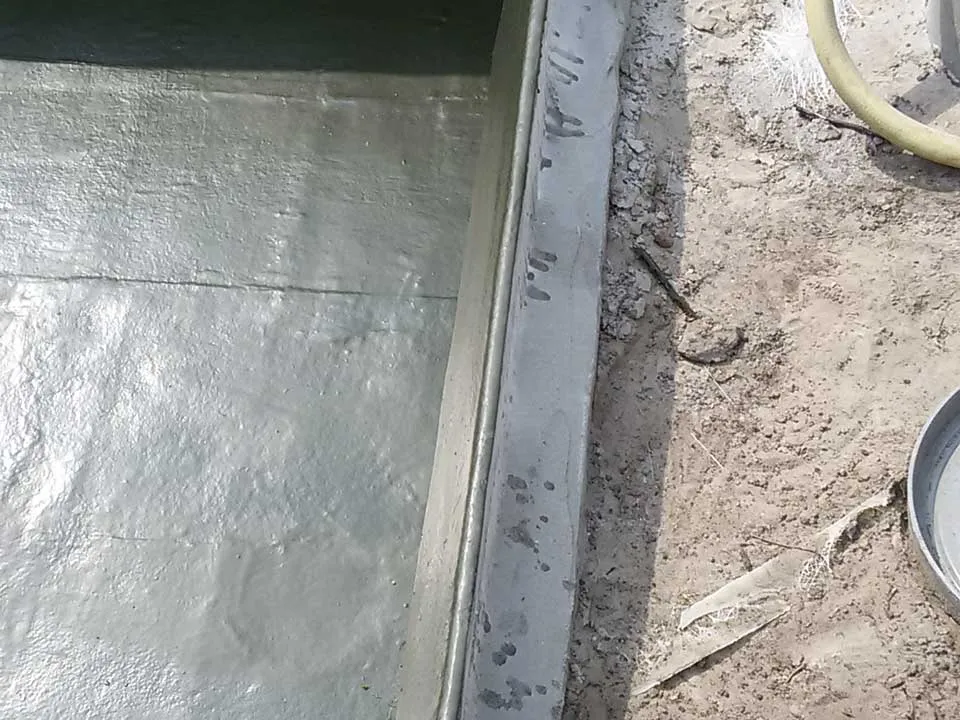
The wetland zone and swimming area are made watertight with a polyester finish. “This finish bonds perfectly to a cement-based substrate and provides extra reliability, especially for unusual shapes. It is not a liner that needs to be cut to size and then sealed at the seams. The waterproofing is built up in layers of polyester and fibreglass. You can essentially paint it on, making it easy to waterproof the curved shapes and, for example, the small pool steps.”
Greater freedom thanks to a large wetland zone
Compared with the swimming area, which measures six by three metres, the wetland zone takes up a relatively large area in this swimming pond. “For swimming ponds built on the downflow principle, as this one was, we generally allow for one third wetland zone and two thirds swimming area. In this case, the proportion is indeed somewhat higher, which gave us a little more freedom when building the filter. As with other projects, we used different grades of lava and Clinopti swimming pond substrate for water purification, but we had even more freedom to select and combine plants.”
Question about this story? Ask your question
Keep following this
Get an email when a new story is published. No account needed.
- SubjectGeneral







