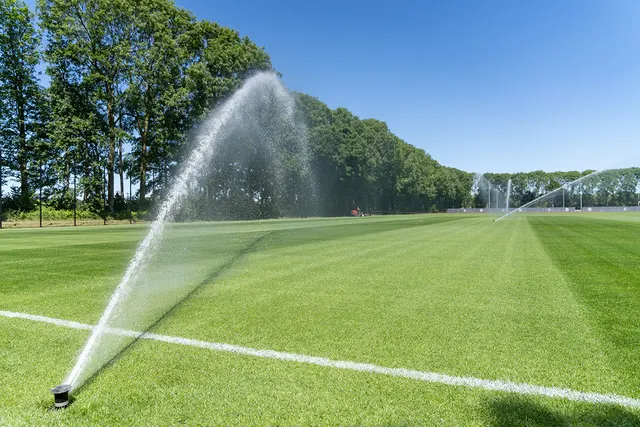
Watering grass sports pitches wisely
Text Ernst Bos / Kris VandekerckhoveImage Ernst Bos
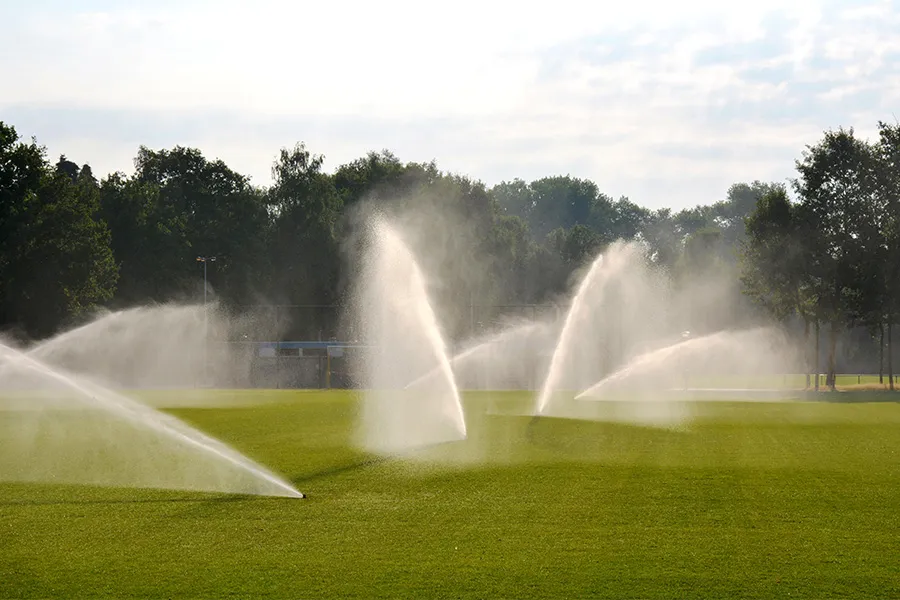
After a wet spring, record-breaking drought seemed on the cards, but it remains to be seen whether drought and heat records will be broken again in 2023. One thing is certain: if dry spells last long enough, it will not be possible to keep all sports pitches and golf courses green. Grass needs water to grow, recover and cool down. Rainwater is best, but if there is no rain, irrigation is necessary. The main question is: how do you decide when to start watering and how much water should you apply each time?
Using a moisture meter may seem the obvious choice. But it is only useful if you take measurements correctly and interpret the readings properly. Occasional measurements in the top few centimetres of the turf do not provide enough information. What is more, the moisture percentage says little about how much water the grass can absorb from the soil. This varies considerably depending on factors such as soil composition, compaction and rooting depth.
Do not irrigate too soon or too often
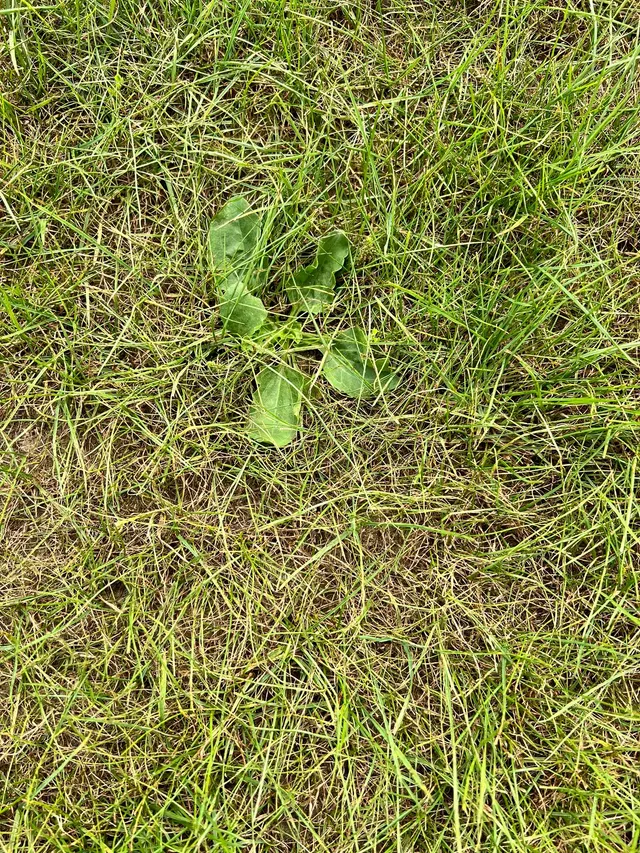
In practice, we often irrigate too soon and/or too much. It is tempting to water pitches briefly and frequently during dry spells. Coaches and footballers like playing on moist grass, and club officials and volunteers like to see it looking lush and green. However, frequent irrigation is the quickest way to ruin a pitch. A constantly moist surface encourages shallow rooting and promotes undesirable species such as annual meadow-grass, rough meadow-grass and various weeds. Shallow roots make poor use of water and nutrients, leaving the grass vulnerable to heat and drought. If the irrigation system fails or a watering ban is imposed, the grass will dry out quickly. In any case, it makes sense to improve the resilience of grass pitches to the vagaries of a changing climate.
One logical approach is to increase the proportion of smooth-stalked meadow-grass and, in some cases, tall fescue. This goes hand in hand with encouraging healthy, deep rooting. The main keys are soil that allows roots to penetrate, fertilisation tailored to the species and, above all, a cautious irrigation regime. In other words, do not start watering too early, but do start in time, and irrigate less often, applying more water each time.
Deep-rooted grass stays green for longer
In spring, it is important to get grass growth, and therefore root growth, off to a good start with air and water, to aid recovery after winter. This prepares the grass for a potentially hot, dry summer. When the soil dries out from the surface down, the grass responds by developing deeper roots. This is very important during hot spells, as grass roots are inactive above around 25°C. They stop absorbing moisture and nutrients, and the leaves begin to wilt. Because it is cooler deeper in the soil, deep-rooted grass stays green for longer. As long as the grass can evaporate water (transpire), it keeps itself and the surface cooler for longer. Wilting does not mean that the sports turf grasses are dying; they enter ‘summer dormancy’. Once temperatures return to normal and sufficient moisture is available, the green leaves return.
Look at the soil
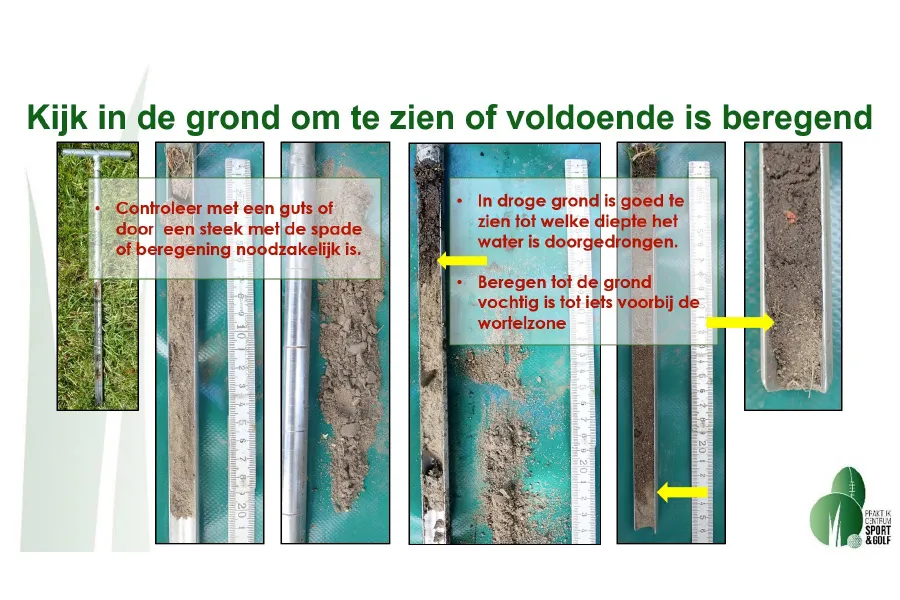
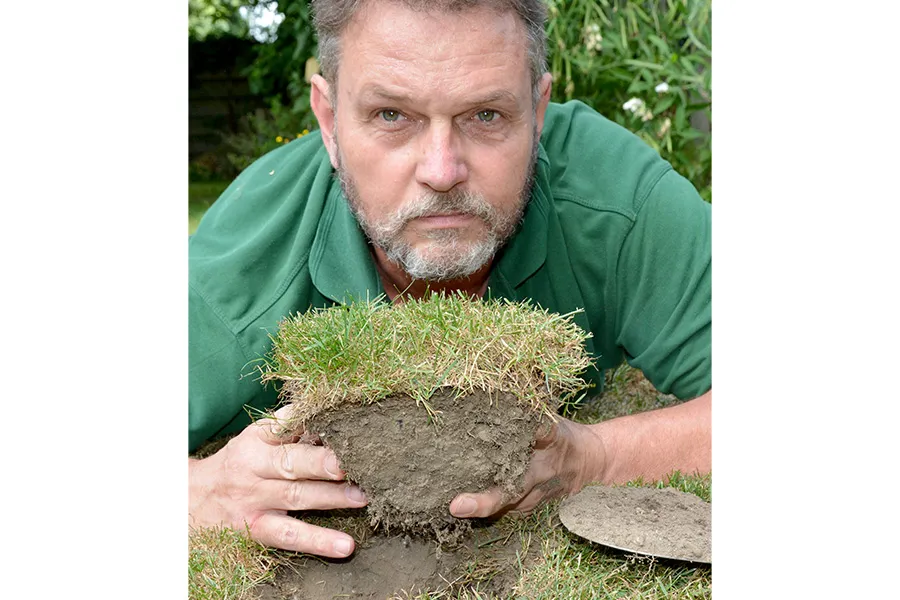
To determine when and how much irrigation is needed, it is better to look at the soil than at the grass. At the start of the growing season, use a soil auger or spade to take samples in several places on the pitch, to a depth of about 25 cm. If the soil is very dry down to that depth and no rain is forecast, it is advisable to replenish the moisture until the soil is properly moist again at a depth of 20 to 25 cm.
Provided aeration is also adequate, this will stimulate growth and help the turf recover after winter. Making the most of spring growth will make the grass much more resilient to possible drought and heat in summer, and it will recover much more quickly after a period of stress.
For subsequent irrigation rounds, check the soil with a spade or soil auger. It is important to establish how deep the grass roots extend. In a good turf, grass roots reach at least 15 to 20 cm deep. Start irrigating when the bottom third of the root zone is just slightly moist. This can be seen from the change in soil colour. Irrigate until the soil is moist just beyond the root zone. Irrigating for longer wastes water and leaches nutrients.
A few exceptions
Newly germinated grass cannot wait for irrigation during dry spells; without water, it will die.
If pitches are unplayable because the surface is too hard or too sandy, irrigation is necessary for safe play. This should therefore be taken into account.
Question about this story? Ask your question
Keep following this
Get an email when a new story is published. No account needed.
- ThemeSmart irrigation and drainage
- SubjectConstruction & management