‘Leaudegem’ is not rocket science, it’s pure nature
Decentralised wastewater treatment in Ledegem
One record after another fell this summer. With barely 23 millimetres of rainfall in total, July and August were the driest months since records began in 1833, according to figures from the KMI. Not only Flanders but all of Europe was struggling under the heat. In Ledegem, in West Flanders, a smart and simple approach was chosen to tackle water shortages.
Dry riverbeds, disrupted inland shipping, lorries having to supply entire regions of France with drinking water, crops scorching in fields everywhere: 47 per cent of Europe’s land area was under drought warning, while the alert threshold was exceeded in 17 per cent. Even the most ardent climate sceptic must have understood this past summer just how inextricably the fate of the human species is bound up with water. During that same long, hot summer, the ‘Leaudegem’ sanitation project was completed in Ledegem, West Flanders.
Zoning and implementation plans (VMM)
In Flanders, all sanitation projects are set out in the zoning and implementation plans of the Flemish Environment Agency (VMM). Discharge conditions are laid down in VLAREM Title II and vary according to the zone into which the discharge of domestic wastewater falls: the central area, the collectively optimised outside area, the outside area to be collectively optimised, or the outside area to be individually optimised.
A zoning plan can be updated annually to reflect the actual situation, taking completed sewerage projects into account. Everything is then set out in a Water Implementation Programme (WUP). The ‘Area-wide Implementation Plan’ (GUP) builds on the zoning plan and governs the implementation and timing of the sanitation projects still to be carried out, as well as their coordination. Priorities and corresponding timelines are set out.
An untenable situation
In the case of Sint-Pietersstraat, where discharges into a roadside ditch via a sewer pipe had caused odour nuisance for years, this meant the problem could not be addressed for another 12 to 15 years or so. Connecting the wastewater to the transport system also entails a very substantial investment, shared by the municipalities and Flanders. Flanders reimburses local authorities for 75 per cent of the cost of completed sewerage projects.
This situation is found in many places across Flanders: the outside area to be collectively optimised still includes more than 340,000 homes. The challenge is to transport wastewater from remote areas to wastewater treatment plants (RWZIs). The basic idea among public authorities was to provide sewerage to the outside areas last, but little has been done and, in any case, progress is far too slow. A further 8,500 to 10,000 kilometres of sewerage still needs to be laid. An untenable situation.
Water treatment using plant systems
Ledegem is taking a bold step and opting for a decentralised solution, backed by a subsidy project. Under the European Blue Deal, the Flemish Ministry of Environment developed a framework to support demonstration projects. The search was therefore on for innovative, alternative and high-quality solutions for wastewater facilities without sewers in the outside areas.
One such solution is local water treatment using plant systems (constructed wetlands). When a restaurant in Kuurne succeeded in recycling kitchen wastewater and toilet flushing water into drinking water using a constructed wetland, it made the television news. Mobile water treatment plants have also been used to treat wastewater at music festivals in Flanders and the Netherlands.
Ledegem becomes Leaudegem
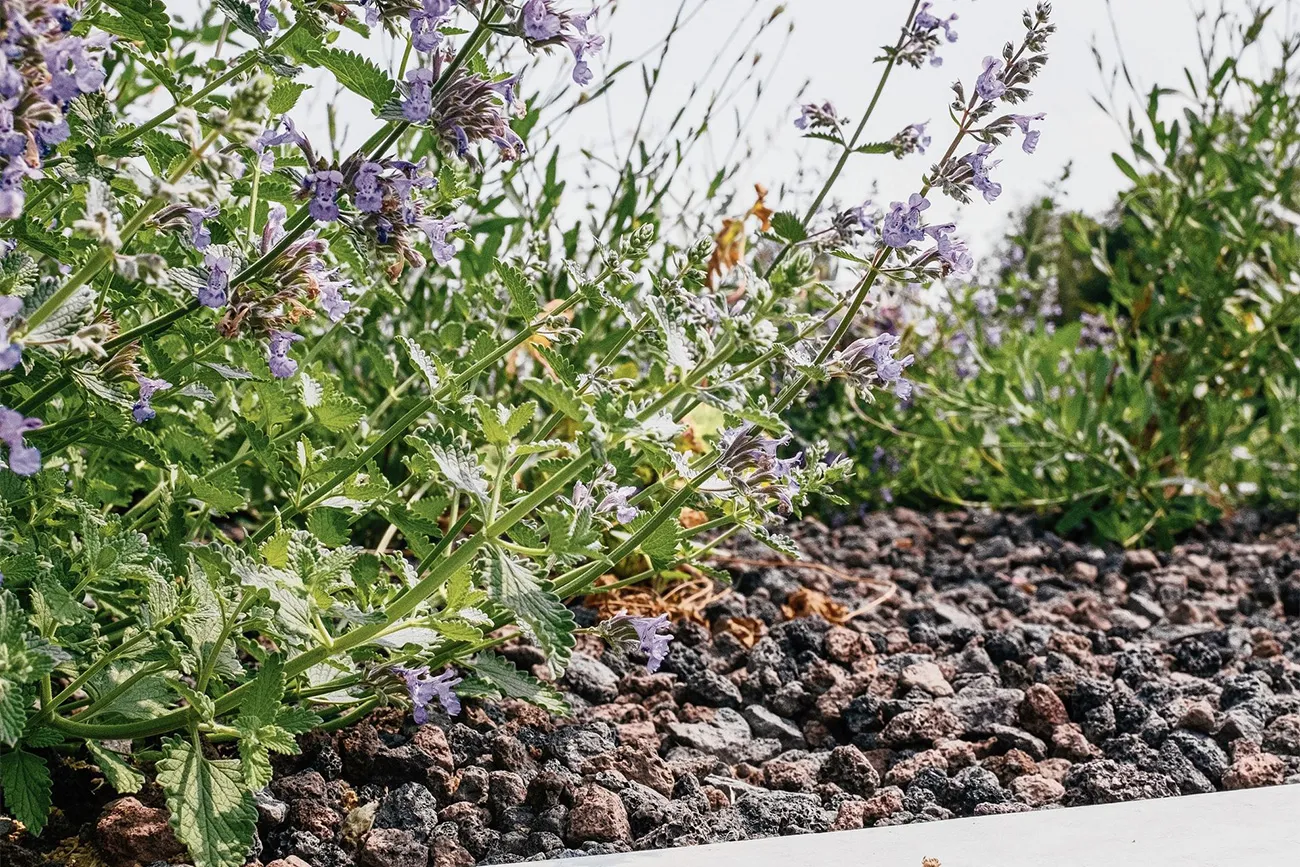
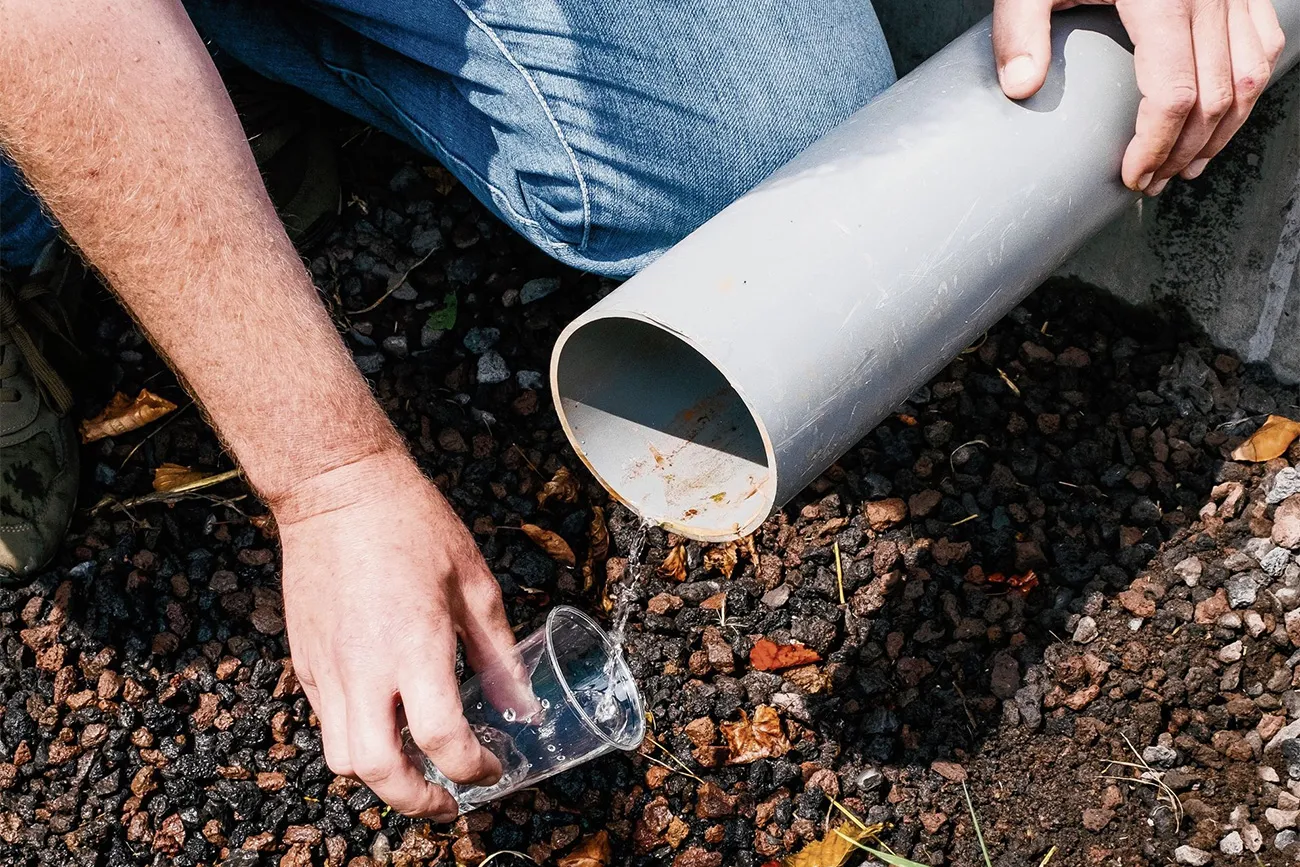
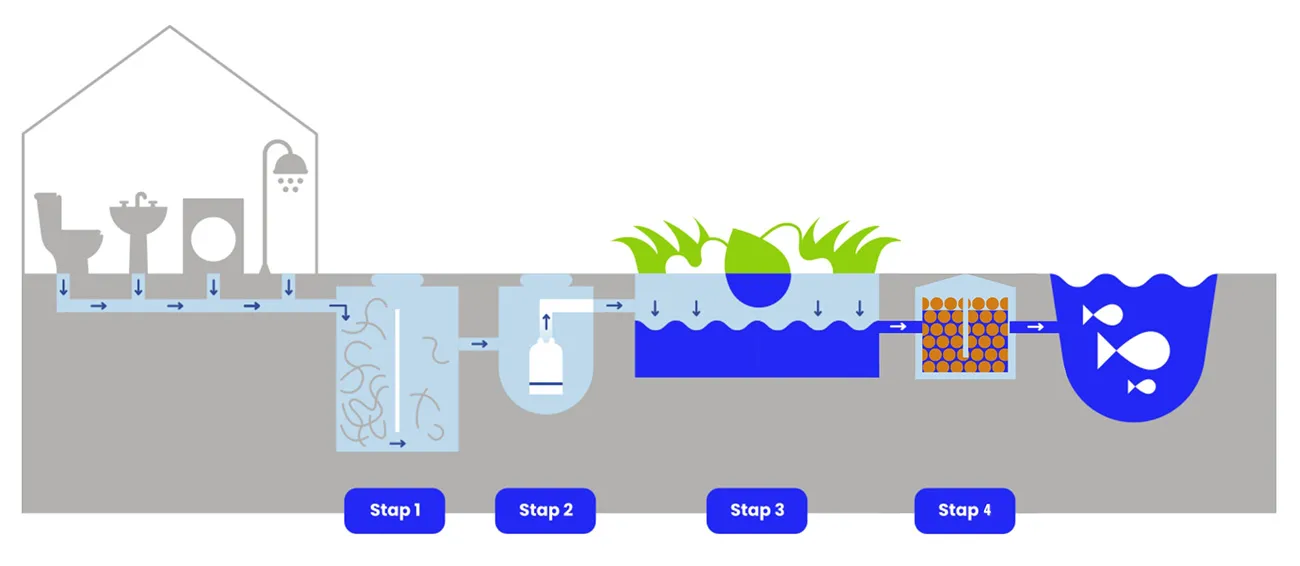
Then there is the Leaudegem project, with HelloWater as the lead technical partner. It’s not rocket science, it’s pure nature. First, all the wastewater is collected in a primary settling tank (step 1). The wastewater is then injected or pumped into a constructed wetland (step 2). The interaction between plants and microbial life in the substrate (step 3) already achieves removal rates of between 96% and 100% for organic load, suspended solids and ammonium (BENOR-certified efficiency).
Next, an innovative post-treatment process called FOSCUBE provides advanced phosphate removal (step 4).
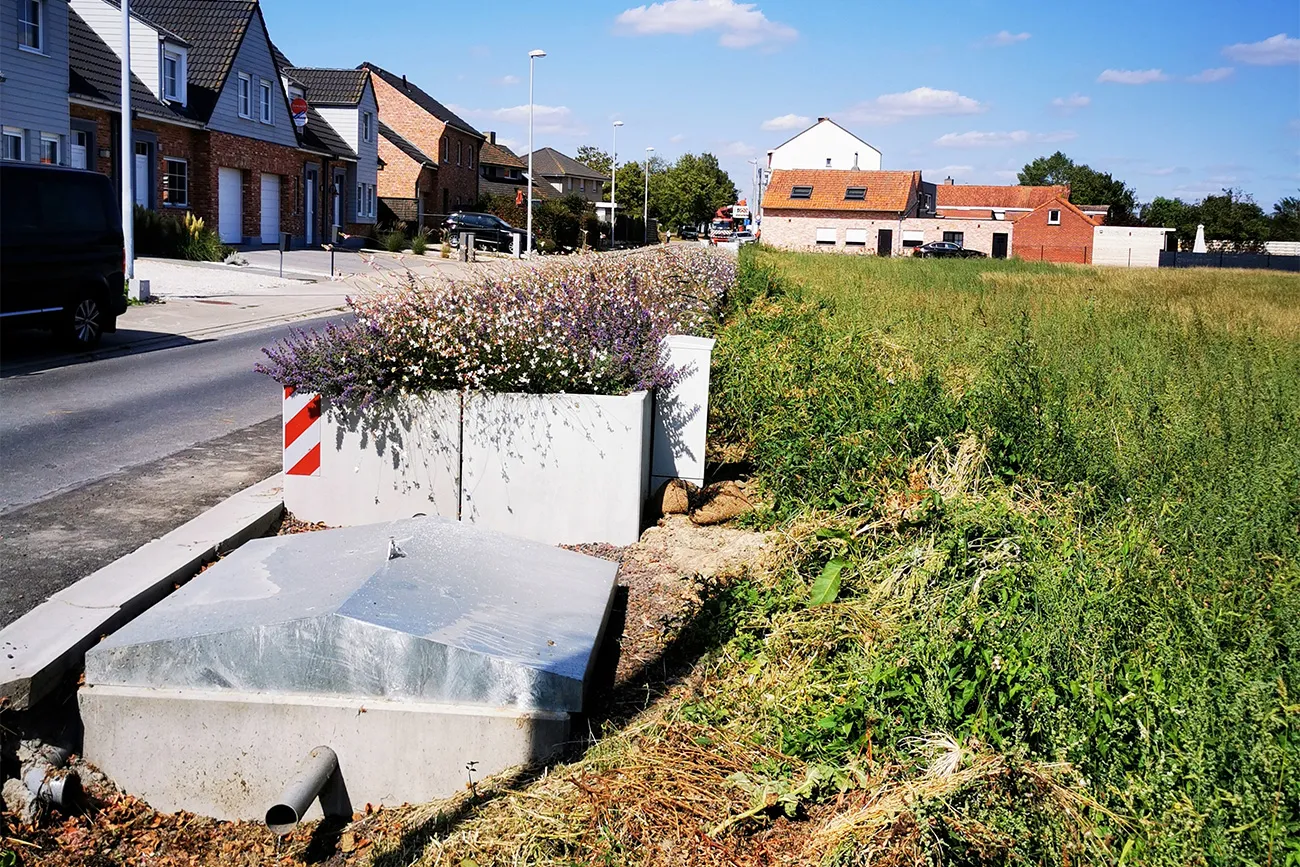
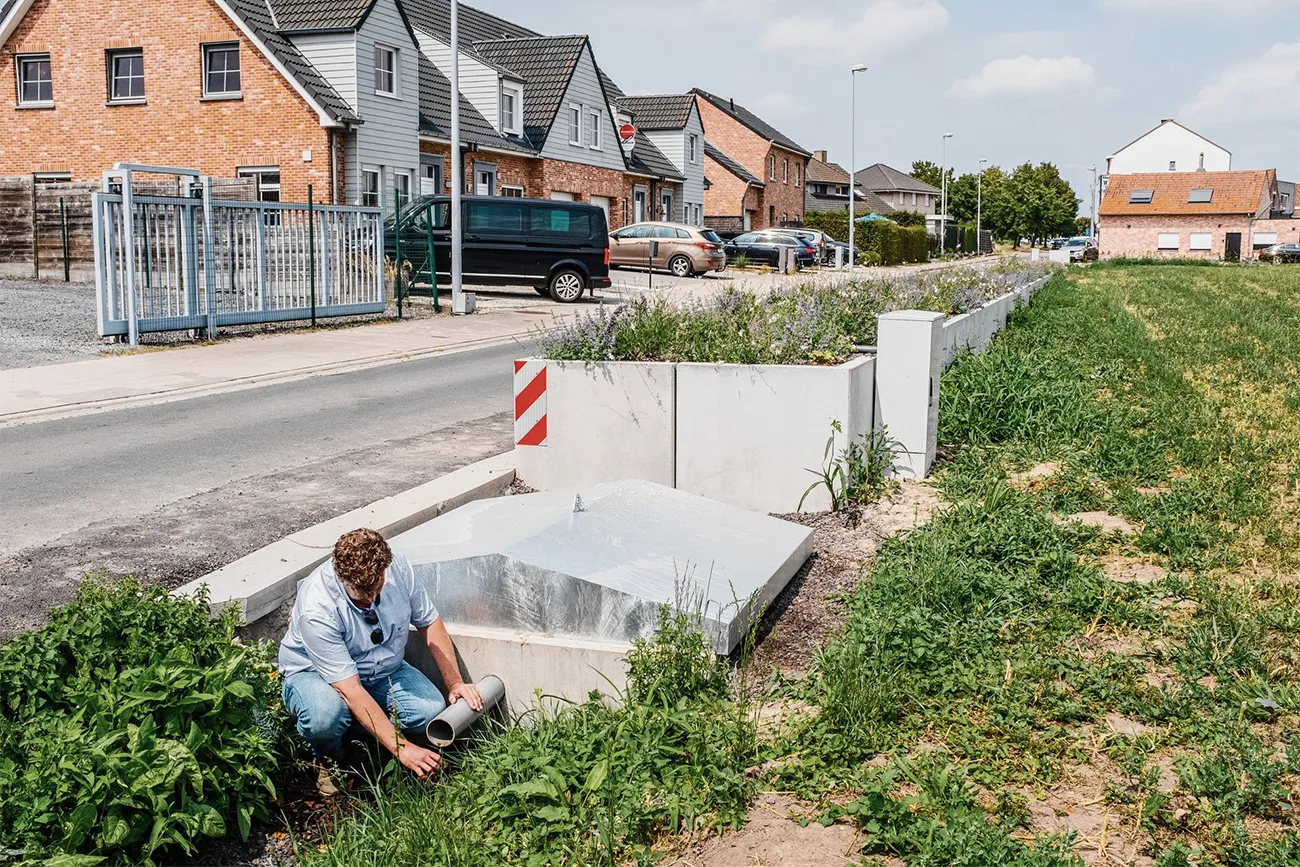
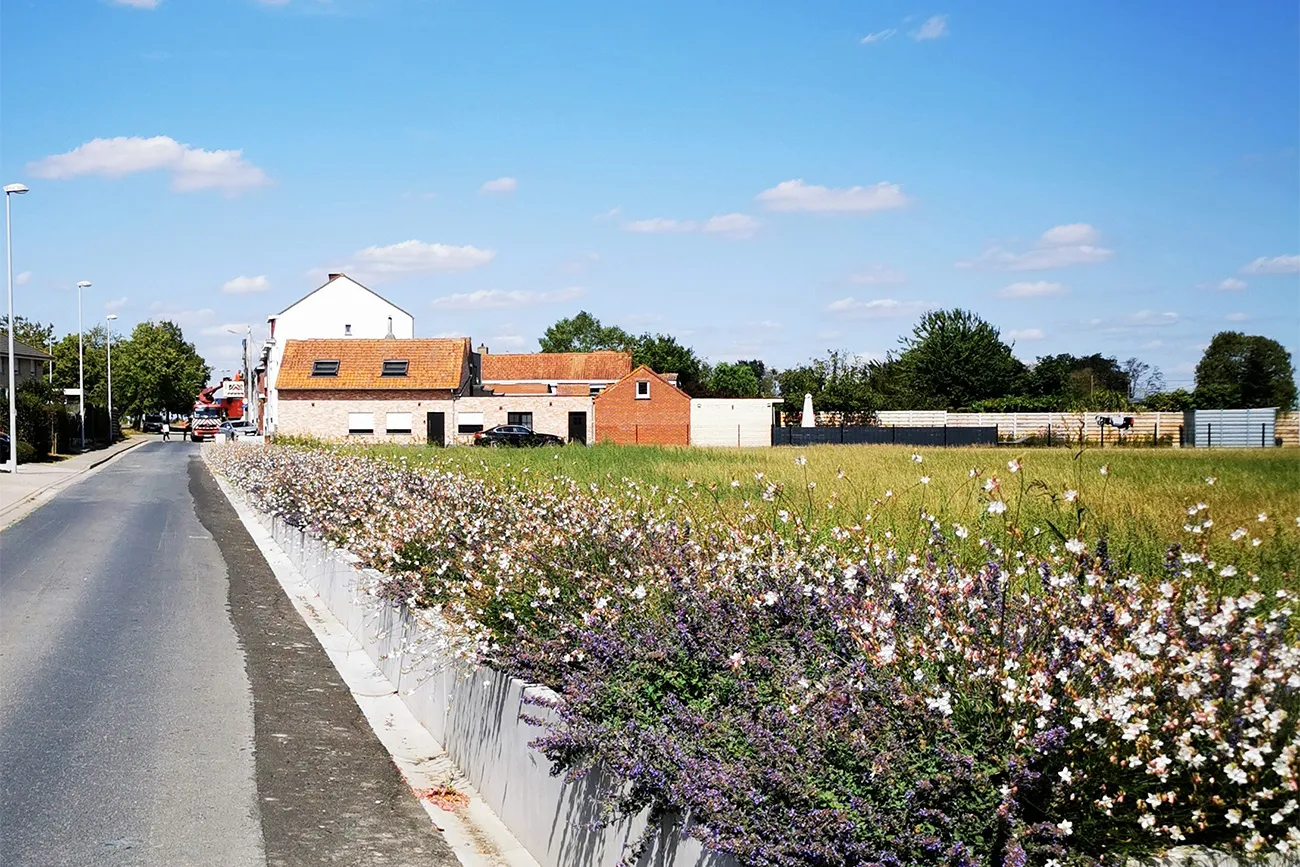
One possible drawback of plant-based treatment is the amount of space required. In Ledegem, the constructed wetland was installed directly in the roadside ditch, so no agricultural or other useful land had to be taken up. The surface is covered with flowering plants, which even boost biodiversity. The installation itself consists of precast elements that can easily be removed or added. This makes the system flexible and scalable as more houses are added. CBS Beton, based in Wielsbeke, was asked to supply the precast elements.
Working with CBS Beton
CBS Beton is the leading specialist in precast concrete elements for the agricultural and infrastructure markets. CBS Beton products are used in general construction, industrial projects, agriculture and horticulture, silos and agricultural buildings, biogas plants, public-sector contracts and private projects.
Marc Vandeputte, marketing and communication manager at CBS Beton: “Our retaining walls are used to bridge changes in level at access and exit roads, gentle slopes, hard shoulders and car parks with ease. Our L-shaped retaining walls (CLF10GS range) are used as modern infrastructure solutions for earthworks, road construction, landscape architecture and hydraulic engineering. The walls have a smooth finish and meet the highest concrete quality standards.”
“CBS Beton was also the first Belgian manufacturer to hold a BENOR certificate, ensuring that its retaining walls meet all Belgian and European quality expectations in the sector. We supplied 400 kilometres of CLF10GS L-shaped retaining walls for this innovative water treatment system.”
Wouter Igodt: “Our collaboration with CBS Beton came about with sustainability in mind. Cement has a well-known CO2 footprint, which we wanted to reduce in our water treatment plants. To do this, we turned to Resourcefull. They offer a cement alternative based on the use of by-products from the metallurgical and mining sectors. CBS Beton and Resourcefull had already joined forces on an Interreg project, Upcycling Concrete. So the collaboration, including delivery and installation, went extremely smoothly.”
“Leaudegem adopted a co-creative approach under the slogan: ‘You go faster alone, you go further together’. The modular, sustainable water treatment systems have produced a result we can all be proud of.”
Een zakelijke vraag aan CBS Beton? Get in touch
Companies in this story
Keep following this
Get an email when a new story is published. No account needed.
- SubjectSoil & water
- CompanyCBS Beton