Small-scale infrastructure, intensive maintenance
Text Elise NoyezImage Antwerp Golf School
The sustainable choices of Antwerp Golf School (AGS)
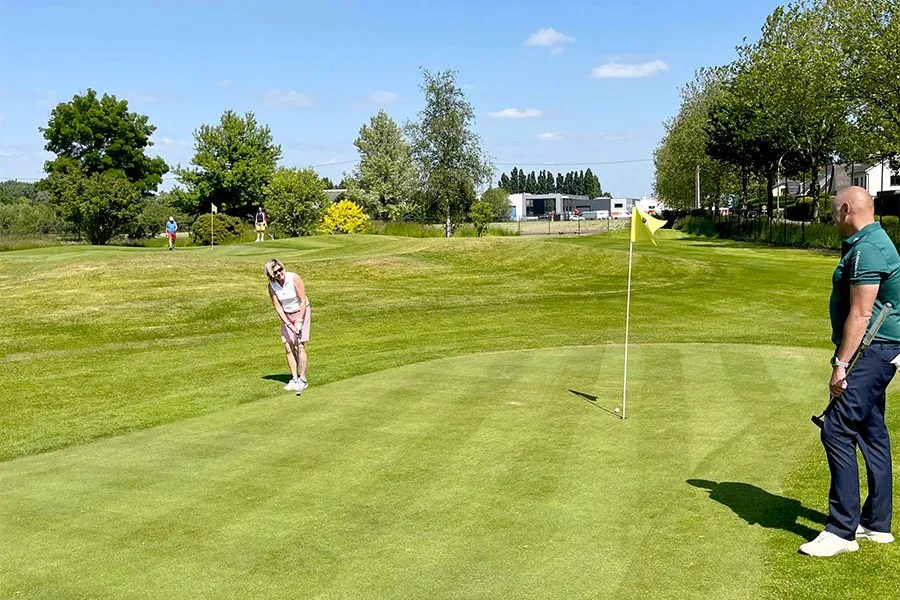
Antwerp Golf School is a different kind of club. Founded as a dedicated golf school, it focuses on beginner golfers and the practice facilities they need. With just six small par-3 holes and a driving range that is, admittedly, extensive, AGS has relatively modest facilities. “That does not mean there is little maintenance to do,” stresses manager Kris Van Ingelgem. “Quite the opposite. There is more foot traffic and, moreover, the golfers are less experienced. That calls for more intensive maintenance and, in the current context, above all, clear priorities.”
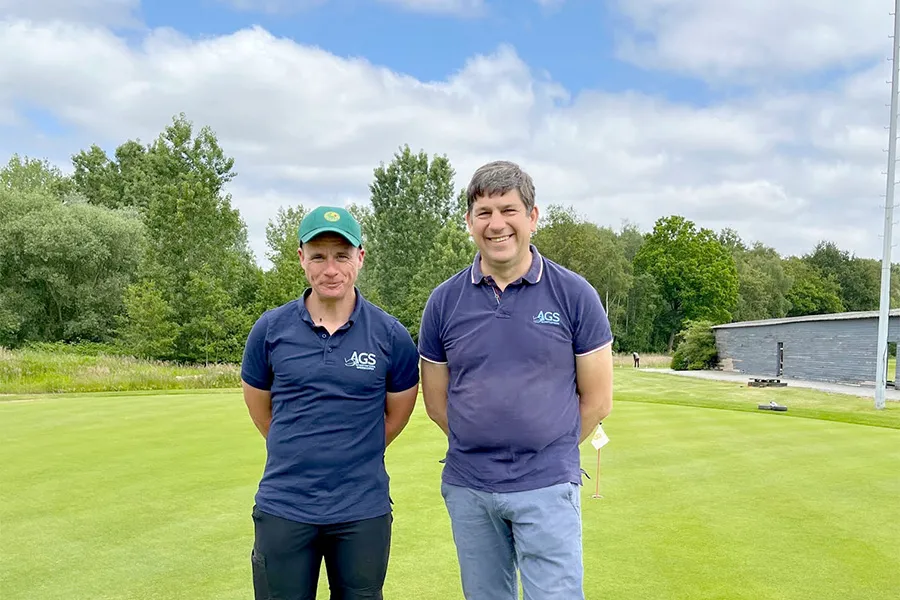
Kris Van Ingelgem started out at AGS as a ball picker. After a brief disillusionment with higher education, he took what was initially a temporary position as a greenkeeper. With the necessary training in the Netherlands and Scotland, this led to a career now spanning almost thirty years, contributions as a greenkeeper at events including a Ryder Cup and US Open, many years on the board of the Greenkeepers Association of Belgium (GAB) and, ultimately, taking over AGS in its entirety. However, Van Ingelgem has found it impossible to give up his greenkeeping role altogether. “Although I found a worthy and passionate successor in Tom Van Hoomissen, I still head out onto the course with him every Monday,” he admits. “I also draw up the nutrient programme for the different areas each year, and am responsible for managing the machinery fleet and calibrating the irrigation system. I also draw up nutrient and maintenance programmes for other clubs as a consultant.”
The new normal
Since his first experiences in 1994, Van Ingelgem has seen the golf sector change considerably. “In the past, we did everything we could to shape the course to our liking. Greens were mown as short as possible, and everything was green and fast. We had, so to speak, twenty different pesticides on our shelves, and if one did not work, we tried another. This created the idea that a golf course should always be immaculate, but that approach is no longer sustainable today.”
“That is why, several years ago, we made a deliberate choice to maintain our golf course sustainably. Not only because many products are being banned, but also because climatic conditions are becoming more extreme and golf is now played all year round. In other words, there is no longer a quiet period when you have time to carry out thorough repairs and overseeding.”
Back to basics
In the current context, Van Ingelgem believes a golf club is best served by focusing on three things: working from a natural foundation, setting well-considered priorities and communicating effectively. “For example, our maintenance always starts with a thorough soil analysis, which then informs a nutrient programme of fertilisers, biostimulants and so on. These programmes create optimum growing conditions tailored to the soil, and are designed so that each of our six greens has its own programme.”
“There are also an increasing number of technologies on the market that can be used to analyse existing conditions. Think of drones or UV systems for identifying irregularities, or machines that measure soil resistance and indicate whether it is compacted. This allows for much more targeted and considered maintenance.”
Priorities
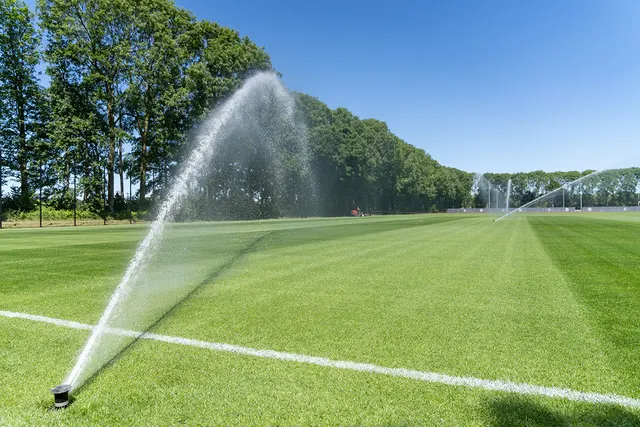
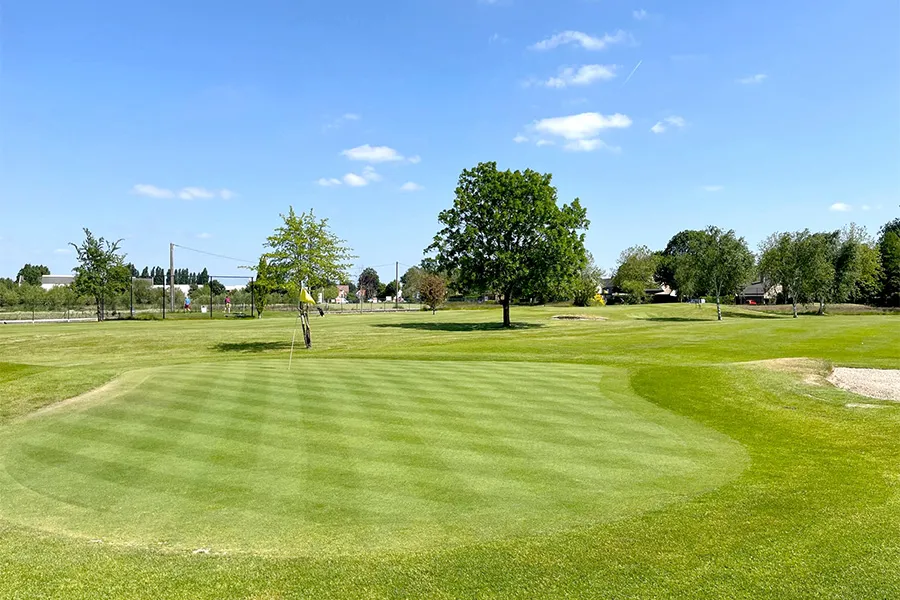
At the same time, Van Ingelgem believes that not every area has the same requirements. “At AGS, for example, we choose to irrigate only the greens and tees. Water is a scarce resource, and drought has little impact on playing quality on the fairways and driving range. We also see a natural shift in these areas towards the most drought-resistant grass species. In time, in other words, we will have a stronger sward that recovers quickly after drought.”
“We do not overseed the driving range, either,” Van Ingelgem adds. “Nobody walks on it, and even the daily maintenance is carried out by a mowing robot and two ball-collecting robots. And yet the quality remains good. It makes sense, really, because that is the power of nature.”
The importance of communication
According to Van Ingelgem, the biggest challenge today is not so much the technical side of things, but adjusting expectations. “Players expect ‘Augusta conditions’, so to speak, at all times and everywhere. So when they arrive at a golf course where the fairway looks more brown than green in midsummer, they are quick to complain. As a club, you need to anticipate this. You need to clearly inform both members and visitors about what you are doing, why you are doing it and what the effects will be on the course. Communication is absolutely crucial in the transition to, among other things, considered water use and pesticide-free maintenance.”
Question about this story? Ask your question
Keep following this
Get an email when a new story is published. No account needed.
- ThemeKeeping golf courses playable all year round
- SubjectConstruction & management