Climate-resilient natural grass pitches start with the soil
Text Elise NoyezImage van Beek Sport en Groen
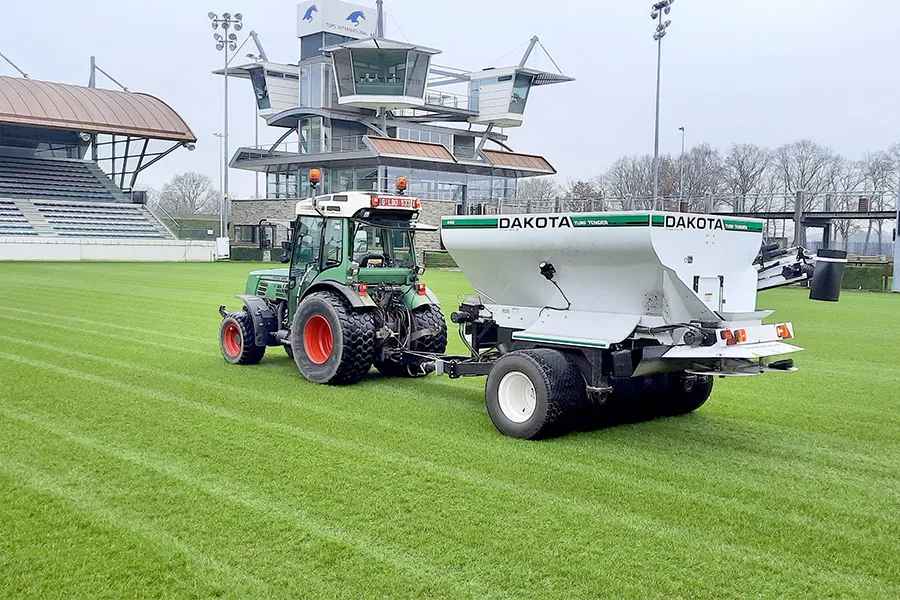
Sports pitch construction and maintenance
Groundsmen and greenkeepers everywhere are feeling the impact of climate change. Even in our historically temperate climate, protecting sports pitches and turf against extreme drought and equally severe waterlogging is proving a real challenge. You might think the answer is to switch to artificial turf. Joost van Beek could not disagree more. The playing experience on a natural grass pitch remains unmatched, according to the owner of Van Beek Sport en Groen. What is more, by giving the soil sufficient attention, you can greatly improve the resilience of the turf.
Joost van Beek originally trained in agriculture, which explains why he sees the soil as the key starting point for sports pitch construction. “Of course, the knowledge I gained at college has since been greatly expanded through experience, new insights and updated knowledge of sports turf. Van Beek Sport en Groen has been building and maintaining football pitches, horse jumping fields and golf courses for fourteen years. We work for amateur clubs as well as at the top end of the market, in Belgium, the Netherlands and Eastern Europe, among other places.”
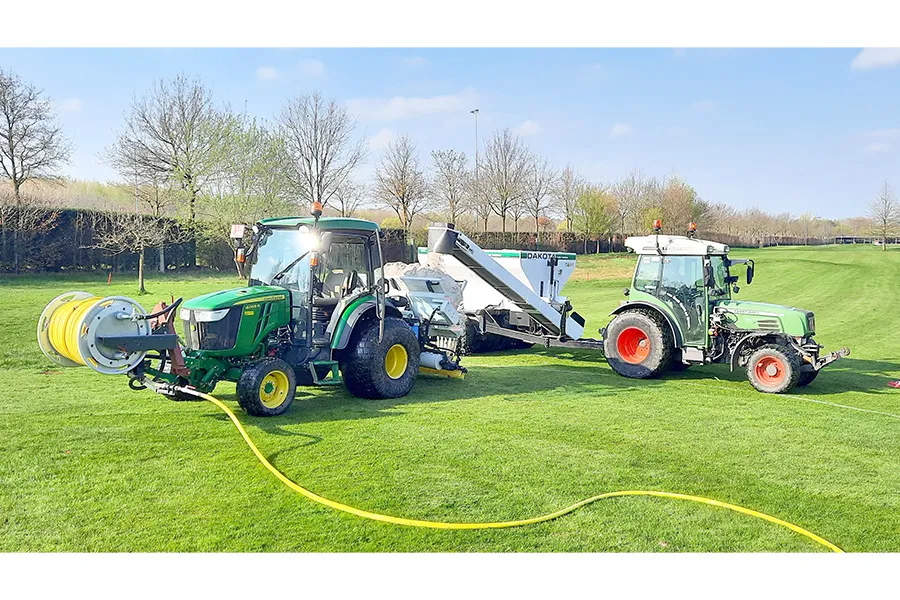
The benefits of natural grass
Van Beek’s position in the debate between artificial and natural grass is clear. “To begin with, many clubs have found out the hard way in recent years just how much it costs to install and maintain an artificial turf pitch. More importantly, though, nothing beats the playing experience and climate and environmental benefits of natural grass. It provides more cushioning, with a lower risk of injuries and burns, and you can even tailor a high-quality natural grass pitch to your needs. A greenkeeper or groundsman who knows what they are doing can give the home team a real advantage by adjusting the grass length or watering more or less before a match.”
Van Beek does not deny that natural grass pitches are being put under severe strain by climate change. “But with the right management, the right grass species and cultivars, biostimulants, fertilisers and so on, and by ensuring the grass plants can develop strong roots, a natural grass pitch can withstand a lot. The more water use comes under pressure, the more important it is to get the soil right.”
Football pitches
At Van Beek, every project starts with a thorough analysis of the soil’s composition and structure. “At professional football clubs, a pitch is of course built up from scratch, layer by layer, incorporating modern technologies such as pitch heating, irrigation and drainage. At amateur clubs, however, we traditionally work with the existing soil. We analyse and improve it, then finish it with a suitable top layer.”
“The basic needs of a grass plant are essentially the same everywhere, of course, but from a sports-turf perspective, football pitches also need to drain excess water effectively in winter. To improve permeability, we therefore almost always incorporate a proportion of rootzone sand into the top layer. The exact proportion depends on the soil analysis. In the layers below, the focus is on retaining water, so that sufficient reserves are available in summer. Finally, good management, regular overseeding and aeration help us maintain the sward.”
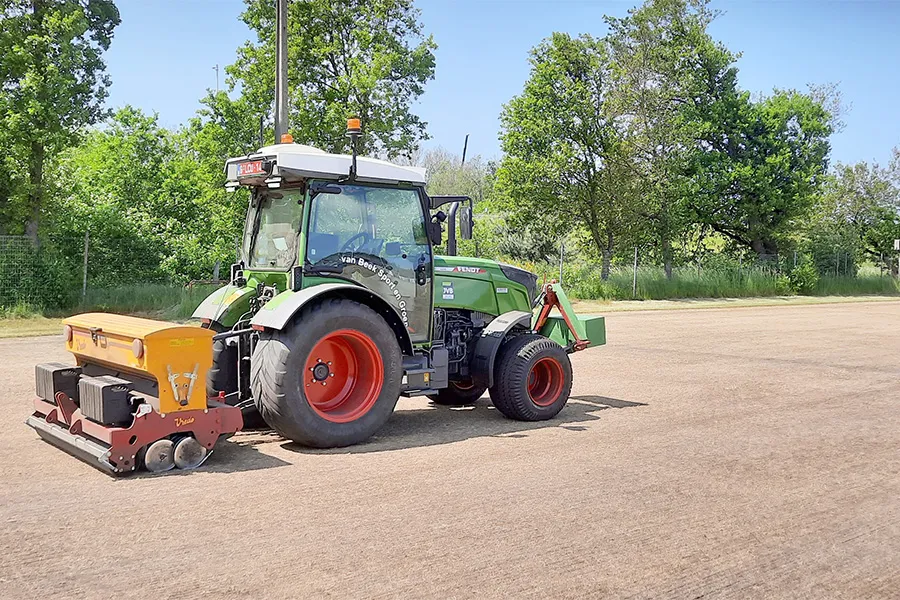
Topchanger
Van Beek believes in a long-term approach, so it is no surprise that many clients in both football and equestrian sport also entrust the company with maintaining their grounds.
“In the golf sector, that is all we do. And we do it properly, with our very own machine, the Topchanger. Instead of spiking the greens every year and then brushing in rootzone sand, which leaves the course in poorer condition and bumpy for several days, the Topchanger uses water pressure to create a hole, which is then immediately filled with white sand. This places the sand deeper in the profile, and the green is immediately smooth and even again. That is a boon for golf clubs, which used to see bookings fall for several days after spiking.”
“In any case, whether it is for football, equestrian sport or golf, a good natural grass sports pitch always requires the right management, the necessary passion and good communication between all the parties involved,” Van Beek concludes.
Question about this story? Ask your question
Keep following this
Get an email when a new story is published. No account needed.
- ThemeKeeping turf strong and playable
- SubjectConstruction & management