Building climate-resilient natural grass pitches
Text Sara DekeselImage Krinkels
Construction and maintenance of sports pitches
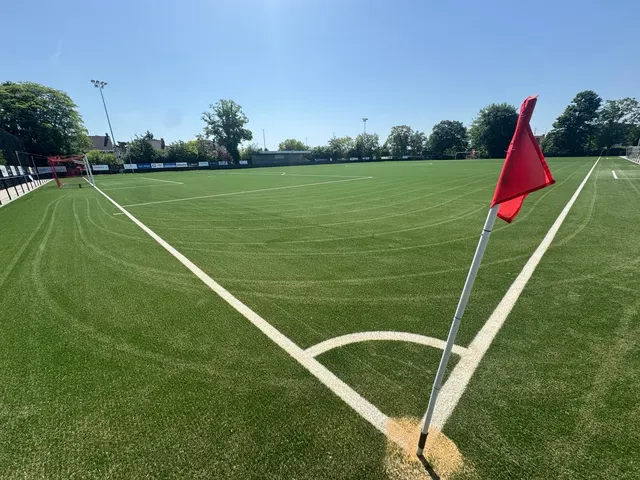
The outdoor sports pitches have been waterlogged in recent weeks. Numerous training sessions and matches were cancelled because the pitches were unplayable. This is probably just a taste of what climate change has in store for us. That is the view of Steven Mattelin, site manager at landscaping contractor Krinkels. He is happy to explain how good soil structure, water permeability and professional maintenance keep a natural grass pitch in top condition.
An experienced partner in sport
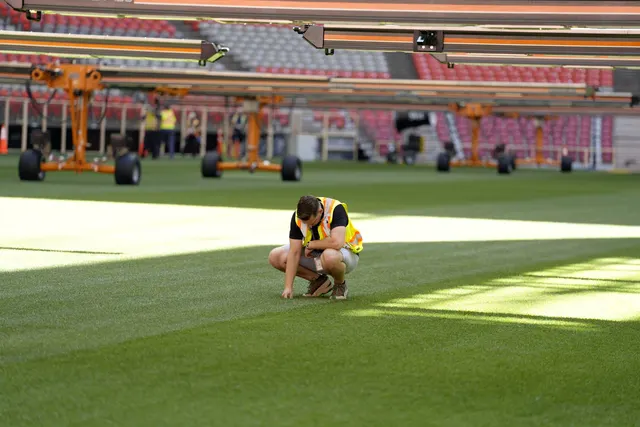
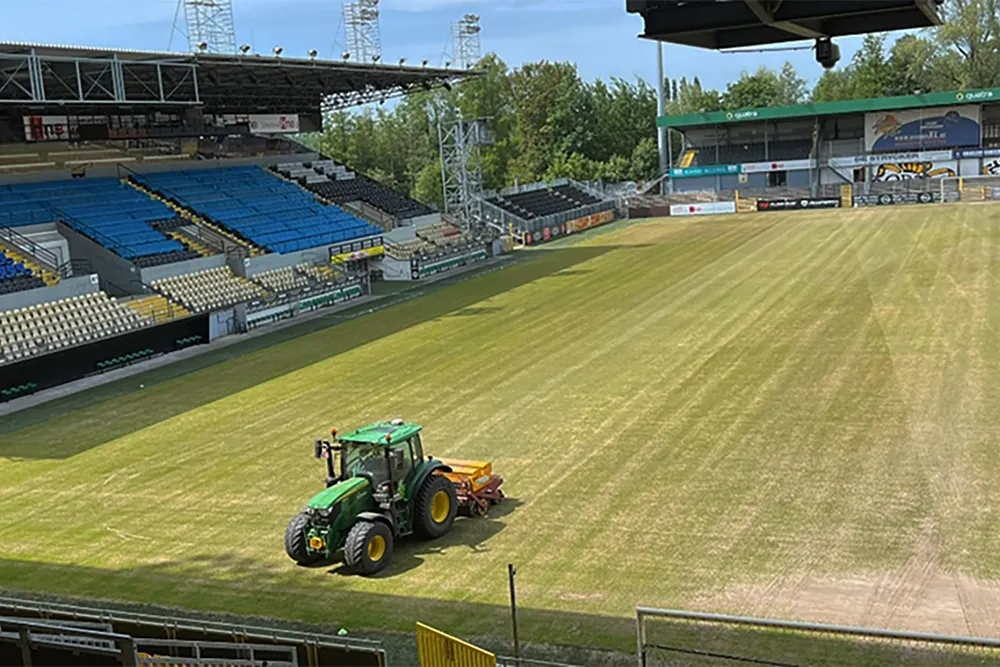
Sports clubs and organisations across Belgium rely on Krinkels to maintain their grass pitches. Site manager Steven Mattelin names a few examples: “KV Oostende, SK Deinze, Sport Vlaanderen, the pitches in Ghent, Ostend, Charleroi, Antwerp… We are also often called in to prepare pitches for European and international matches, such as the Kevin De Bruyne Cup last summer.”
A team of thirty employees is responsible for maintaining around 320 sports pitches. “Of course, they are not all working on the pitches continuously in winter, but during the regeneration season and peak season, the team is working at full capacity,” says Steven Mattelin.


It all starts with the soil
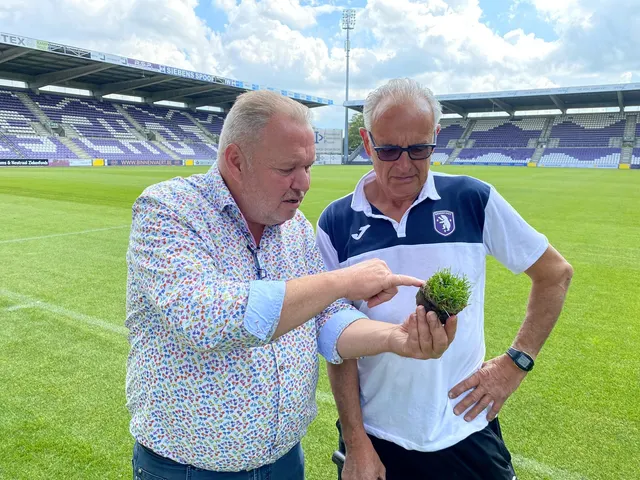
Krinkels lays around twenty new sports pitches every year. “Before earthworks begin, it is best to carry out a particle-size analysis of the soil. The cost of such an analysis is negligible. The results show how the soil can be treated to give the top layer the ideal composition. What we learn from it can greatly improve the playability of a natural grass pitch,” says Mattelin. “The unfortunate thing is that the budget for constructing a natural grass pitch is many times lower than the budget for an artificial turf pitch.”
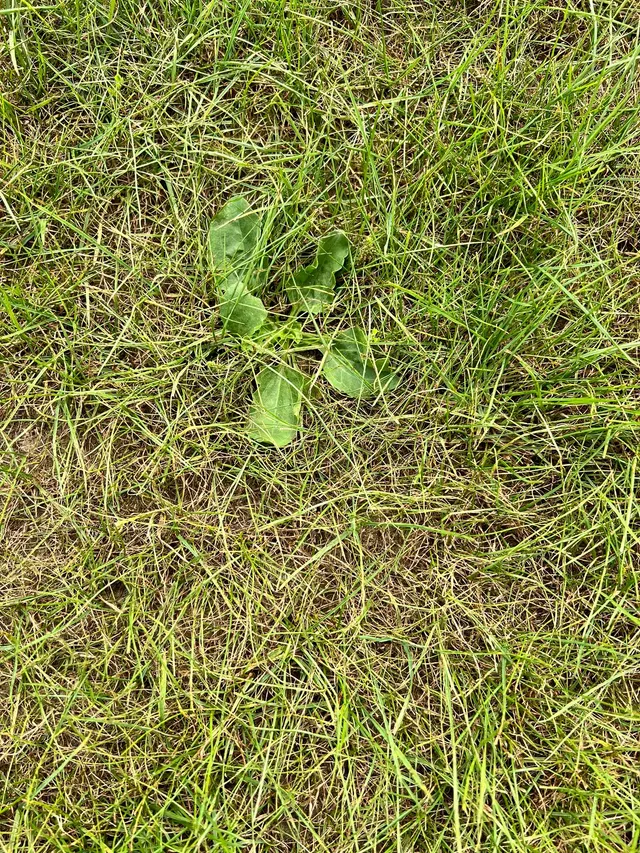
“If the clay content is above five per cent, we add sand to the top layer. Otherwise, water permeability is insufficient, which has a detrimental effect on playability during wet spells. Grass also roots less effectively in heavy soil, leading to rapid wear and tear from play. This creates uneven areas and bare patches, where weeds can quickly take hold if the grass is not reseeded promptly.”
Scoring on the green-blue benchmark
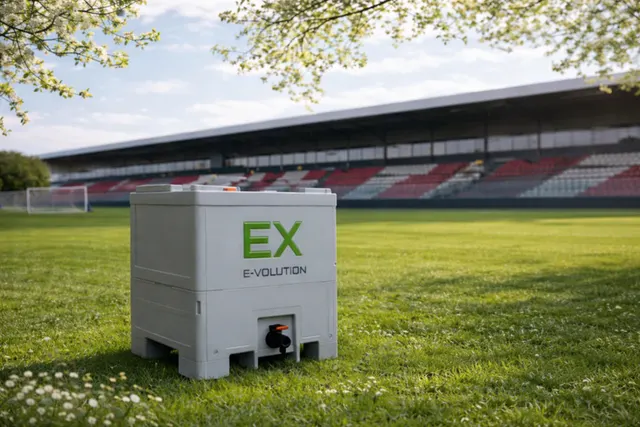
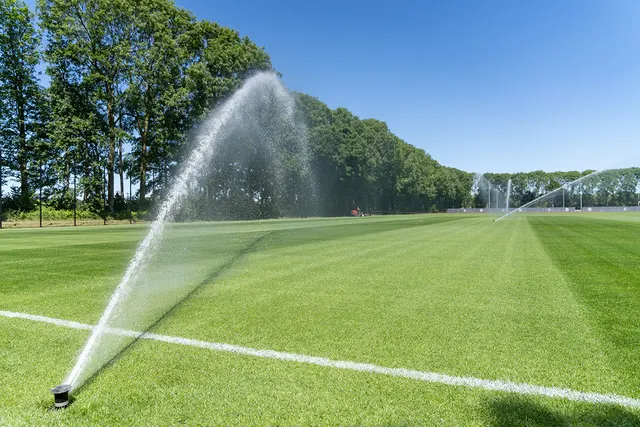
Krinkels signed the Green Deal Sportdomeinen. “Our company is committed to efficient water management on sports grounds. That is not only good for nature,” says Mattelin, “it also improves the playability of the pitches. We ensure that rainwater infiltrates locally wherever possible and is collected for use during dry spells. We do this mainly by removing hard surfaces and creating swales and ponds around the pitches, as well as installing infiltration crates to store water.”
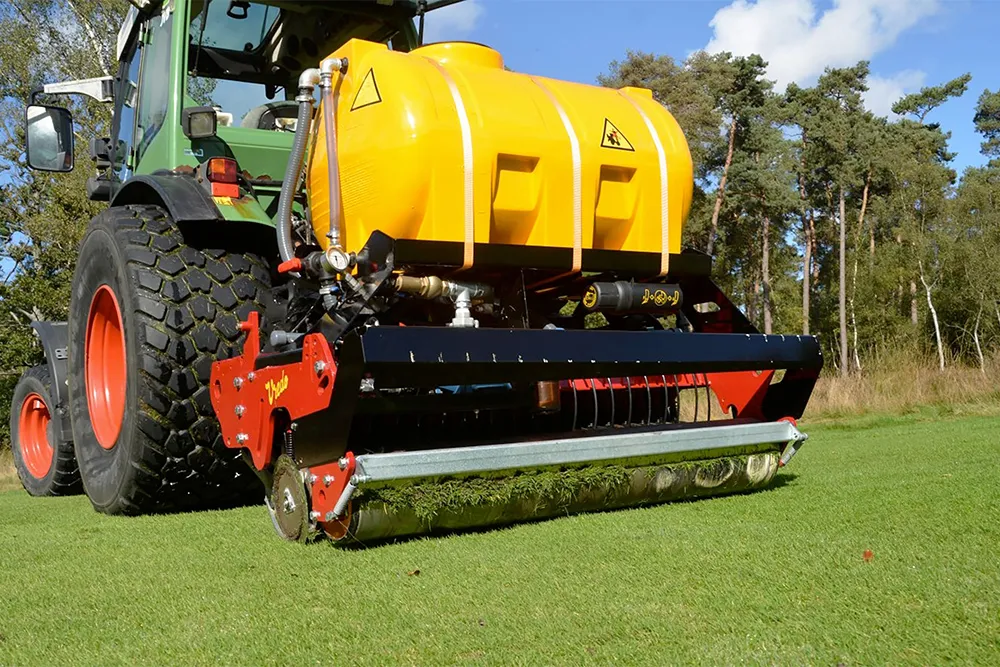
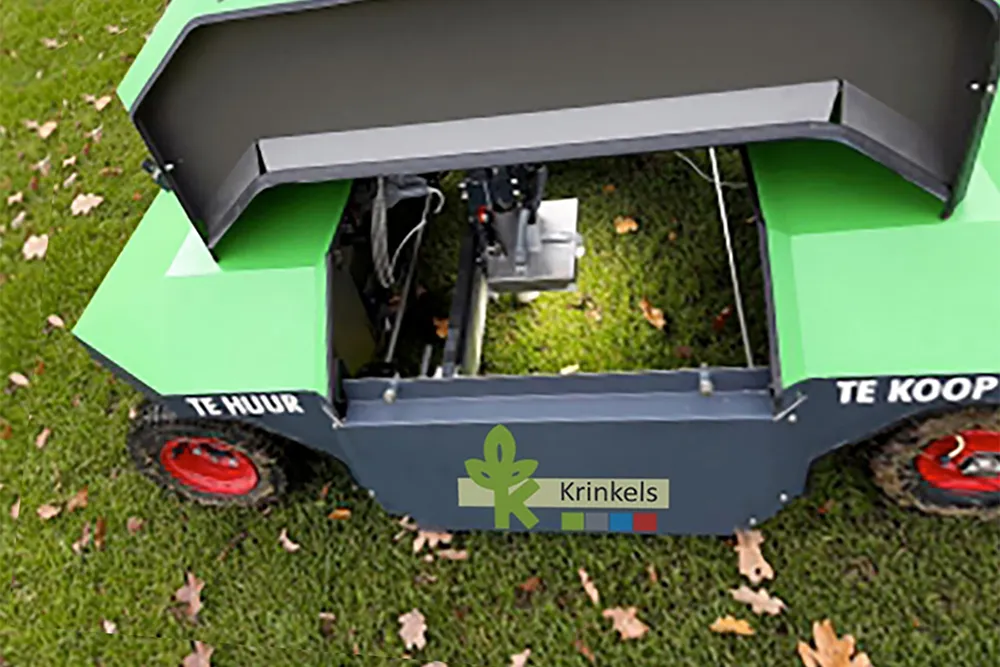
Krinkels also promotes biodiversity around the pitches. Pest and weed control are carried out as ecologically as possible. Steven Mattelin explains: “Chemical products are now used only in exceptional, extreme cases, and then in very carefully measured quantities. We control chafer grubs with the Vredo Fluid Feeder. It injects nematodes into the soil, where they parasitise the harmful beetle larvae. We also scarify and harrow the turf to remove weeds. For weeds with taproots, we use our Violette weed-control robot.”
Robots take to the field
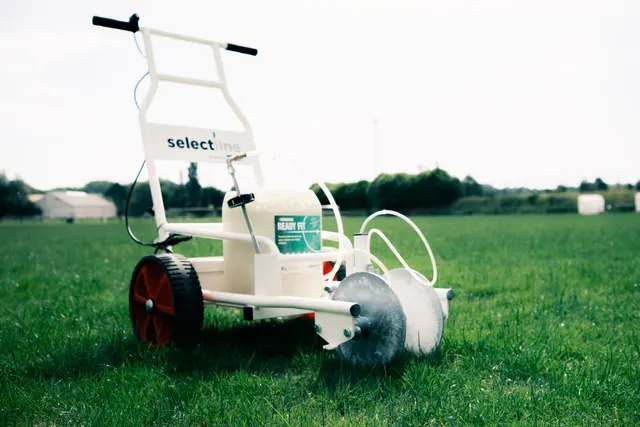
Vredo Fluid and Violette are not the only innovations. “We are also using more and more robotic mowers. We hire them out with a service package that includes replacing the blades, monitoring their operation remotely and adjusting working hours to fit around playing times. We also use robotics for line marking. Our new line-marking robots use both GPS and laser technology, so they deliver impeccable results even under large trees and floodlights, and when surrounded by stands,” concludes Mattelin.
Een zakelijke vraag aan Krinkels nv? Get in touch
Companies in this story

Keep following this
Get an email when a new story is published. No account needed.
- ThemeSports pitches under heavy use
- SubjectConstruction & management
- CompanyKrinkels nv